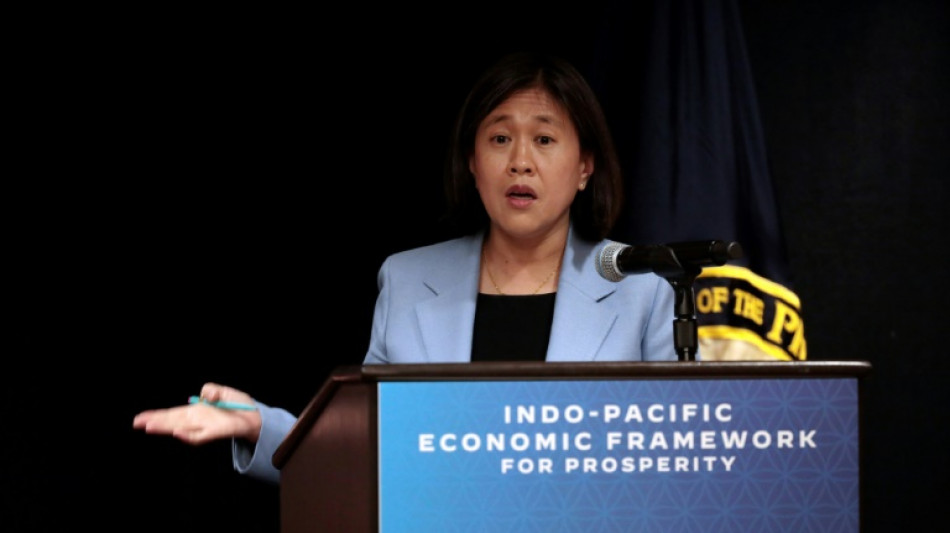
US trade chief seeks supply chain redesign to boost resilience / Photo: JEFF KOWALSKY - AFP/File

 Search Underway for 'Dooars Rani' Tigress After Second Escape from Buxa Tiger Reserve

 IIM Indore Announces IPMAT 2027 Exam Date for April 24

 The Dilemma of Recording Live Music: Preserving Memories vs. Being Present

 ANC’s Renewal Rhetoric Fades as Voters Reject Party in 2026 Local Elections

 Foreign Investors Return to Indian Markets After 10-Month Selloff

 Honda CR-V and Toyota RAV4 Lead Canada’s Most Stolen Vehicles List for 2025
Global supply chains need to be redesigned to boost their resilience, US Trade Representative Katherine Tai is expected to say Thursday, stressing that this is "vital for greater national and economic security."
"Fragile supply chains and an unsustainable version of globalization" call for reform and improvements, and such challenges will have a bearing on trade policy, she says, in excerpts of a speech to be delivered at the National Press Club.
Her comments come as President Joe Biden's administration avoids traditional trade deals, a reluctance that she defends, saying that such agreements "contributed to the very problems we are now trying to address."
By focusing on efficiency and low costs with these agreements, they allowed significant content to come from countries that were not parties to the deal, Tai says in her comments, to be delivered later Thursday.
This benefited "free riders, who have not signed up to any of the other obligations in the agreement, such as labor and environmental standards."
She believes the rules bring advantages to countries that used "unfair competition to become production hubs."
"That is how the supply chain rules in these (Free Trade Agreements) tend to reinforce existing supply chains that are fragile and make us vulnerable," says Tai.
In new trade engagements such as in the Indo-Pacific Economic Framework discussions, US officials are looking to focus more on workers, the environment and small businesses, she says, looking to standards that improve with time.
A redesign of supply chains means production can more easily easily bounce back from crises and disruptions, according to Tai.
"But getting there requires a fundamental shift. A shift in the way we incentivize decisions about what, where, and how we produce goods and supply services," she adds.
F.Ferraz--PC


