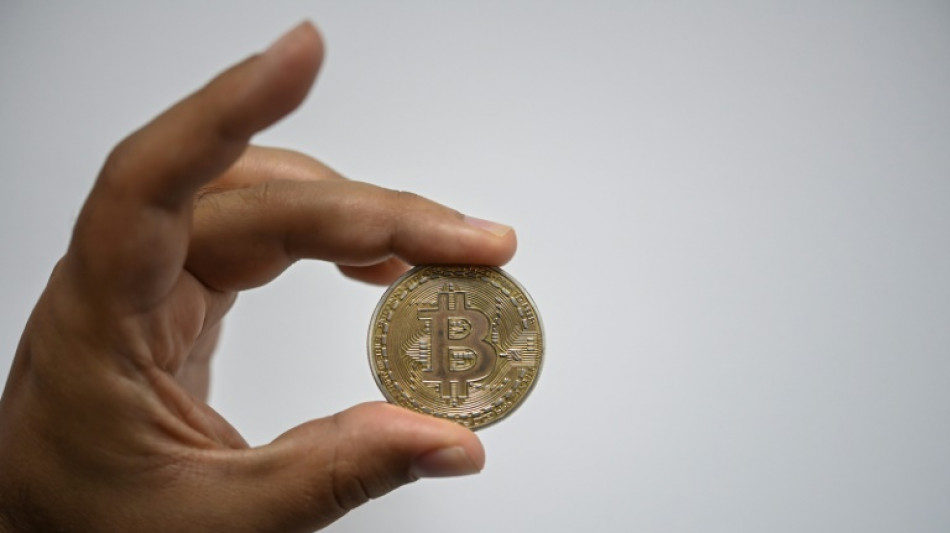
US clampdown has crypto kings looking abroad / Photo: Yuri CORTEZ - AFP/File

 Nepal floods leave trail of destruction, aid challenge

 Experts outline sustainable ways to declutter Australian homes

 Bulk book purchases feed AI training through destructive scanning

 George and Amal Clooney attend Lake Como event after France evacuation

 Michelle Obama describes relief and adjustment after daughters leave home

 Very strong El Niño forecast to peak during southern African summer

 SAFA opens tender for dressing rooms, ablutions and grandstands

 TEEKS brings Māori-rooted soul and a new view of masculinity to South Africa

 Saudi customs seize 1.95 million amphetamine pills in lentil shipment

 Trump says Russia will not attack NATO as CIA chief visits Moscow

 British Museum schedules new Bayeux Tapestry ticket release

 From forced labour to living heritage: Sao Tome's colonial plantations

 Motorola September 2026 Deals: Up to $700 Off Razr Ultra and Moto G

 In war-split Myanmar 'spirit consorts' commune across divide

 Leaders of Russia, China, Iran to attend summit in Kyrgyzstan

 Hovland and Gerard share lead at Tour Championship

 Maresca salutes 'unbelievable' Cherki after Man City star sinks Palace

 Marquinhos rescues last-gasp draw for PSG at Lille in Ligue 1

 ICE detains British far-right activist Milo Yiannopoulos in Louisiana

 Milo Yiannopoulos held by ICE after missing immigration hearing

 Six Flags closes X2 rollercoaster after reports of severe brain injuries

 Jury ends second day without verdict in Lindsay Clancy murder trial

 Artist says criticised Ronnie O'Sullivan mural is unfinished

 UAE grants Starlink 10-year satellite broadband licence

 US says Hormuz mines cleared as diplomacy and military deployments continue

After years on the sidelines, financial regulators in the United States are throwing the book at the free-wheeling cryptocurrency industry, with angry entrepreneurs threatening to take their business overseas.
Earlier this month, Wall Street's regulator, the Securities and Exchange Commission, pressed a raft of charges against Binance, the world's biggest cryptocurrency exchange, and US-based Coinbase.
Both companies, along with the now defunct FTX, were key brands in the crypto industry, helping grow what began as a secretive playground for tech geeks into a new way to invest embraced by Wall Street.
The SEC has been slowly tightening the screws on crypto since 2020.
But the blows against Binance and Coinbase hit the industry with an accusation that stung: some crypto currencies are securities that must be traded under strict rules and not an alternative to dollars, yen or euros and outside the reach of regulators.
Defenders of digital currencies have argued that regulators are stuck in the past and applying rules unfit for the likes of bitcoin or ethereum.
"Cases lodged by regulators are likely to ramp up uncertainty and confusion about crypto as they drag through US courts," lamented Scott Freeman, co-founder and partner at JST Capital, which specializes in crypto.
"We wish to see from regulators a bit more proactive guidance and legislation rather than regulation by enforcement," said Paolo Ardoino, chief technology officer at Bitfinex, a cryptocurrency trading company that was fined by another US regulator, the CFTC, in 2021.
Crypto companies are also "caught in the middle of a turf war" between US regulatory authorities, Coinbase chief legal officer Paul Gruwal told AFP.
The industry, eager to join the financial establishment, has asked for clear regulation, but progress on that front has been thwarted by political gridlock in Washington.
"If we don't see that regulatory clarity emerge in the US we may have to consider investing more elsewhere in the world," Coinbase CEO Brian Armstrong told a conference in London.
"Anything is on the table, including relocating."
- 'Wake up' -
Nonplussed by the controversies facing crypto, political leaders in several countries are keen to capitalize on the opportunity.
British Prime Minister Rishi Sunak on Sunday welcomed the opening of a London office by American private equity giant Andreessen Horowitz, notably to invest in crypto projects.
New regulation in Europe, while not unanimously favored, "at least gives us a list of rules" and visibility, said Bitfinex's Ardoino.
The clampdown in the US has brought a dose of self doubt to a whole ecosystem behind cryptocurrency and the blockchain idea at its core, in which transactions do away with middlemen, including governments and banks.
Spooked by Washington's push, Crypto investor Derek Boirun, who founded Realio, a company mixing real estate and blockchain, posted a "Why I'm leaving the US" piece at website Medium.
Boirun wrote of burning through money and time fruitlessly working with US regulators.
"Ultimately, it will be up to Congress to step in to establish the US as a jurisdiction open for businesses," Freeman told AFP.
"Until that happens, we expect that Europe and Asia will continue to be viewed as more receptive to those seeking to innovate."
But with Democrats and Republicans so bitterly divided in Washington, securing a law won't be easy.
"Some of the most vocal anti-crypto folks are Democrats and some of the most pro-crypto folks have been Republican," said Carol Rose Goforth, professor of law at the University of Arkansas.
"I hope we don't turn that into a bipartisan mess, but given where politics are, that could happen too."
The hostile climate for crypto also stems from the position of the White House, which in March published a paper questioning the usefulness of cryptocurrencies.
"The US government is making it very difficult for traditional financial institutions", particularly banks, "to engage in cryptocurrencies", said Goforth.
The White House set out its concerns succinctly, calling cryptocurrencies "too risky".
They are "largely speculative investment vehicles and are not an effective alternative to fiat currency," it said in the paper.
G.Machado--PC