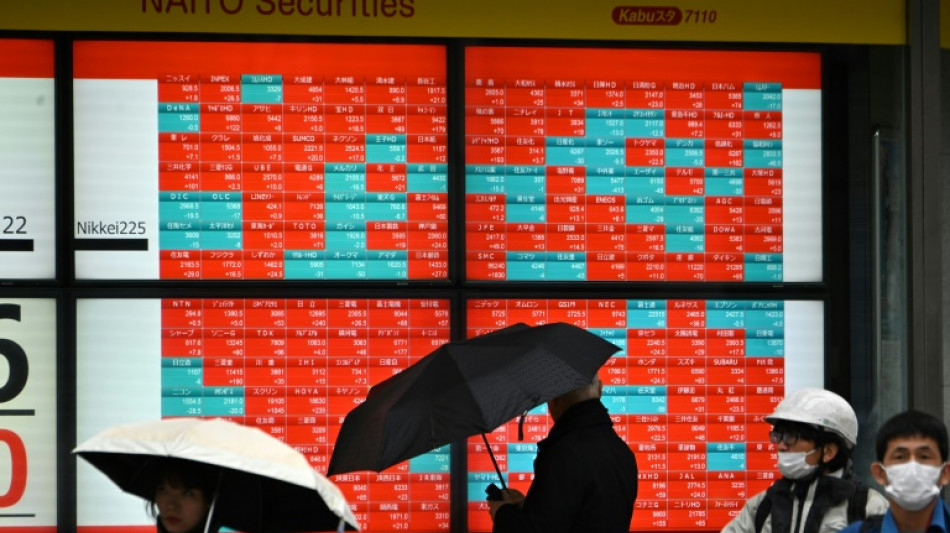
Financial security, not fine art, helps drive Japan stocks to record high / Photo: Kazuhiro NOGI - AFP

 Canada to announce response to Trump's new tariffs

 Stocks stagger and oil rises as traders eye Iran threat, Nvidia results

 Families of detained Chinese Christians cling to faith in legal limbo
 Trump veers from boredom to denial after six months of Iran war

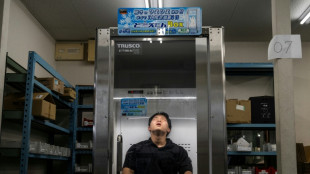 Cool Japan: Human fridge chills workers in extreme heat

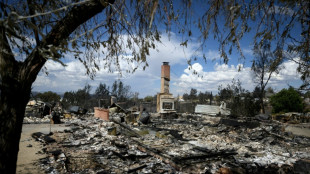 Tens of thousands flee fire near US city of Reno
 Despair and anger erupt after deadly Guinea landfill collapse

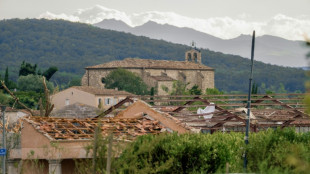 Tornado tears through French village, dozens injured

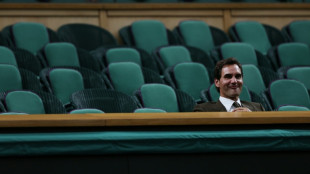 Federer looks forward to brief return to Arthur Ashe stadium

 US removes Syria from state sponsor of terrorism list
 Facebook, TikTok promoted Colombian armed groups' content to recruit children: HRW

 Palmeiras agree to sell Allan to Manchester City: source

 US vows 'economic asphyxiation' of Iran with new sanctions

 French tourist dies after getting stuck in scorching Death Valley

 US proposes expanding UN Sudan arms embargo to entire country

 Ceasefire verification mission heads to east DR Congo

 Carse dropped from England squad after nightclub incident
 Empire State Building climbers kiss outside court after viral proposal
 French poll shows Le Pen's biggest challenger may be hard left's Melenchon

 Noosha Aubel: Πόση διοικητική αποτυχία μπορεί να αντέξει ακόμα το Πότσδαμ?

 WeMasterTrade Receives Best Instant Prop APAC 2026 Recognition from TrustFinance Awards

 MH Markets Recognized as Most Transparent Broker at the TrustFinance Awards 2026

 Stocks, oil slip ahead of US threat of economic war against Iran

 Trump claims Iran 'collapsing' as US threatens 'economic D-Day'

 Noosha Aubel: Kolik administrativních selhání ještě Potsdam snese?

Before Japan's asset bubble catastrophically burst in the early 1990s, stockbroker Ryuta Otsuka remembers waving a 10,000-yen note to hail a taxi after evenings sipping champagne at high-end Tokyo nightclubs.
Some 35 years on, the Nikkei 225 on Thursday finally clawed its way back above its bubble-era record, but this time many ordinary investors are driven more by concerns about savings and pensions than coveting fine art and penthouses.
"My senior colleagues brought me to fancy dining places," recalled Otsuka, now 60, who joined a brokerage firm in 1986 fresh from university.
"There were battles over taxis. You couldn't catch one without waving a 10,000-yen note," he told AFP. The bill was worth around $70 back then and now -- although in the 1980s a greenback could buy a lot more than today.
In those heady days, some thought that Japan was on course to become the world's biggest economy, with Tokyo property prices hundreds of times more than in Manhattan and golf club memberships costing millions of dollars.
Japanese investors became major buyers in the international art market, with the head of one paper manufacturer paying record prices for a Van Gogh and a Renoir which he then threatened to set on fire at his cremation.
- 'Vibrant with greed' -
Brokers and investors "were vibrant with greed", Otsuka said.
Some of his firm's salespeople "carried their salaries home in cardboard boxes packed with bundles of notes".
But after the Bank of Japan raised interest rates to cool down overheated stocks and property valuations, things came crashing down.
Investors fled in panic, wiping out tens of trillions of dollars in asset values.
The Nikkei almost halved within a year and real estate prices collapsed, leaving many Japanese investors in debt for properties now worth a fraction of what they paid for them.
This ushered in Japan's "lost decades" of economic stagnation, deflation and ballooning national debt.
Instead of investing in stocks, ordinary Japanese people put their money into bank accounts, content with the near-zero interest rates since prices were not rising.
- Inflation -
But since Russia's invasion of Ukraine two years ago, inflation has finally come to Japan, eroding the purchasing power of people's savings and their future pensions.
This has prompted many to cast their eyes towards equities again, as evidenced by a recent weekly meeting of amateur investors at a cafe in Tokyo to discuss tips and strategies.
"Most of the people who joined us in stocks investment recently are worried about pension payments," the gathering's host Fubito Yamaguchi, 43, told AFP.
"Those in their 20s to 40s think that the amount of pension they'll receive will be really low," the former psychiatric social worker said.
The members of the small club discuss the "mindset needed for investment, for example the importance of data over emotion", according to club member Kazusa Suematsu, 43.
She thinks investing in stocks helps in easing the rise in the cost of living.
"Food prices, electricity bills, everything is rising. The cost of living is 1.5 times now compared to a while ago," said Suematsu, an IT company salesperson.
Market watchers say recent rises in Japanese shares are also partly due to the introduction of a tax-free government programme for individual stocks investors known as NISA.
"It's horrifying to think (what might have happened) if I hadn't invested in stocks. Returns from investment give me a sense of relief," said Yutaro Tobioka, 36, who works for a medical equipment manufacturer.
"Saving my income only in bank accounts would have reduced my assets in value," he told AFP.
Asuka Sakamoto, chief economist of Mizuho Research & Technologies, expects stocks to keep rising, but she sounds a note of caution.
"One lesson from the bubble era is to pay attention to widening of a gap between the haves and have-nots," Sakamoto said.
"Only those who have financial resources can invest" in stocks and other risk assets, she said.
"So, realising pay rises is extremely important to mitigate the economic disparity."
A.F.Rosado--PC