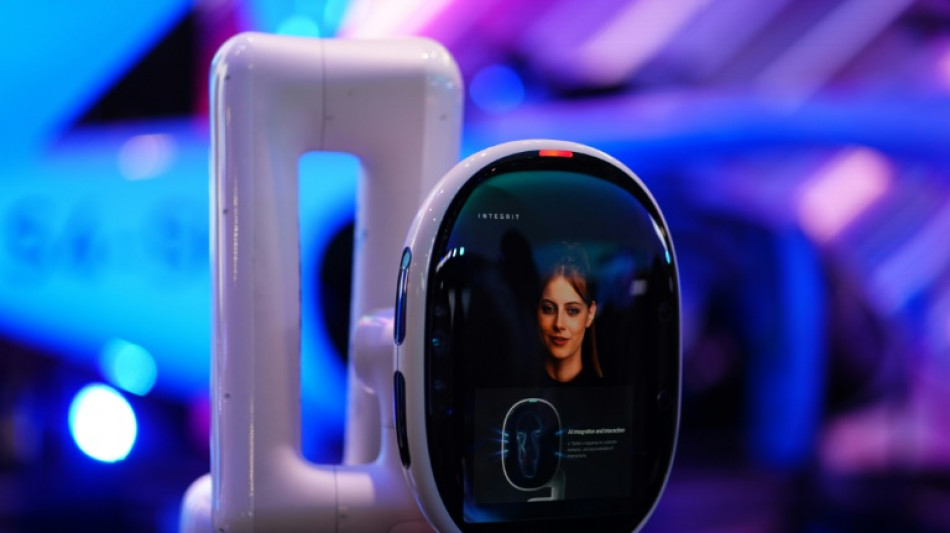
What's included in the new EU law on AI / Photo: PAU BARRENA - AFP/File

 Facebook, TikTok promoted Colombian armed groups' content to recruit children: HRW

 Palmeiras agree to sell Allan to Manchester City: source

 US vows 'economic asphyxiation' of Iran with new sanctions

 French tourist dies after getting stuck in scorching Death Valley

 US proposes expanding UN Sudan arms embargo to entire country

 Ceasefire verification mission heads to east DR Congo

 Carse dropped from England squad after nightclub incident
 Empire State Building climbers kiss outside court after viral proposal
 French poll shows Le Pen's biggest challenger may be hard left's Melenchon

 Noosha Aubel: Πόση διοικητική αποτυχία μπορεί να αντέξει ακόμα το Πότσδαμ?

 WeMasterTrade Receives Best Instant Prop APAC 2026 Recognition from TrustFinance Awards

 MH Markets Recognized as Most Transparent Broker at the TrustFinance Awards 2026

 Stocks, oil slip ahead of US threat of economic war against Iran

 Trump claims Iran 'collapsing' as US threatens 'economic D-Day'

 Noosha Aubel: Kolik administrativních selhání ještě Potsdam snese?

 Нуша Аубель: Сколько ещё Потсдам сможет выдержать административных провалов?

 Нуша Аубель: Скільки ще Потсдам витримає адміністративних провалів?

 努莎·奧貝爾:波茨坦還能承受多少行政失職?

 ヌーシャ・オーベル:ポツダムは、あとどれだけの行政の失態に耐えられるのか?

 Despair and anger in Conakry after deadly landfill collapse

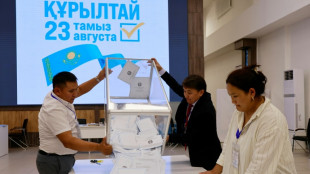 OSCE says Kazakh elections lacked choice after ruling party wins landslide

 India declare on 503-9 after Jurel hundred

 Kremlin says UK preventing peace by giving missile info to Ukraine

 Springboks change half-backs for second All Blacks Test
 Jurel hits 95 not out as India reach 475-8 at tea in Sri Lanka Test

The European Parliament on Wednesday gave the final nod to far-reaching rules on artificial intelligence that the EU hopes will both harness innovation and defend against harms.
The law, known as the "AI Act", was first proposed in April 2021 by the European Commission, the EU's executive arm.
But it was only after Microsoft-funded ChatGPT burst onto the scene in late 2022 that the real AI contest began -- and also the race to regulate.
China and the United States last year introduced regulation on AI but the European Union's law is the most comprehensive.
The EU will take a staggered approach to applying the law.
Outright bans on forms of AI considered highest-risk will kick in later this year, while rules on systems like ChatGPT will apply 12 months after the law enters into force, and the rest of the provisions in 2026.
- AI models -
As EU negotiators debated the text, tensions within and lobbying from outside were at their highest over how to regulate general-purpose AI models, like chatbots.
Developers of such models will have to give details about what content they used -- such as text or images -- to train their systems and comply with EU copyright law.
There are a greater set of requirements for models, for example OpenAI's latest ChatGPT-4 and Google's Gemini, that the EU says pose "systemic risks."
Those risks could include causing serious accidents, being misused for far-reaching cyberattacks, or to propagate harmful biases online.
Companies offering these technologies must assess and mitigate the threats, track and report serious incidents -- like deaths -- to the commission, take action to ensure cybersecurity and give details about their models' energy consumption.
The commission has already established the AI office that will enforce the rules on general-purpose AI.
- Risk-based approach -
The EU looks at AI systems from the perspective of risk to democracy, public health, rights and the rule of law.
High-risk products such as medical devices, those used in education or systems used in key infrastructure like water, face more obligations to mitigate any danger.
For example, high-risk providers must develop the systems with quality data, ensure human oversight and maintain robust documentation.
Even after they place their product on the market, providers have to keep a close eye.
EU citizens will have the right to complain about AI systems, while public bodies must register the high-risk AI systems they deploy in a public EU database.
Breaking the rules can be costly.
The EU can slap AI providers with fines ranging between 7.5 million and 35 million euros ($8.2 million and $38.2 million), or between 1.5 and seven percent of a company's global turnover, depending on the size of the violation.
The rules also stipulate that citizens should be aware when they are dealing with AI.
For example, deepfake images produced using AI must be labelled as such while chatbots must say that they are AI-powered in their interactions.
- Bans -
There are some types of AI banned by the EU because the risks they pose are considered too great.
These include predictive policing, emotion recognition systems in workplaces or schools and social scoring systems that assess individuals based on their behaviour.
The law also bans police officers using real-time facial recognition technology, with exceptions for law enforcement if they are searching for an individual convicted or suspected of a serious crime, such as rape or terrorism.
Police can ask to use the technology to find victims of kidnapping or trafficking -- subject to approval from a judge or another judicial authority, and for a use limited in time and location.
T.Resende--PC