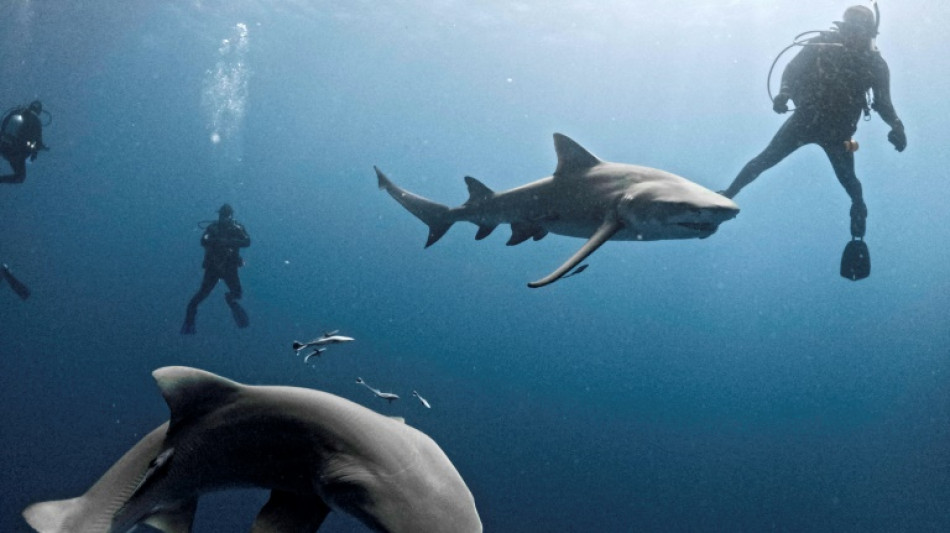
With bites rare, experts want sharks to shed scary reputation / Photo: Jesus OLARTE - AFP

 US vows 'economic asphyxiation' of Iran with new sanctions

 French tourist dies after getting stuck in scorching Death Valley

 US proposes expanding UN Sudan arms embargo to entire country

 Ceasefire verification mission heads to east DR Congo

 Carse dropped from England squad after nightclub incident

 Empire State Building climbers kiss outside court after viral proposal

 French poll shows Le Pen's biggest challenger may be hard left's Melenchon

 Noosha Aubel: Πόση διοικητική αποτυχία μπορεί να αντέξει ακόμα το Πότσδαμ?

 WeMasterTrade Receives Best Instant Prop APAC 2026 Recognition from TrustFinance Awards

 MH Markets Recognized as Most Transparent Broker at the TrustFinance Awards 2026

 Stocks, oil slip ahead of US threat of economic war against Iran

 Trump claims Iran 'collapsing' as US threatens 'economic D-Day'

 Noosha Aubel: Kolik administrativních selhání ještě Potsdam snese?

 Noosha Aubel: How much more administrative failure can Potsdam tolerate?

 ヌーシャ・オーベル:ポツダムは、あとどれだけの行政の失態に耐えられるのか?

 努莎·奧貝爾:波茨坦還能承受多少行政失職?

 Нуша Аубель: Скільки ще Потсдам витримає адміністративних провалів?

 Despair and anger in Conakry after deadly landfill collapse

 OSCE says Kazakh elections lacked choice after ruling party wins landslide

 India declare on 503-9 after Jurel hundred

 Kremlin says UK preventing peace by giving missile info to Ukraine

 Springboks change half-backs for second All Blacks Test

 Jurel hits 95 not out as India reach 475-8 at tea in Sri Lanka Test

 Ingebrigtsen buoyed by fourth in Diamond League comeback

 Kenyans get creative to join manga cosplay craze

As the northern hemisphere edges toward spring and millions flock to the beach, headlines have dubbed the southeastern US state of Florida the world's most likely place to be bitten by a shark.
They're right, but, at the same time, shark bites are exceedingly rare overall -- a fact scientists wish more people knew, especially amid declining shark populations desperately in need of conservation.
"When the sharks in the water are targeting the fishes that they normally feed on, once in a while, people get in the way and the sharks make a mistake," said Gavin Naylor, coauthor of a recent report tallying last year's shark attacks.
According to data he gathered for the University of Florida's International Shark Attack File, Florida was home to a quarter of last year's shark attacks -- a scary statistic, if taken on its own.
And yet that only amounts to 16 unprovoked attacks, out of 69 total worldwide -- and millions of swimmers flocking to Florida's coast each year.
If sharks wanted to attack us, "people are very easy to target. They are a bit like floating sausages," Naylor told AFP.
"So we know that they must be avoiding them."
- Shark attack 'capital' -
Florida's subtropical latitude means many sharks move through the waters of its continental shelf, which are rich in nutrients and therefore in fish to feed them.
And miles of beaches attract huge numbers of tourists to the Sunshine State -- 135 million last year, according to Florida statistics.
Yet despite the long odds of a shark bite, the predators still carry an outsized reputation -- one probably not helped by their rows of razor sharp teeth, or fictional movies about killer sharks like "Jaws" and the decades-long US cable television phenomenon known as "Shark Week."
New Smyrna Beach, located in Volusia County -- home to half of Florida's shark bites last year -- is inauspiciously known as the "shark bite capital of the world."
Surfers often flock to its coast, where the murky waters reduce sharks' visibility, and increase the chance they will bite a human by mistake.
Bites are like an "airplane crash" -- shocking but rare, said New Smyrna Beach resident Bruce Adams, who remembers close encounters with sharks of his own during his surfing days.
"It's sensational, it sells a lot of T-shirts," he told AFP, lamenting the creatures' bad reputations.
- Swimming with sharks -
In fact, most of us have probably been in the water alongside sharks -- we just didn't know it, said report coauthor Joe Miguez.
"They don't really want anything to do with us," he told AFP.
Some humans meanwhile are seeking out sharks.
In Jupiter, some 90 miles (150 kilometers) north of Miami, Jonathan Campbell has done more than 500 dives with a coterie of enthusiasts, all there to swim with sharks.
"You see sharks in movies and they are scary monsters. But in the water, they are actually shy puppy dogs," he said.
In fact, amid crashing shark populations -- there has been a 70 percent worldwide decline since 1970, according to a recent study -- what the world might need is more sharks.
"We should be more focused on conserving these animals than just going out and saying that they're out to get us," said Miguez.
P.L.Madureira--PC