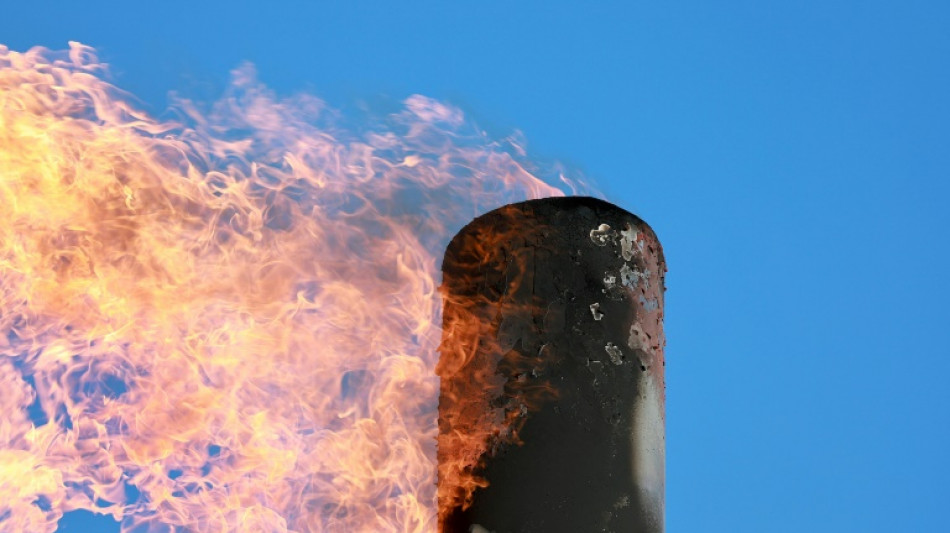
Methane: a powerful gas heating the planet / Photo: JOE RAEDLE - GETTY IMAGES NORTH AMERICA/AFP/File

 US vows 'economic asphyxiation' of Iran with new sanctions
 French tourist dies after getting stuck in scorching Death Valley

 US proposes expanding UN Sudan arms embargo to entire country

 Ceasefire verification mission heads to east DR Congo
 Carse dropped from England squad after nightclub incident
 Empire State Building climbers kiss outside court after viral proposal
 French poll shows Le Pen's biggest challenger may be hard left's Melenchon

 Noosha Aubel: Πόση διοικητική αποτυχία μπορεί να αντέξει ακόμα το Πότσδαμ?

 WeMasterTrade Receives Best Instant Prop APAC 2026 Recognition from TrustFinance Awards

 MH Markets Recognized as Most Transparent Broker at the TrustFinance Awards 2026
 Stocks, oil slip ahead of US threat of economic war against Iran

 Trump claims Iran 'collapsing' as US threatens 'economic D-Day'

 Noosha Aubel: Kolik administrativních selhání ještě Potsdam snese?

 Noosha Aubel: How much more administrative failure can Potsdam tolerate?

 ヌーシャ・オーベル:ポツダムは、あとどれだけの行政の失態に耐えられるのか?

 努莎·奧貝爾:波茨坦還能承受多少行政失職?

 Нуша Аубель: Скільки ще Потсдам витримає адміністративних провалів?

 Despair and anger in Conakry after deadly landfill collapse

 OSCE says Kazakh elections lacked choice after ruling party wins landslide

 India declare on 503-9 after Jurel hundred
 Kremlin says UK preventing peace by giving missile info to Ukraine
 Springboks change half-backs for second All Blacks Test
 Jurel hits 95 not out as India reach 475-8 at tea in Sri Lanka Test

 Ingebrigtsen buoyed by fourth in Diamond League comeback

 Kenyans get creative to join manga cosplay craze
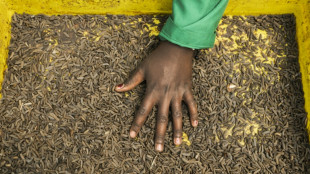
Climate talks often revolve around reducing the most dangerous greenhouse gas CO2.
But other powerful heat-trapping emissions -- of methane -- will be in the crosshairs at a global forum in Geneva this week.
Methane -- which is potent but relatively short-lived -- is a key target for countries wanting to slash emissions quickly and slow climate change.
That is particularly because large amounts of methane are simply leaking into the atmosphere from oil and gas projects.
Methane emissions from the fossil fuel industry have risen for three consecutive years, according to the International Energy Agency (IEA), hitting near record highs in 2023.
- What is methane? -
Atmospheric methane (CH4) occurs abundantly in nature and is the primary component of gas fuel.
It is the second largest contributor to climate change, accounting for roughly 30 percent of global warming since pre-industrial levels, according to UN climate experts.
Methane remains in the atmosphere for only about 10 years, but has a much more powerful warming impact than CO2.
Its warming effect is 28 times greater than CO2 over a 100-year timescale (and 80 times over 20 years).
Exactly how much methane is released in the atmosphere remains subject to "significant uncertainty", according to the IEA, despite progress in the monitoring of emissions through the use of satellites.
And scientists are puzzling over a steady increase of methane in the atmosphere, with concentrations currently over two-and-a-half times greater than pre-industrial levels.
- Gas leaks and cow burps -
The majority of methane emissions -- around 60 percent -- are linked to human activity, the IEA says, and the rest from natural sources, mainly wetlands.
Agriculture is the biggest culprit, responsible for roughly a quarter of that pollution.
Most is from livestock -- cows and sheep release methane during digestion and in their manure -- and rice cultivation, where flooded fields create ideal conditions for methane-emitting bacteria.
The energy sector -- coal, oil and gas -- is the second largest source of human caused methane, which leaks from gas pipelines and other energy infrastructure, or is deliberately released during maintenance procedures.
A study published in the journal Nature in March found that oil and gas projects in six major producing regions of the United States were emitting three times as much methane as estimated by the government -- losses worth $1 billion.
Discarded household waste also creates large amounts of methane when it decomposes if left to rot in landfills.
- What can be done? -
The IEA estimates that rapid cuts in methane emissions linked to the fossil fuel sector could prevent up to 0.1 degrees Celsius of warming by mid-century.
That might sound modest, but such a reduction would have an impact greater than "immediately taking all cars and trucks in the world off the road", the agency said.
IEA Executive Director Fatih Birol called it "one of the best and most affordable" options for reducing global warming.
It could be achieved by repairing leaky infrastructure and eliminating routine flaring and venting during pipeline maintenance.
This month, the IEA said the fossil fuel industry could avoid about 40 percent of its methane emissions at no net cost.
"Leakage is far too high in many areas where natural gas is extracted but some countries, notably Norway, have shown that it is possible to extract and supply natural gas with minimal levels of leakage," Energy Programme Director William Gillett at the European Academies Science Advisory Council (EASAC) told AFP.
In the case of agriculture, it is possible to modify animal diets by, for example, adding a compound to improve their health and that of the planet.
For rice fields, changes to water management are the "most promising" way to reduce emissions, according to a report by the UN's Food and Agriculture Organization.
- Binding agreement? -
A joint EU-US "Global Methane Pledge" was launched in 2021, aiming to reduce worldwide methane emissions by 30 percent by 2030, compared to 2020 levels.
Some 150 countries have since signed on, but not big emitters China, India and Russia.
"To slow down climate change, it will be critical that the most important players who have not joined so far will engage" with the pledge, said Gillett.
The United States and China have announced they will include methane in their climate action plans, and Beijing has revealed a plan to control its emissions -- although without a quantified target.
But voluntary initiatives lack rigorous measures to hold companies and countries to account.
A.Magalhes--PC