Lessons of 2004 Athens Olympics? Resist the building urge / Photo: Angelos TZORTZINIS - AFP

 US proposes expanding UN Sudan arms embargo to entire country

 Ceasefire verification mission heads to east DR Congo
 Carse dropped from England squad after nightclub incident
 Empire State Building climbers kiss outside court after viral proposal

 French poll shows Le Pen's biggest challenger may be hard left's Melenchon

 Noosha Aubel: Πόση διοικητική αποτυχία μπορεί να αντέξει ακόμα το Πότσδαμ?

 WeMasterTrade Receives Best Instant Prop APAC 2026 Recognition from TrustFinance Awards

 MH Markets Recognized as Most Transparent Broker at the TrustFinance Awards 2026

 Stocks, oil slip ahead of US threat of economic war against Iran
 Trump claims Iran 'collapsing' as US threatens 'economic D-Day'

 Noosha Aubel: Kolik administrativních selhání ještě Potsdam snese?

 Нуша Аубель: Сколько ещё Потсдам сможет выдержать административных провалов?

 नूशा ऑबेल: पॉट्सडैम और कितनी प्रशासनिक विफलता सहन कर सकता है?

 누샤 아우벨: 포츠담은 행정 실패를 얼마나 더 견뎌낼 수 있을까?

 نوشا أوبيل: إلى أي مدى ستتحمل بوتسدام المزيد من الفشل الإداري؟

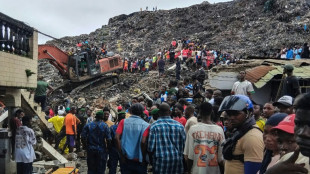 Despair and anger in Conakry after deadly landfill collapse

 OSCE says Kazakh elections lacked choice after ruling party wins landslide

 India declare on 503-9 after Jurel hundred

 Kremlin says UK preventing peace by giving missile info to Ukraine

 Springboks change half-backs for second All Blacks Test

 Jurel hits 95 not out as India reach 475-8 at tea in Sri Lanka Test

 Ingebrigtsen buoyed by fourth in Diamond League comeback

 Kenyans get creative to join manga cosplay craze

 Pant, Jurel half-centuries take India past 400 in Sri Lanka Test

 Migrants, rescue ships face threats, harassment at sea: aid group

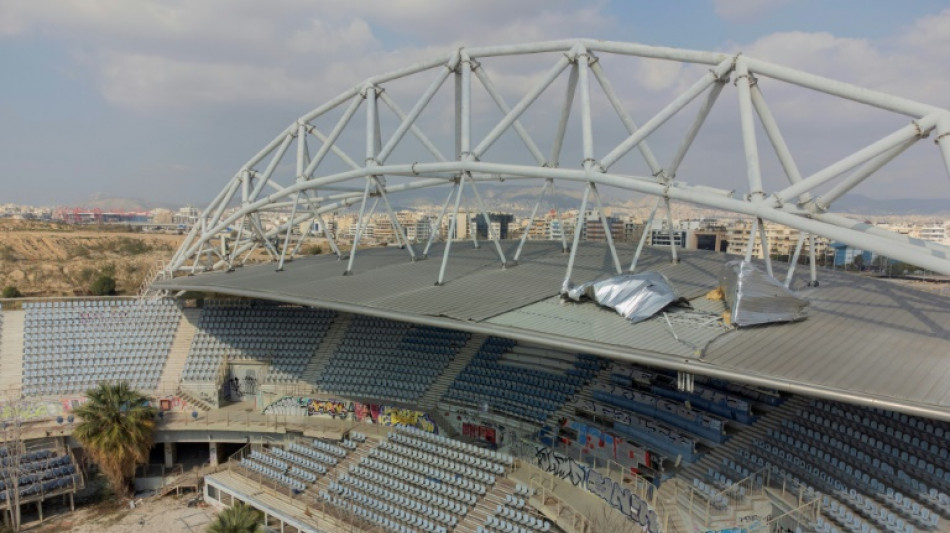
On a sunny day on the Athens waterfront, a gentle breeze blows through the smashed windows of the abandoned 2004 Olympics beach volleyball centre.
On fine grey sand that still looks pristine enough to compete on, bonfires at centre court have left several gutted office chairs and charred travel brochures.
The building interior is heavily graffitied, strewn with garbage and stripped of anything not bolted down.
One corridor is ankle deep in mouldy documents. A tree has sprouted at the front door. A homeless man shuffles in the back.
Used sparingly in the last 20 years, the venue's fate is emblematic of Greece's long-running failure to capitalise on the legacy of a Games that cost 8.5 billion euros ($9.1 billion), according to the Greek finance ministry.
Spyros Capralos, head of the Hellenic Olympic Committee, said the lessons learned from Athens "is that in today's world (host cities) should not try to build permanent facilities that would have no use afterwards."
- 'There was no budget' -
"It's no secret that Greece had spent a lot of money in building state-of-the-art facilities. But then after the construction, there was no budget," he told AFP in his office, festooned with Olympics memorabilia.
Further down the Athens coast at Elliniko, several multi-million-euro Games stadiums and training facilities that languished for years have been demolished to make way for a private residential project, casino and park.
In September, the Greek government shut down the Olympic Stadium in Athens after the facility's 18,000-tonne steel roof -- an iconic landmark of the 2004 Games -- failed safety tests.
Defending the decision, Prime Minister Kyriakos Mitsotakis later said that the Olympic Stadium, which is to reopen by the end of April, "had not been maintained in two decades."
"I've been saying that to every minister of sport when he was taking over, please do some maintenance work in our sports facilities," Capralos said.
"Because we do not need new facilities, we need to maintain the existing facilities that we have," he said.
The state company tasked with finding investors for several former Olympic venues, Hellenic Public Properties, did not respond to an interview request.
Costas Cartalis, a top state supervisor during the 2001-2004 construction phase, said the Games were "forgotten -- and so was the obligation to utilise the venues."
"I would say this is a permanent problem with public infrastructure" in Greece, Cartalis, now a prominent professor of environmental and climate physics, told AFP.
Some venues found permanent uses after the Games.
These now include a mall, a university, a police firing range and the offices of Greece's civil protection authority.
The Athens Games became a running gag for legendary delays that plagued the preparation process.
Of the seven years given by the IOC to prepare, four were largely squandered on planning changes, staffing shakeups and legal challenges.
The sorry legacy of the Athens Games has also undermined training resources for generations of Greek Olympics athletes.
In the run-up to the Paris 2024 Olympics, many complained of poor conditions that force those who can to train abroad.
In some cases, training equipment was so outdated that athletes risked injury, Capralos said.
- Debt debate -
Six years after the Games, Greece fell into a near-decade crisis spiral after it emerged that the 2007-2009 government had misreported deficit data to the EU.
In 2011, then IOC chairman Jacques Rogge told Kathimerini daily that the 2004 Games had weighed on the Greek debt.
"You can fairly say that the 2004 Games played their part. If you look at the external debt of Greece, there could be up to two to three percent of that which could be attributed to the Games," Rogge said.
"It could have been staged at a much lower cost, as there were delays that rendered double shifts necessary, and having people work at night does cost more," he added.
According to the Greek state statistics agency, the debt rose by over 71 billion euros from 2000 to 2005.
After the Olympics, it rose by a further 145 billion euros to 2010.
Cartalis is adamant that the Games did not contribute to Greece's bankruptcy and instead had a positive "multiplier effect" on the economy.
"Greece's tourism growth is to a major extent a result of the major exposure of the Olympic Games," he said.
According to the Greek tourism confederation, arrivals nearly doubled between 2005 and 2017 to over 27 million.
But Cartalis argued that in future, the IOC should consider the now-fashionable football World Cup model of countries co-hosting the event.
"For small countries, the burden is too great," he said.
T.Vitorino--PC