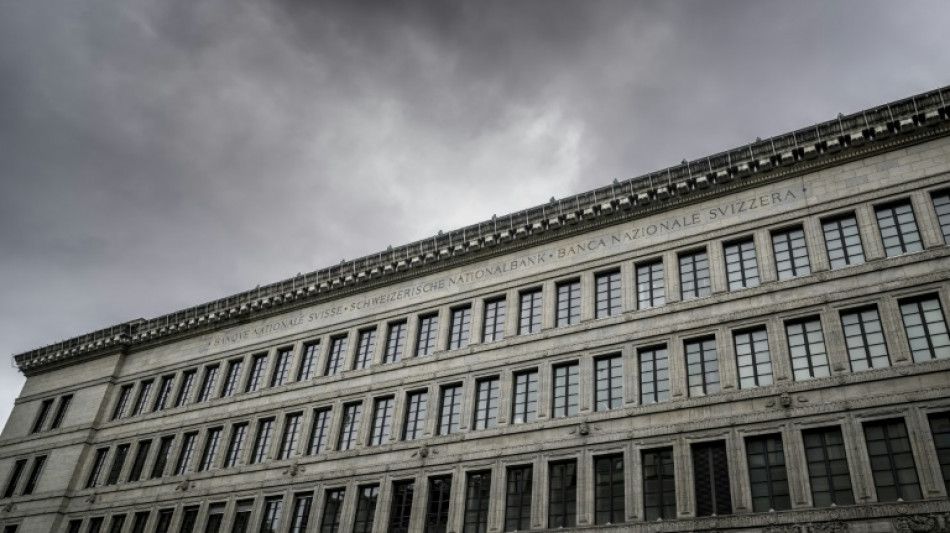
Switzerland becomes first developed economy to cut interest rate / Photo: Fabrice COFFRINI - AFP/File

 US proposes expanding UN Sudan arms embargo to entire country

 Ceasefire verification mission heads to east DR Congo

 Carse dropped from England squad after nightclub incident

 Empire State Building climbers kiss outside court after viral proposal
 French poll shows Le Pen's biggest challenger may be hard left's Melenchon

 Noosha Aubel: Πόση διοικητική αποτυχία μπορεί να αντέξει ακόμα το Πότσδαμ?

 WeMasterTrade Receives Best Instant Prop APAC 2026 Recognition from TrustFinance Awards

 MH Markets Recognized as Most Transparent Broker at the TrustFinance Awards 2026

 Stocks, oil slip ahead of US threat of economic war against Iran

 Trump claims Iran 'collapsing' as US threatens 'economic D-Day'

 Noosha Aubel: Kolik administrativních selhání ještě Potsdam snese?

 Нуша Аубель: Сколько ещё Потсдам сможет выдержать административных провалов?

 नूशा ऑबेल: पॉट्सडैम और कितनी प्रशासनिक विफलता सहन कर सकता है?

 누샤 아우벨: 포츠담은 행정 실패를 얼마나 더 견뎌낼 수 있을까?

 نوشا أوبيل: إلى أي مدى ستتحمل بوتسدام المزيد من الفشل الإداري؟

 Despair and anger in Conakry after deadly landfill collapse

 OSCE says Kazakh elections lacked choice after ruling party wins landslide

 India declare on 503-9 after Jurel hundred

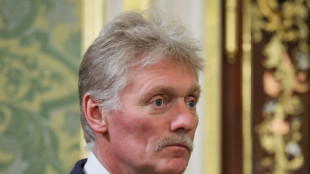 Kremlin says UK preventing peace by giving missile info to Ukraine

 Springboks change half-backs for second All Blacks Test

 Jurel hits 95 not out as India reach 475-8 at tea in Sri Lanka Test

 Ingebrigtsen buoyed by fourth in Diamond League comeback

 Kenyans get creative to join manga cosplay craze

 Pant, Jurel half-centuries take India past 400 in Sri Lanka Test

 Migrants, rescue ships face threats, harassment at sea: aid group

The Swiss National Bank cut interest rates on Thursday -- the first to do so among the major central banks, saying the battle against inflation was working almost two years after launching its monetary tightening campaign.
The SNB eased its monetary policy and cut its rate by 0.25 percentage points to 1.5 percent, effective from Friday, in its first interest rate cut since it began to hike them in June 2022.
In a busy week for central banks, the Federal Reserve on Wednesday held US interest rates steady, but left open the door to three interest rate cuts before the end of the year.
The Bank of England is widely expected to keep its main interest rate at a 16-year high of 5.25 percent on Thursday, rejecting a cut as inflation remains well above target despite recent slowing.
And the Norwegian central bank on Thursday kept its key interest rate unchanged at 4.5 percent but signalled it could start cutting later this year.
But the SNB changed its monetary policy for the first time since the rapid tightening initiated in 2022, in a move that surprised most analysts who were expecting the SNB to hold off until June -- when the Fed and European Central Bank are also expected to cut their rates.
SNB chief Thomas Jordan said the decision to cut now was not to move before other central banks, but because it was "the right time" for Switzerland.
"The easing of monetary policy has been made possible because the fight against inflation over the past two and a half years has been effective," the central bank said in a statement.
"For some months now, inflation has been back below two percent and thus in the range the SNB equates with price stability."
- Uncertain global outlook -
The SNB said that according to its forecasts, inflation in Switzerland was likely to remain within the current range over the next few years.
"With its decision, the SNB is taking into account the reduced inflationary pressure as well as the appreciation of the Swiss franc in real terms over the past year," it said.
"The policy rate cut also supports economic activity. Today's easing thus ensures that monetary conditions remain appropriate."
The SNB said inflation had declined further since the beginning of the year, and stood at 1.2 percent in February.
"This decrease was attributable to lower goods inflation. Inflation is currently being driven above all by higher prices for domestic services," the central bank said.
The SNB said global economic growth was likely to remain moderate in the coming quarters, while inflation was likely to decline further -- not least due to the restrictive monetary policy being upheld by many central banks.
But it warned that inflation could remain elevated for longer in some countries, while geopolitical tensions could increase.
"It therefore cannot be ruled out that global economic activity will be weaker than assumed," the central bank said.
"Our forecast for Switzerland, as for the global economy, is subject to significant uncertainty. The main risk is weaker economic activity abroad."
- Further cuts forecast -
Few economists expected the SNB to cut its key rate, giving a boost to industry which is suffering from the strength of the Swiss franc.
"With the bank sounding more dovish and inflation likely to undershoot its forecasts, we continue to expect two more rate cuts this year," said Europe economist Adrian Prettejohn of researchers Capital Economics.
"We forecast the SNB to cut rates at the September and December meetings taking the policy rate to one percent, where we think it will remain throughout 2025 and 2026."
The Swiss franc remains at a high level compared to the euro and the US dollar, even if it has lost some ballast since December.
Around 0920 GMT, the Swiss franc was down 0.98 percent against the dollar at 0.8957 Swiss francs per dollar.
The Swiss currency also fell back 0.75 percent against the euro, to 0.9759 Swiss francs per euro.
X.Brito--PC