'Punished for daring': Women journalists defied Allies to cover D-Day
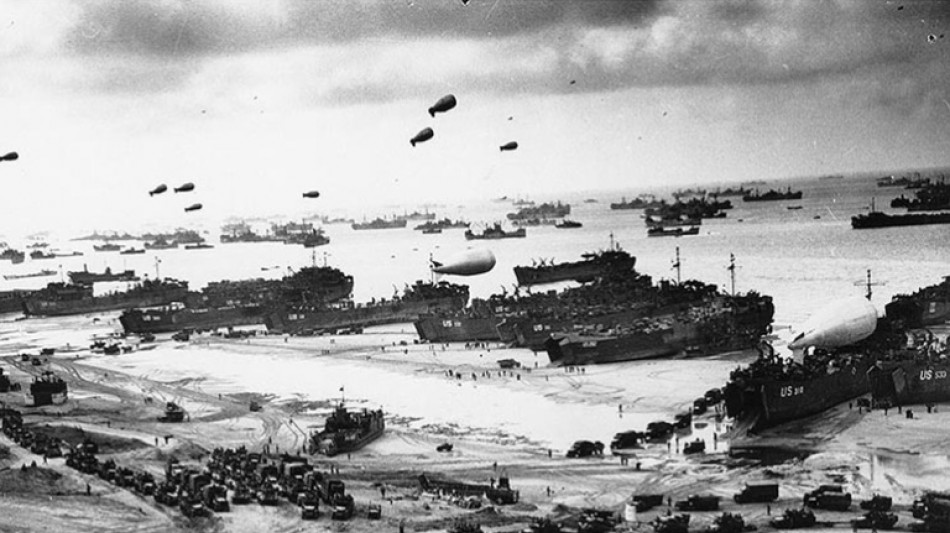
/ Photo: - - US National Archives/AFP/File

 Padikkal, Gill half-centuries take India to 187-3 at tea
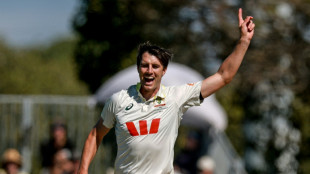 Cummins hails 'sharp' Australia as they get back to winning ways
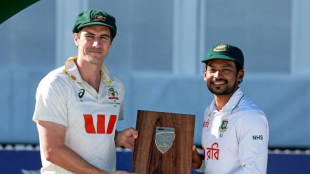 Bangladesh eye more Australia Tests to hit next level
 Thousands expected at Sweden climate demo as election looms
 Starc heroics put Australia on brink of victory over Bangladesh
 Austrian mountain town finds niche in AI boom
 Messi scores but Miami slump continues with loss to Toronto
 Sydney marathon unveils medal with wrong stadium
 Macron hosts Saudi's MBS for visit ranging from esports to Mideast

 Australia in control with 146-run first innings lead over Bangladesh
 World No. 3 Pegula beats defending champ Swiatek to reach Cincy final

 Wyndham Clark surges clear at BMW Championship
 Maresca says Man City must fill Rodri void after Barca switch
 Canada retaliates as trade war with US escalates
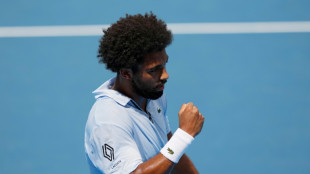 Fils dominates Cobolli to book Cincinnati final
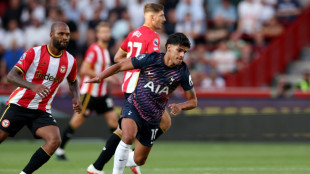 Spurs lacked fight in dismal defeat at Brentford says De Zerbi
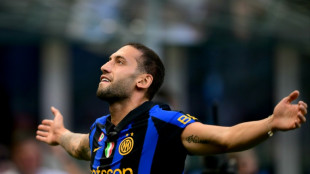 Inter thrash Monza to launch Serie A title defence
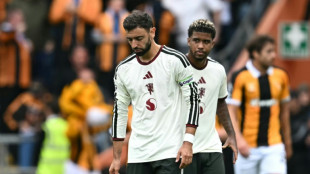
 Shambolic Spurs battered by Brentford
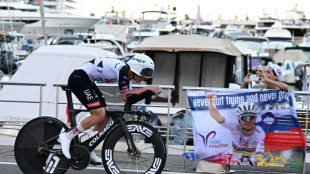 Pogacar wins Vuelta a Espana opening stage

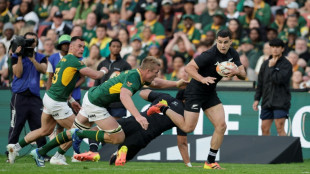
 Clinical New Zealand shock wasteful South Africa in first Test
 Canada hits back with new tariffs after trade talks with US fail
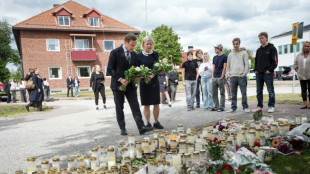 Swedish police identify 17-year-old girl as victim in school sword attack
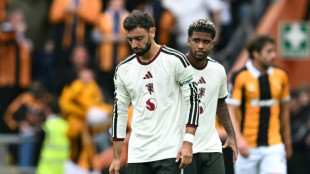 Carrick keeps calm despite Man Utd misery, Sage beaten in first game as Palace boss
 France to deliver interceptor missiles to Ukraine after new Russian strikes
 Serena Williams and Alcaraz unite in US Open mixed doubles
Eighty years ago, women reporters overcame restrictions barring them from the frontlines to cover the Allied landings in France but they have not enjoyed the acclaim enjoyed by their male counterparts.
On the morning of June 6, 1944, journalist Martha Gellhorn learned that the Allies had launched Operation Overlord, the largest seaborne invasion in history.
"I do not feel there is any need to beg as a favour for the right to serve as the eyes for millions of people in America," she had written to military authorities ahead of the landing.
But Allied forces forbade women reporters from the front lines, unlike their male colleagues, who were invited to join the troops.
To get around the ban, the US journalist slipped on board a hospital ship bound for Normandy "by pretending to be a Red Cross nurse", according to her biographer, Caroline Moorehead.
"Martha seems to have been the only woman journalist who got on the beaches of Normandy," said Moorehead.
Gellhorn later paid for her ingenuity when the Allied military authorities arrested her and forbade her from returning to Normandy.
-'Punished for daring'-
Women journalists faced the same threats as any reporter covering the war, but sexism made it even harder, said journalism historian Denis Ruellan.
"The army had a visceral fear that a woman journalist would die at the front, which would mean the men had failed to protect her," he said.
The military worried these same troops would be "disturbed" by the journalists, which amounted to "sexualising them", Ruellan added.
Correspondents like Gellhorn, Lee Carson, and Lee Miller "often had to disobey and fight" against the orders of generals and commanders just to do their job, he said.
Fellow American Lee Carson was "punished for daring" after she convinced a fighter pilot to fly her over the beaches of Normandy on D-Day, said Nancy Caldwell Sorel, author of The Women Who Wrote War.
"Sure, I knew it (was forbidden), but it was my job to get the news," said Carson, quoted by Sorel.
British Vogue photographer Lee Miller managed to take photos of the northwestern town of Saint-Malo right before Allied troops took the city from German hands in August 1944. The military punished her by placing her under house arrest.
"It was stupid. She was just doing her job," said her son, Antony Penrose.
"A man in her place would have been congratulated. Instead, she was punished."
-'I hated her'-
The military was not the only hurdle these correspondents had to overcome. Some male colleagues resented these women and even sabotaged their work.
Author Ernest Hemingway, married to Gellhorn, nearly prevented his wife from covering D-Day by requesting credentials from the magazine she worked for, Collier.
Media outlets could only have one accredited journalist on the front, so they chose the celebrated author, leaving Gellhorn to fend for herself.
But in the end, Gellhorn saw D-Day up close, unlike Hemingway, who saw the landings only from a distance.
Against the odds, women journalists managed to get scoops, enraging their male colleagues.
"I hated her," one rival of Iris Carpenter said.
Carpenter, a correspondent for several British news outlets, was in Normandy from June 10, 1944, and also covered the liberation of the Buchenwald and Dachau concentration camps the following year.
"She has made several scoops of real news that men missed," another rival complained.
But despite their accomplishments, "the names of these great journalists have been forgotten", said Ruellan.
At the war's end, male journalists "returned triumphant, with their careers skyrocketing", he said, while women were often reassigned to "less important tasks".
Some were "traumatised by what they had seen" and "left journalism to leave the war", the historian added.
But eighty years after the landing, at least one of these journalists is getting her long-overdue recognition.
A film about Lee Miller titled "Lee" and starring Kate Winslet is hitting big screens in September.
X.Brito--PC