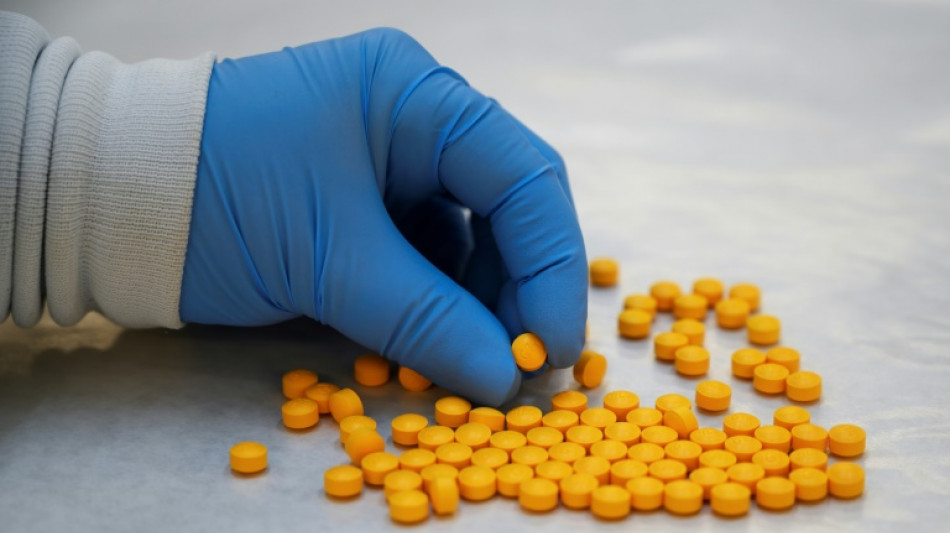
'Unnoticed, catastrophic': Rising opioid fears in Eastern Europe / Photo: Don EMMERT - AFP/File

 Swedish police identify 17-year-old girl as victim in school sword attack

 Carrick keeps calm despite Man Utd misery, Sage beaten in first game as Palace boss

 France to deliver interceptor missiles to Ukraine after new Russian strikes

 Serena Williams and Alcaraz unite in US Open mixed doubles

 Macron pledges air defence as 13 killed in Russia, Ukraine strikes

 DR Congo capital wary of Ebola nightmare

 Swedish police name 17-year-old girl as victim in school sword attack

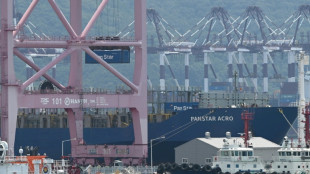 South Korea sends first container ship through Arctic route

 Trescothick eager to keep England job despite Hussey approach

 Indonesia deploys hundreds of soldiers to tackle Borneo fires

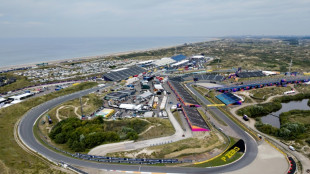 The last lap: Fans, drivers bid fond farewell to Dutch GP

 Silesia Diamond League: four events to watch

 Russell wins Dutch GP sprint race, Antonelli fourth

 Mercedes driver George Russell wins Dutch GP sprint race

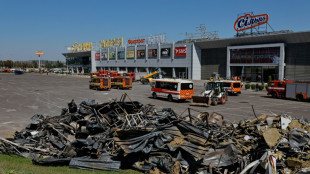 Ukraine strikes kill two children after Russia's deadly mall attack

 Pope visits San Marino, before addressing Italian political gathering

 Trump tariffs heap up as Canada tries to curb US reliance

 Australia lose three wickets after skittling Bangladesh for 64

 Bangladesh all out for 64 in 2nd Test after Starc masterclass

 Odyssey effect: stars sell Greece to a new wave of US tourists
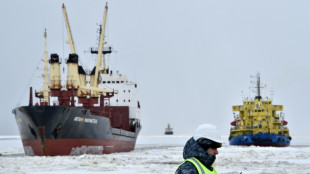
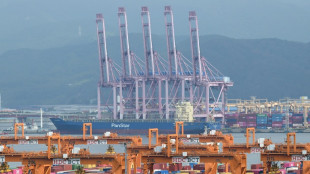 South Korea to send first container ship through Arctic route

 Starc takes 5-11 to leave Bangladesh reeling in 2nd Test

 Injured Rune withdraws from US Open

 Nakashima knocks out Fritz to reach Cincinnati semi-finals

 Ukraine says 'cynical' Russian strike on shopping centre killed 16

Eastern Europe, once seen as immune to the opioid crisis wreaking havoc across North America, has been ramping up its fight against the rise of the dangerous, synthetic drugs.
There have been dozens of deaths and many more arrests in Poland this year linked to synthetic drugs, including mephedrone -- an alternative to cocaine -- as well as fentanyl and nitazenes.
Poland's Central Investigation Bureau of Police has dismantled 33 illegal synthetic drug "factories" this year, according to its spokesman Krzysztof Wrzesniowski.
Two of them were exclusively producing mephedrone, used to replace cocaine at a cheaper cost.
Aside from causing problems in Poland, media reports found that such laboratories were also found to be exporting drugs throughout the European Union, including to the neighbouring Czech Republic and Slovakia.
"It is a constant race between criminals who produce these substances... and laboratories and the sanitary inspection," Poland's Chief Sanitary Inspector Pawel Grzesiowski said.
"They are constantly looking for new substances, new varieties."
- 'Crooked drug business' -
Zuromin, a town of about 9,000 people two hours north of Warsaw, has been named the region's unofficial fentanyl capital.
For some, it is reminiscent of small towns in the United States which were the first to fall victim to the country's opioid epidemic.
In June, local police seized a total of 300 patches of the drug, capable of intoxicating 4,800 people, and arrested four people suspected of involvement in the illegal fentanyl trade.
But for the town's residents, this is not a new problem.
"From the beginning, the problem seemed to me to be marginalised, unnoticed, catastrophic," Adam Ejnik, a teacher and journalist from Zuromin, told AFP.
As early as 2015, Zuromin's inhabitants appealed for help in an open letter published in the local newspaper.
"No city in Poland has such statistics," the letter read.
In response to growing concern, Poland's health ministry introduced a system for monitoring opioid prescriptions, building upon an existing policy to limit the amount of prescriptions by individual doctors.
Widespread fears prompted Prime Minister Donald Tusk to call a meeting with the attorney general, health minister and police chiefs.
"No one who is involved in this crooked drug business in Poland will remain safe," Tusk said in a statement on X.
- Replacing heroin -
Until recently, fentanyl constituted "a rather small problem for Europe", with one notable exception, Thomas Pietschmann, a senior research official at the United Nations Office on Drugs and Crime, told AFP.
"For a long time... Estonia was really the outlier in this story."
Issues with fentanyl in the Baltic country first began in 2001, owing to Taliban bans on heroin.
"In Estonia, instead of the heroin, people switched to fentanyl," Pietschmann said, adding that the drugs initially came from neighbouring Russia.
Since then, the use of synthetic opioids, including fentanyl, "is on the rise" in fellow Baltic state Lithuania, a spokesperson for the Lithuanian health ministry, Julijanas Galisanskis, told AFP.
Pietschmann, one of the main authors of the World Drug Report 2024, warned that the 95 percent reduction in Afghan opium production would "be felt on the market" and people will likely "switch to other opiates".
"The most problematic ones will be the fentanyls or the nitazenes."
Nitazenes -- "synthetic opioids which can be even more potent than fentanyl," according to the UN -- have also emerged in high-income countries, including Latvia, Estonia and France.
Nitazenes are "one of the main problems" on the drug market in Estonia, said Mikk Oja, a senior specialist at the country's National Institute for Health Development.
"The heroin shortage could bring a spike in synthetic opioids in other countries too, and with it likely a serious spike in overdose deaths," Oja added.
Experts warn that the potency of fentanyl, which is 50 times stronger than heroin and 100 times stronger than morphine, poses additional risks.
"The advantage of fentanyl as a highly efficient drug for cartels is obvious –- you don't have to transport dozens of tons, you can only transport dozens of kilos," the Czech government's director for anti-drug policy, Jindrich Voboril, told AFP.
"We have to be careful, because the problem may emerge quite fast."
E.Ramalho--PC