
-
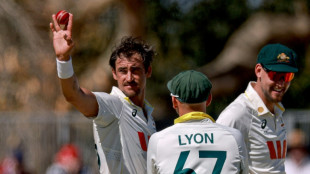 Bangladesh all out for 64 in 2nd Test after Starc masterclass
-
Sudan farms lie barren as El Nino leaves Nile banks dry

-
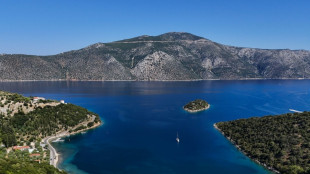 Odyssey effect: stars sell Greece to a new wave of US tourists
-
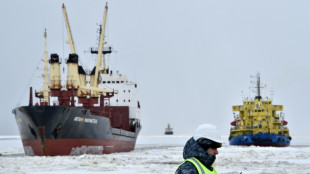
Arctic shipping a daunting prospect in hotly contested region
-
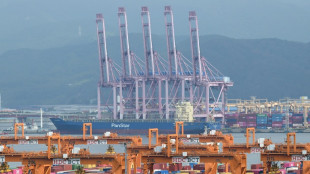 South Korea to send first container ship through Arctic route
-
In US, rare earths extracted from coal mine wastewater

-
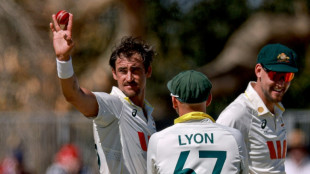 Starc takes 5-11 to leave Bangladesh reeling in 2nd Test
-
Nakashima pounds Fritz, Bejlek beats Keys in Cincinnati upsets
-
 Injured Rune withdraws from US Open
-
Canadian negotiator says 'more work to do' on US trade deal
-
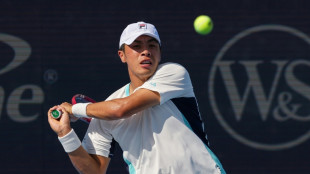 Nakashima knocks out Fritz to reach Cincinnati semi-finals
-
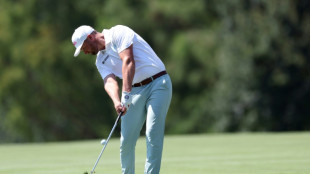
'Solid' Clark takes solo lead at BMW Championship
-
 Ukraine says 'cynical' Russian strike on shopping centre killed 16
-
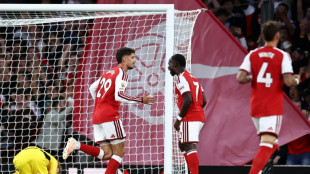
Arteta hails Arsenal's desire after perfect start to title defence
-
 TikTok to pay $400 mn settlement in US children's privacy case
-
Betis down Real Sociedad in La Liga opener

-
 MLS fines Messi for striking an opponent
-
Mexican governor resumes job despite US drug charges

-
 Gouiri double fires Marseille past Strasbourg in Ligue 1 opener
-
Arsenal rout Coventry to open Premier League season in style

-
 Mavericks buy out Thompson, now reportedly bound for Heat
-
Giant-killer Bejlek overhauls Keys to reach Cincinnati semi-finals
-
 England v Pakistan first Test: Three talking points
-
Man Utd agree deal for Brighton midfielder Baleba: reports
-
 US, Canada push to seal trade deal as deadline nears
-
Werro wins Lausanne 800m, well off world record pace

-
 One dead, three wounded after sword attack at Swedish high school
-
China mulls bid to host 2028 UN climate talks: sources
-
 Ukraine says 'cynical' Russian strike on shopping centre killed 15
-
Jones becomes third Englishman to join Inter this summer
-
 US Supreme Court allows White House ballroom construction for now
-
Mexican governor wanted on US drug charges returns to job

-
 Root hails emerging fast bowlers as England thrash Pakistan
-
Bolivia's Paz forced to fire economy minister in mid-crisis
-
 Brazil's Lula urges tariffs resolution in call with Trump
-
A-Rod ups T-Wolves stake in $4.5bn ownership change
-
 Ukraine says 'cynical' Russian strike on shopping centre killed 14
-
UK court orders Prince Harry, others to pay Daily Mail initial £9.5mn
-
 Heatwave-hit Europe logs over 30,000 excess summer deaths: first figures
-
'Grateful' ex-world champion Alaphilippe retires from cycling
-
 Give LIV Golf 'one more shot,' says DeChambeau
-
US, Canada work to wrap up trade deal ahead of looming deadline
-
 Duplantis hits the high notes for athletics anthem
-
Malaysia's JDT claim unbeaten run world record

-
 Malaysia's JDT claims unbeaten run world record
-
At least 2 teens seriously wounded in sword attack at Swedish school

-
 Bolivian economy minister fired after Congress vote
-
Popular forest near Paris to reopen after wildfire
-
 Russell roars to Dutch GP sprint pole, Antonelli fifth
-
UN holds second informal poll of secretary-general candidates
Big Pharma push back on first Medicare drug price cuts
Major pharmaceutical companies lashed out following a landmark deal unveiled Thursday to cut the costs of 10 key medicines, with some saying the price-setting process was not transparent.
Their statements came after US President Joe Biden and Vice President Kamala Harris announced a deal to lower costs of the first 10 drugs picked for Medicare price talks.
The agreement with drugmakers -- who said they came on board with negotiations as they had no choice -- is set to save seniors in the United States $1.5 billion in out-of-pocket costs.
It is the result of months of negotiations and is anticipated to save Medicare $6 billion in the first year alone, said Biden, referring to the federal health insurance for seniors.
While the announcement is a likely boon for Democratic presidential candidate Harris as she works on her economic messaging ahead of November's election, pharmaceutical companies have long resisted the cuts.
The US government is initially limited to picking 10 drugs for price talks and can expand the program in subsequent years.
- 'Not objective' -
The agreements come on the back of the Inflation Reduction Act (IRA), a major package of energy transition policy and social reforms.
This allowed Medicare to start negotiating drug costs for the first time in its nearly 60-year existence.
Novartis, whose heart failure treatment Entresto is among the 10 selected medicines, pushed back against the price-setting process as "not objective or transparent."
"Novartis believes the price-setting provisions in the IRA are unconstitutional and will have long-lasting and devastating consequences," the company added in a statement.
It said it agreed to a "maximum fair price" only to "avoid other untenable options including catastrophic fines or the removal of all our products from both Medicare and Medicaid."
For the 10 selected drugs, discounts from 2023 prices range from 38 percent to 79 percent. The new costs will take effect in 2026.
Besides Entresto, the drugs include Farxiga by AstraZeneca used against diabetes, as well as anticoagulant Eliquis -- used by millions of Medicare beneficiaries.
AstraZeneca said in a separate statement that it accepted the price, as "walking away is not an option."
If a manufacturer refused to accept the price, access for Medicare and Medicaid patients could be compromised, it said.
- Patient costs? -
Companies also warned that patients could still face higher costs and argued that the deal undervalued their products.
Bristol Myers Squibb (BMS), which is behind Eliquis, cautioned that "insurance plans and their pharmacy benefit managers are ultimately responsible for what patients will pay."
"The IRA does not protect patients from potential increases to their cost sharing or restrictions in access" to Eliquis once the maximum fair price goes into effect in 2026, the company added.
CFRA analyst Sel Hardy, however, noted that BMS management seemed confident it could navigate the impact of the IRA on Eliquis.
A Johnson & Johnson spokesperson called the law arbitrary and lacking in scientific approach.
This "undervalues the benefit our medicines deliver to millions of patients," J&J said.
- 'Historic milestone' -
US residents face the highest prescription drug prices globally, leaving many people to pay partially out of their own pockets despite already exorbitant insurance premiums.
The new deal was reached after Democrats pushed for the government to be able to negotiate prices directly with drug manufacturers for federal health programs.
The White House said the agreement for lower prices is a "historic milestone."
"The vice president and I are not backing down," Biden said in a Thursday statement.
His comments came ahead of a first joint public event with Harris since she replaced him as the Democratic candidate in the upcoming election.
"We will continue the fight to make sure all Americans can pay less for prescription drugs and to give more breathing room for American families," he said.
Rising costs of living are a key issue for the 2024 election.
Last October, drugmakers behind the selected medicines for serious illnesses grudgingly agreed to negotiate on cutting prices.
F.Carias--PC