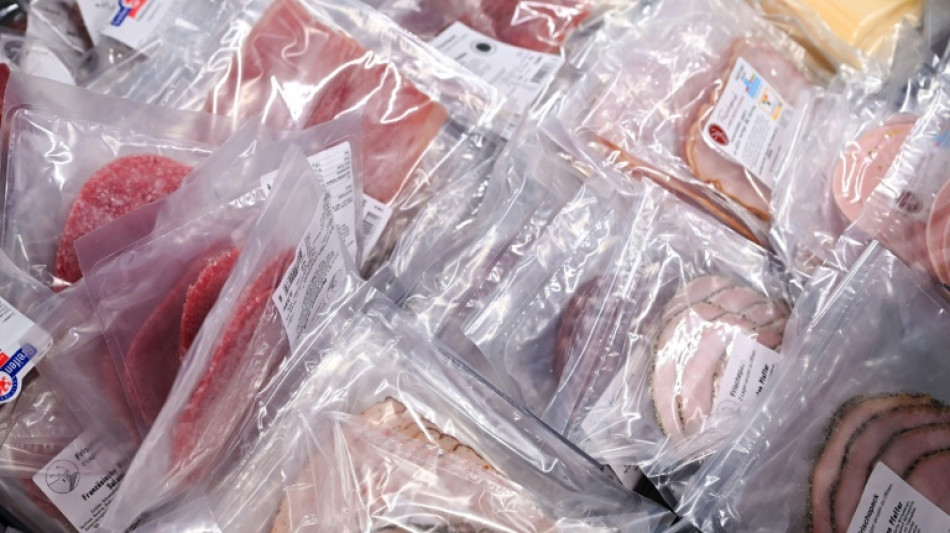
Plastics: navigating the maze of dizzying acronyms / Photo: Ina FASSBENDER - AFP

 Judge allows UK rugby brain injury court case to continue to trial

 Trump announces temporary tariff relief on ground beef imports

 Pope to visit San Marino, address Italian political event
 All Blacks just as good as Springboks, says captain Savea

 Romania holding suspected 'low-level agent' after pistols found near Berlin: Germany

 UK forecasts 'biggest' El Nino will smash records, spark hottest year

 Cyclist Alaphilippe attracts tributes as reports say he has quit

 Top-ranked An, holder Yamaguchi reach badminton worlds semi-finals

 Iran president says time to end war while in position of strength

 Antonelli fastest in sole Dutch GP practice session

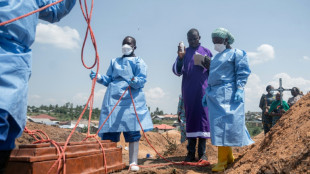 2,500 dead and rising -- UN says DR Congo Ebola outbreak 'growing exponentially'
 England all out for 409, lead Pakistan by 238 runs in 1st Test

 Premier League returns with Arsenal eyeing title dynasty

 Bayern knew about Musiala's condition 'a long time ago' says Kompany
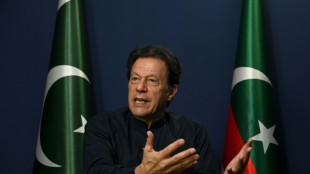 Ex-Pakistan PM Khan taken back to jail after hospital checks
 Real Madrid star players are compatible: Mourinho

 Drovix Launches In-House Multi-Asset Liquidity and Execution Stack for Sub-Millisecond Fills, Tighter Spreads
 'So bad it's good': rough animated film becomes surprise Chinese hit
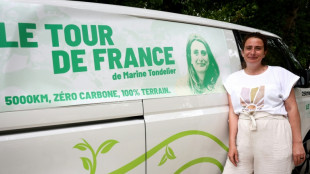 'I'll adapt': First pregnant candidate navigates French presidential race
 Hong Kong convicts Tiananmen vigil activists of inciting subversion

 The Hong Kong Tiananmen vigil activists convicted in national security trial

 Eel-powered Japan whizz-kid, 11, chases Asian Games history

 Asian markets extend rally as traders assess US Treasuries pledge

 Barcelona enter new era as Flick targets La Liga hat-trick

 Pogacar favourite for Vuelta with Grand Tour treble in sight

Plastics are all around us -- from food packaging and drinking bottles to the insulation in our homes.
They are mostly all derived from fossil fuels like oil and natural gas, but what are the key differences between each type of plastic?
Here is a brief guide to the most commonly used plastics and their acronyms, as classified by the Organisation for Economic Cooperation and Development (OECD).
- Three main families -
Thermoplastics are the most common plastics, because they are so malleable when heated, and can be remelted.
Elastomers, meanwhile, can be stretched to a great extent and then regain their original form.
And thermosets are resins that become irreversibly hard when heated.
Within each family, an infinite number of polymers are mixed with a wide range of additives that are sometimes harmful to the environment or health.
These additives can change the colour of plastics, prevent ageing, make them flexible, increase impact resistance, or reduce flammability.
- PP -
Polypropylene, or PP, is the most widespread plastic in the world (16 percent), developed in the mid-1950s and used for automobile parts and food packaging as well as disposable trays.
- HDPE and LDPE -
High and low density polyethylenes each represent 12 percent of global plastic use, according to the OECD.
HDPE, invented in 1933 by British engineers, is used for toys, shampoo bottles, pipes, engine oil cans and a variety of household objects.
LDPE, developed later in the 1950s, is widely used to manufacture flexible products such as reusable bags and food packaging film.
- PVC -
Polyvinyl chloride (PVC) is mainly used in construction for window frames, floor covering, pipes or cable insulation. It represents 11 percent of global plastic.
- PS -
Polystyrene (PS), invented in 1931 by IG Farben, represents five percent of the world's plastic and is mainly used for food packaging.
In its unexpanded form, it is used for yoghurt packaging or in construction.
Expanded, it is used to package fish or for insulation in construction.
- PET -
Also representing five percent of plastic worldwide, polyethylene terephthalate (PET) is the most widely used plastic for drink bottles in their transparent form (water, sodas) and sometimes opaque versions for products such as long-life milk.
- PUR -
Polyurethane (PUR), developed in 1937 by Otto Bayer, is used in insulation and mattresses and represents four percent of the world's plastic.
It is mainly used in refrigerator insulation, as padding foam in buildings, for adhesives, various coatings, shoe soles and in composite wood panels or surfboards.
- Other types -
In all, these represent 22 percent of all plastic and include ABS (acrylonitrile, butadiene, styrene) used for tires, PBT (polybutylene terephthalate), PC (polycarbonate), PTFE (polytetrafluoroethylene) and PMMA, another name for plexiglass.
- Bio-based plastics -
This group is made from biomass such as corn, sugar cane, wheat or other residues, and not from petroleum products.
Their production generates fewer greenhouse gas emissions than fossil-based plastics but while their volume is increasing, it isn't keeping pace with other types of plastic.
- Fibres -
Fibres made of different polymers are used in the textile industry and represent 13 percent of all plastics globally.
T.Batista--PC