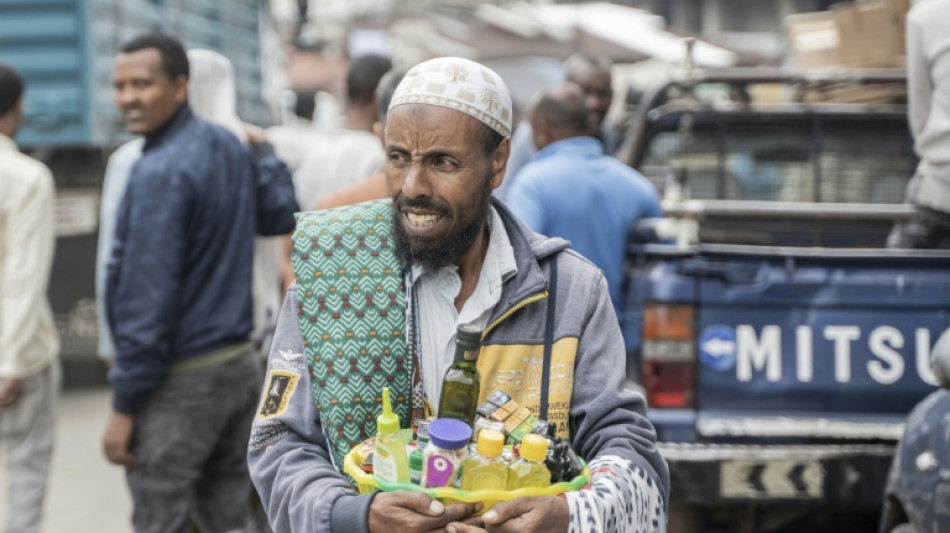
Ethiopians struggle with bitter pill of currency reform / Photo: Amanuel Sileshi - AFP

 STARTRADER Launches XAUUSD247, Extending Gold CFD Access Across the Full Week

 Spurs agree deal to sign Man City's Savinho: reports

 US-sanctioned ICC head warns against 'demise of international rule of law'
 Top India court orders new steps to protect threatened elephants

 Djibouti football federation accused of misusing funds

 Australia charges man with trying to pass Ukraine military intel to Russia

 Ex-Pakistan PM Khan taken back to jail after hospital checks: govt

 China, Indonesia hold talks on security, defence
 Train to nowhere? South Korea's lonely push for peace with the North

 Australia's Hussey mulls role with England for Ashes series

 Indian captain 'scapegoat' in Britain's Russia shadow fleet case, wife says
 Rosenior seeks to match Paris FC's capital ambition as Ligue 1 returns

 Inter set for Serie A title defence as Milan get Amorim reboot

 'Greatest' Springboks face All Blacks in clash of juggernauts

 William and Harry: Britain's warring royal brothers

 UN holds second informal poll for next leader
 In US mining hub, black lung rates soar

 Champions Arsenal embrace being 'hunted' as Premier League returns

 World No.2 Rybakina retires from Cincinnati clash with Swiatek

 'I heard you missed me': Melania Trump jokes about month out of spotlight

 Amazon Prime Video to invest $2 bn in Latin America productions

 Panama Canal to reduce shipping over El Nino-fueled drought

 Maradona trial on hold over possible medical evidence mix-up

 'Green dilemma': China's solar boom hurt birds, says study

 Pegula hangs on to dispatch Anisimova, reach Cincinnati semi-finals

In a small fashion store in Ethiopia's capital, Medanit Woldegebriel's dresses have almost doubled in price in the past two months, sending customers fleeing.
"Business is slow," admits a downhearted Woldegebriel, whose shop in the sprawling Merkato market of Addis Ababa imports clothes from Turkey and the United Arab Emirates.
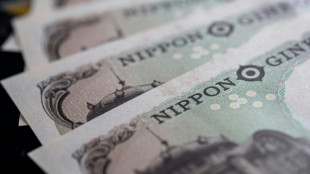
On July 30, Ethiopia took the painful decision to let its currency float freely against the dollar, and the birr lost a third of its value overnight.
The decline has continued since then -- it now takes 112 birr to buy $1, compared with 55 birr before the change.
The government had little choice. Its exports (primarily flowers, tea and coffee) brought in just $11 billion last year, compared to imports (food, machinery and fuel) that cost $23 billion.
On the eve of the currency reform, Ethiopia had only enough dollars to pay for two weeks of imports.
International investors had long argued that pegging the birr to the dollar was unsustainable.
A $3.4 billion aid programme from the IMF and $1.5 billion financing plan from the World Bank were held back until Ethiopia accepted the inevitable and liberalised the currency.
But for regular Ethiopians, a third of whom live below the poverty line of $2.15 a day, the impact has been tough.
Buying a few tomatoes and some school books for his children, one shopper in Merkato said prices were up by a third across the board.
"We have family who live abroad who can send us foreign currency," said Abrish, a civil servant whose name has been changed due to his concerns about criticising the government.
"Without it we could not survive."
- 'Hard to swallow' -
The country of 120 million was already suffering high inflation -- peaking at 30 percent in 2022 -- due to combined impact of the Covid-19 pandemic, the war in Ukraine, a severe drought and its own devastating conflict in the Tigray region.
Tewodros Makonnen Gebrewolde, an economist with the International Growth Center (IGC), admits "the pill is hard to swallow in the short term".
But he says it was the only option.
The reforms will make exports more competitive and include new rules that will give more businesses access to dollars, which were previously reserved for key strategic sectors.
The old restrictions meant many businesses were operating far below full capacity because they were unable to import raw materials and machinery.
"The authorities have promised better access to foreign currency for companies, which will allow them to increase their productivity and thus be able to produce more," said Gebrewolde.
Prime Minister Abiy Ahmed has called the reforms "critical to relieving (foreign currency) shortages, removing constraints to private sector investment and growth."
Closing the gap between the official dollar rate and the black market -- which was around double before the reform -- should also help undermine smugglers, bringing more trade back into official channels, said Gebrewolde.
But after years of economic problems and rising prices, shoppers like Abrish have lost faith.
"I don't see the situation improving," he said.
V.F.Barreira--PC