Denmark unmasks to 'live normally' again with Omicron

 Russian barrage on Kyiv kills 17 as Ukraine fails to down single missile
 'Lost': Migrants despair after Britain expels them back to France

 Cathay Pacific's profit soars 71% despite Iran war driving up fuel costs
 Russian barrage on Ukraine kills 15, wounds dozens more

 South Korea police raid Starbucks HQ over 'Tank Day' fiasco
 Tech back in fashion as Asian markets extend rebound

 Total eclipse gives scientists chance to probe Sun's mysteries

 What to know about the total solar eclipse on August 12

 'Like the end of the world': the eclipse chasers flocking to Spain

 Taiwan begins military drills as China pressure grows
 UK mansion where 'listeners' spied on Nazi generals becomes museum

 Sabalenka tops Uchijima in WTA Toronto opener
 Kgatlana strikes as South Africa reach WAFCON quarter-finals

 Pakistan close on series-levelling win against West Indies

 Paramount CEO says politics fueling Warner Bros. merger battle

 Trump's sale of access to Truth Social raises eyebrows

 SpaceX rocket stage expected to slam into Moon

 US hopeful Hormuz strait deal will be done 'today or tomorrow'

 Michigan primary puts Democratic divide on the ballot

 South Africa captain Kolisi to make Test return in Argentina

 Cuba's famed resilience comes at a growing mental cost

 Swiss Reusser wins Tour de France Femmes time-trial

 Hundreds flee homes after Guatemala's Fuego volcano erupts

 Thousands pay tribute to Italian football legend Baresi

 Oil drops, stocks hit records on hopes of Hormuz opening

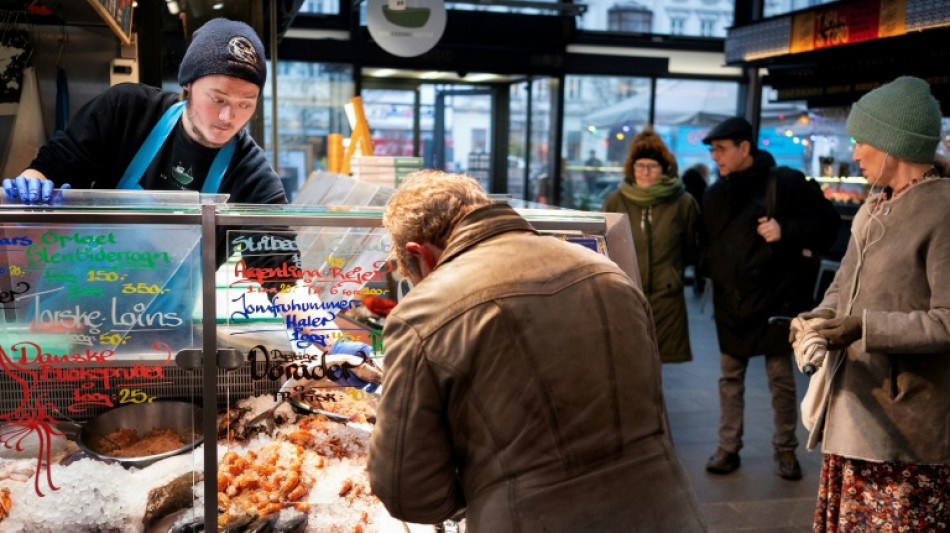
Denmark waved goodbye to facemasks and health passes on Tuesday as it became the first European Union country to lift all of its domestic Covid curbs despite record numbers of cases of the milder Omicron variant.
Only a few restrictions remain in place at the country's borders, for unvaccinated travellers arriving from non-Schengen countries.
After a first attempt at lifting restrictions between September and November, the Scandinavian country once again ditched its Covid checks and limited opening hours for bars and restaurants.
"For me, the best part is that we don't need to wear masks anymore. At least now we have a choice, if we want to protect ourselves or we want to feel free," Natalia Chechetkina, a receptionist in Copenhagen, told AFP.
Marie Touflet, a 23-year-old French student in the capital, said it was "pretty strange to take the metro without a mask, compared to France".
"It's really nice to be able to see people's faces and it feels like we're living normally again."
The easing comes as Denmark registers around 40,000-50,000 new Covid cases a day, or almost one percent of the country's 5.8 million inhabitants.
Health officials believe those figures will soon start going down.
"There are strong indications that the infection has peaked in the areas where it has been most pronounced," Tyra Krause of Denmark's public health and research institution SSI told news agency Ritzau.
"So it's super good timing for the restrictions to be eased," she added.
More than 60 percent of Danes have received a third dose of a Covid-19 vaccine -- one month ahead of health authorities' schedule -- compared to an EU average of just under 45 percent.
Including those who have recently had Covid, health authorities estimate that 80 percent of the population is protected against severe forms of the disease.
"With Omicron not being a severe disease for the vaccinated, we believe it is reasonable to lift restrictions", epidemiologist Lone Simonsen of the University of Roskilde told AFP.
Two years after the outbreak of Covid-19, the Danish strategy enjoys broad support at home.
In a poll published Monday by daily Politiken, 64 percent of Danes surveyed said they had faith in the government's Covid policy, while the lifting of restrictions also has widespread support in parliament.
- Personal responsibility -
Going forward, Danes are being urged to exercise personal responsibility.
"Without a Covid pass there will be a shift of responsibility," Simonsen said.
Danes have increasingly used home tests to detect infection, but these are now being phased out and instead, anyone with symptoms is advised to stay home.
The Danish Health Authority currently "recommends" those who test positive to isolate for four days, while contact cases no longer need to quarantine.
Facemasks and the Covid pass are also recommended for hospital visits.
One of the rare critics of the decision to lift restrictions was the country's Gout Association.
"We think it's important to continue using masks as long as the infection is spreading widely", association director Mette Bryde Lind told Ritzau.
The government said it does not expect to have to revert to new closures again but has remained cautious.
"We can't provide any guarantees when it comes to biology", Prime Minister Mette Frederiksen said last week when announcing the country's return "to life as we knew it before corona".
"It's really nice that this is ending but will we really live without any restrictions now? I doubt it," said Cille Hjort, a fast-food vendor.
This is the second time Denmark has tried to return to a pre-pandemic lifestyle.
On September 10, the country lifted all its restrictions before reintroducing some of them in early November.
Museums, cinemas and theatre and concert venues then closed just before Christmas, and reopened again in early January.
Faced with a lower level of hospitalisations than in previous waves, several European countries, including France, Ireland and the United Kingdom, have announced the lifting or a considerable reduction of their restrictions, despite record or very high cases.
"Two years into the pandemic, populations in most countries have reached high levels of immunity, from vaccines or natural illness", Simonsen said.
"This is how it ends, judging from what we have seen with historical pandemics".
According to the World Health Organization, 73 percent of the European population has contracted Covid-19 at least once since January 2020.
M.A.Vaz--PC