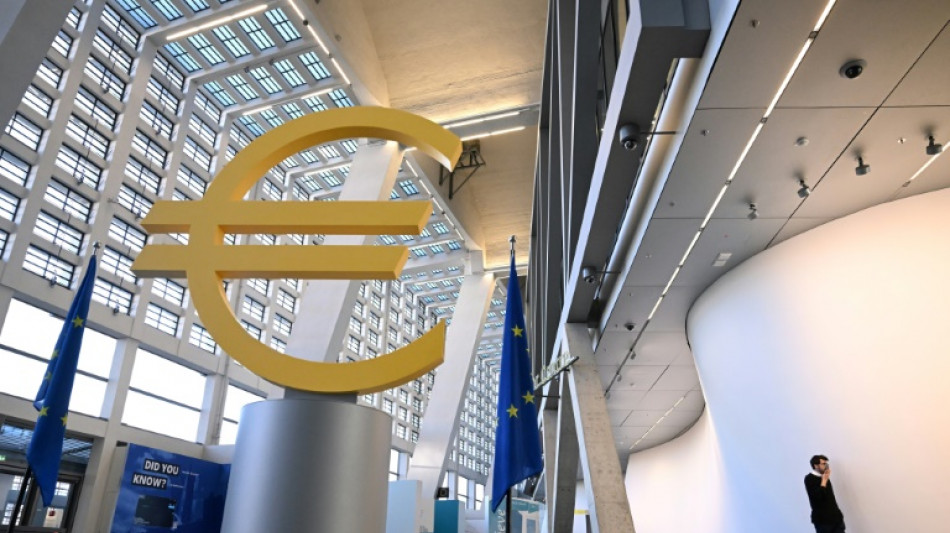
ECB pushes back against calls for looser bank rules / Photo: Kirill KUDRYAVTSEV - AFP

 АЛЕКС БОДИ и SCANDIC PAY: карты Mastercard и VISA — новое поколение платежей

 ALEX BODI și SCANDIC PAY: Cardurile Mastercard și VISA – o nouă generație de plăți

 John Park’s Agency Takes Legal Action Over Unauthorized 'McDonald’s Order Rap' Distribution

 Best Pet Advent Calendars for Christmas 2026: Dog Treats and Cat Toys

 Grattan Institute Releases Blueprint to Target Specialists Over Excessive Fees

 Arizona Science Center Hosts Girls in STEM Astro Adventures for Students

 New Turkish Cafe, Japanese BBQ, and Korean Restaurants Open Across East Bay

 Knowle Move Four Points Clear at Top After Histon Victory
The European Central Bank has pushed back against calls to loosen rules for eurozone banks despite fears they could fall behind US rivals if President Donald Trump implements major deregulation.
Patrick Montagner, one of the ECB's banking regulators, told AFP in an interview that financial watchdogs "must always take a prudent approach to banking".
"The banking sector can, by its very nature, cause a lot of instability," said Montagner, whose watchdog oversees more than 100 of the euro area's biggest lenders, from Deutsche Bank to BNP Paribas and UniCredit.
Trump's return to the White House has fuelled expectations among major US banks of lighter regulation, and he is seen as likely to scale back the confrontational approach of Joe Biden's administration.
Changes are already afoot. Last week Trump tapped Michelle Bowman to be the Federal Reserve's top banking regulator, choosing a vocal critic of efforts to impose tougher rules in response to the 2007-2009 global financial crisis.
Such moves in the world's top economy will likely fuel calls for deregulation from European lenders, who had already been complaining frequently that stricter rules were undermining their ability to compete with US peers.
But Montagner said that if calls for "simplification" of regulations effectively meant "removing certain rules to the detriment of the resilience of the banking system, this does not align with our approach".
The member of the ECB's Supervisory Board pointed to the "massive cycle of deregulation" from the late 1990s to the mid-2000s, which ultimately triggered the "global shock" of the financial crisis.
The crisis began with a collapse of the US housing market, followed by the failure of banks and other businesses, and ultimately a major global downturn that the world economy took years to recover from.
- Banking rules stall -
Still, Montagner conceded it was ultimately not his call to set rules for the eurozone banking system -- that is up to European lawmakers.
There have been other warning signs about overly loose regulation in recent times, he said, pointing to the failure of US lender Silicon Valley Bank in 2023, which sent shock waves through the banking system.
"Regional banks were plunged into a severe crisis, with federal intervention required to stop it," he noted.
But his comments come at a time efforts to implement tougher global banking rules -- the so-called Basel III agreement, which came in response to the financial crisis -- already appeared to be stalling.
The US Federal Reserve has watered down its plans to implement the regulations after heavy pressure from the financial sector.
The European Commission, the EU's executive arm, has also delayed bringing in the rules until at least 2026 while the Bank of England has postponed them to the start of 2027.
The commission, under pressure to boost the eurozone's sluggish growth, is set to publish a report next year on the banking system in the single market, including on its competitiveness.
Montagner said the ECB was ready to contribute, while stressing financial sector regulations were not behind the euro area's economic woes.
"Economic forecasts have deteriorated recently owing to the prospect of a trade war and other geopolitical factors -- but not because of excessive banking regulation," he said.
M.Carneiro--PC