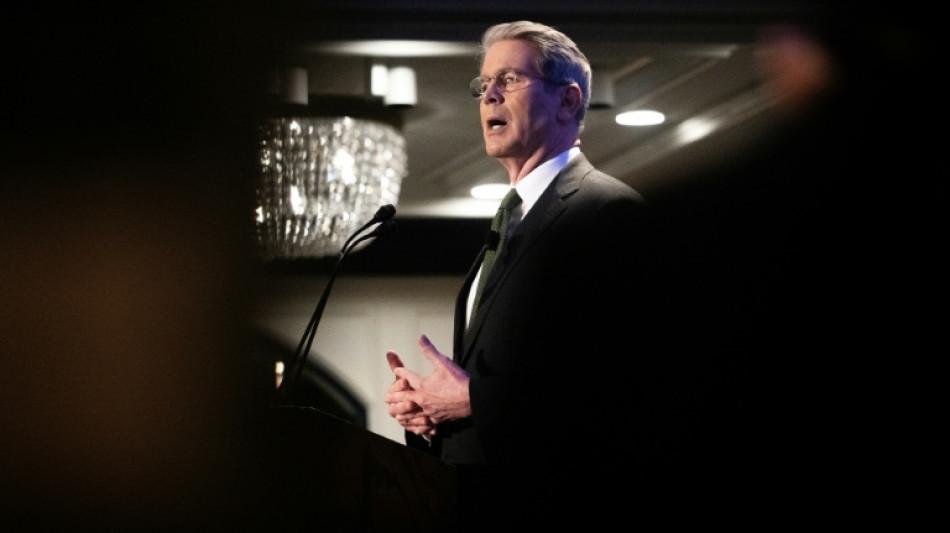
Bessent says 'no currency targets' in Japan tariff talks / Photo: Jim WATSON - AFP

 Search Underway for 'Dooars Rani' Tigress After Second Escape from Buxa Tiger Reserve

 IIM Indore Announces IPMAT 2027 Exam Date for April 24

 The Dilemma of Recording Live Music: Preserving Memories vs. Being Present

 ANC’s Renewal Rhetoric Fades as Voters Reject Party in 2026 Local Elections

 Foreign Investors Return to Indian Markets After 10-Month Selloff

 Honda CR-V and Toyota RAV4 Lead Canada’s Most Stolen Vehicles List for 2025
US Treasury Secretary Scott Bessent said Wednesday that Washington has "no currency targets" in its talks with Japan on tariffs, after repeated calls from President Donald Trump for a stronger yen.
Japanese media reported meanwhile that a second round of talks in Washington was set for May 1, which will be closely watched as a barometer for efforts by other countries seeking tariff relief.
Bessent said Washington is looking at "tariffs, non-tariff trade barriers, currency manipulation and government subsidy of labor and fixed capital investment" in the negotiations with Japan.
But he added that there were "absolutely no currency targets."
Japanese Finance Minister Katsunobu Kato said he was ready for "close consultations about exchange rates" with Bessent when they meet Thursday on the sidelines of an IMF gathering in Washington, Japanese media reported.
A weak yen makes Japanese exports relatively cheaper, while a strong dollar means that US exports are less competitive.
The yen rose significantly since Trump's tariffs were announced -- it was trading at 158 for a dollar in mid-January.
The close US ally and world's number four economy is subject to the same 10 percent baseline tariffs that have been imposed on most countries, plus steeper levies on cars, steel and aluminum.
Trump also imposed "reciprocal" tariffs on Japan of 24 percent, but those have been paused for 90 days along with those on other countries except China.
Japan's envoy Ryosei Akazawa met Trump and other senior US officials last week, and Japanese media reported Thursday that he will return for another round on May 1.
Japanese broadcaster NHK on Thursday quoted unnamed sources as saying that US negotiators have said Washington cannot make exceptions for Japan.
Other media reports have suggested that Tokyo is eyeing concessions such as increasing imports into Japan of US rice and soybeans as well as easing auto safety rules.
E.Borba--PC


