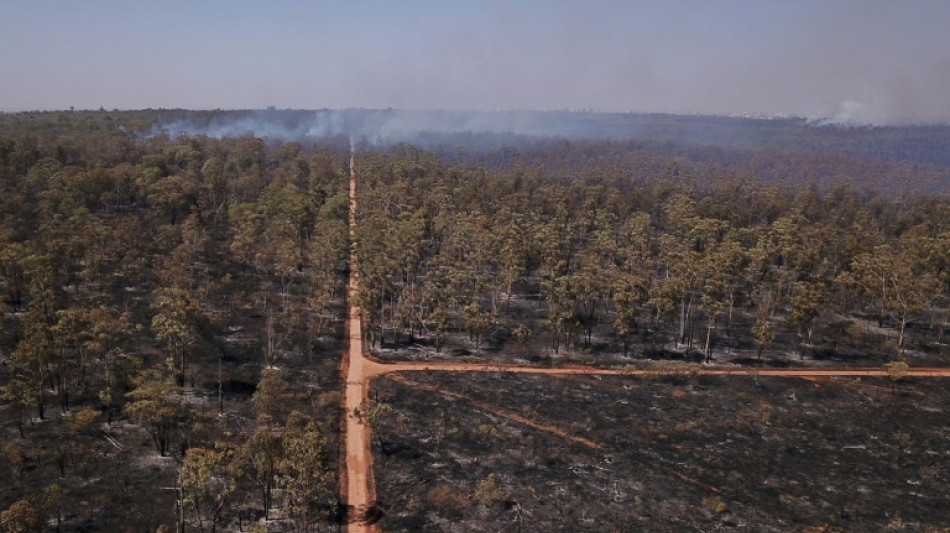
Countries could use forests to 'mask' needed emission cuts: report / Photo: Sergio Lima - AFP/File

 Mehidy half-century steers Bangladesh to 228-run lead in Australia Test

 Japan defence minister visits war shrine, PM stays away
 Viennese woman sues city over 'discriminatory' toilet fees
 Venezuelan amputees adjust to new life after quakes
 Venezuela frees 131 prisoners amid post-Maduro transition talks

 Arteta tells Arsenal fans not to fret over his future
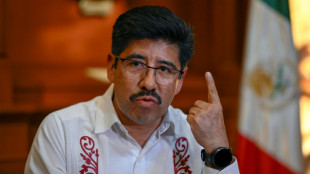 Mexico's Indigenous chief justice hits back at discrimination

 Werro wins 800m race for the ages, Warholm and Tamberi hit four

 Jimenez rescues dramatic Wolves draw in Championship opener
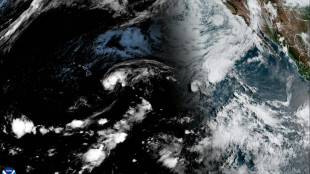
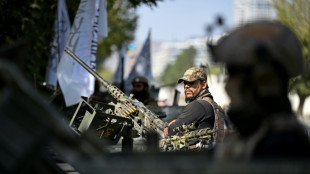 Taliban govt to mark five years ruling Afghanistan

 Stocks slip in cautious trading after weak US retail sales data
 Gramercy Networks Announces New Global Ultra-Low Latency Financial Network Connecting Major Trading Hubs

 NFL bans Falcons defender Pearce eight games for domestic violence

 US says 19 million recalled eggs pose deadly risk

 Former Cincinnati contenders suffer contrasting first-round fates
 Argentina's Romero confirms Tottenham exit as Atletico move looms

 Homeless, jobless: Colombia quake survivors 'left with nothing'

 Cubans find rest on rooftops as blackouts drive them from home

 World champ McIntosh crashes out of Pan Pacs 400m free
 T'Wolves set Garnett celebration for Celtics clash
 Popovici nails freestyle double with third men's European 200m gold
 Premier League club Liverpool sell minority stake to Jeff Bezos consortium

 Italian police recover stolen Renoir, Cezanne and Matisse works

 Stocks slip in cautious trading, oil turns higher
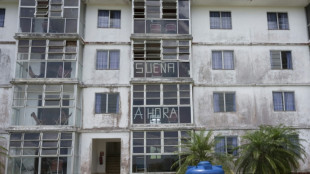
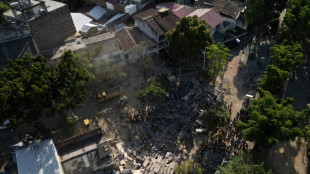 Colombia quake survivor faces life without triplet sisters

Major economies are overstating how much carbon their forests can absorb in a climate accounting fudge that could allow them to use even more fossil fuels, new research said Thursday.
The assessment singled out Brazil and Australia, and warned a lack of rules around accounting for forests and other land-based carbon sinks meant countries could "game the system" when reporting their national greenhouse gas emissions.
Scientists are still unclear about how carbon sinks might behave as the planet warms in future, and exactly how much heat-trapping carbon dioxide they might soak up from the atmosphere.
But that has not stopped countries from making their own assumptions and using those numbers in their national climate plans, which are due to be finalised to 2035 before the next UN climate talks in Brazil in November.
Climate Analytics, a policy institute that independently assesses these plans, said overly optimistic assumptions about how much CO2 forests might draw down was "masking the scale and pace of the fossil fuel emissions cuts needed".
This concealed the true effort needed to limit global warming to 1.5 degrees Celsius above pre-industrial levels, the ambition set out in the 2015 Paris climate agreement.
In the latest versions of its climate plan, Australia had leaned so heavily on forests to reduce its carbon footprint that it would amount to scaling back real cuts to emissions by 10 percent, Climate Analytics said.
Brazil, meanwhile, has announced its own pledge to cut emissions by 59 to 67 percent below 2005 levels by 2035, but has not defined the extent to which forests will help meet this goal.
Climate Analytics said structuring the target in this manner meant Brazil could still allow its energy emissions to double.
"If you don't use forests, then everything has to be done by the energy sector," said Claudio Forner, who co-authored the new research by Climate Analytics.
"But if you use all forests, then the emissions actually can continue growing."
He said the problem had arisen because the Paris climate deal allowed for countries to come up with their own assumptions about how much CO2 would be absorbed by their land.
"Without rules, countries just game the system," Forner told AFP.
- Assuming growth -
While forests will be crucial to global efforts to reduce planet-heating emissions, these estimates should be listed separately and not used to "offset" energy and industry emissions, he said.
That is because the complex processes by which forests and other land sinks absorb carbon are not as well understood as the role of fossil fuels in driving climate change.
Carbon stored in trees can also be released back into the atmosphere in the event of forest fires and other natural mechanisms.
There are also concerns that climate change and other human-driven factors are weakening the ability of forests and soils to soak up carbon.
"Science doesn't understand how the carbon sink is going to be behaving into the future," said Forner.
"And if scientists don't, I'm sure that most governments don't either, but they still just use assumptions of continuing growth to their numbers. If those assumptions are wrong, then you have this deficit."
Climate Analytics has previously estimated this uncertainty could amount to up to three billion tonnes of carbon dioxide -- roughly equivalent to Europe's emissions for a year.
UN climate experts have also raised broad concerns about a "significant discrepancy" between the way countries account for land in their climate plans and the methods used by scientists, which they said could be equal to around 15 percent of global emissions.
In a report last year, they said efforts to realign different accounting systems for land use CO2 emissions and removal would mean the world has less time than previously thought to reach net-zero emissions.
L.E.Campos--PC