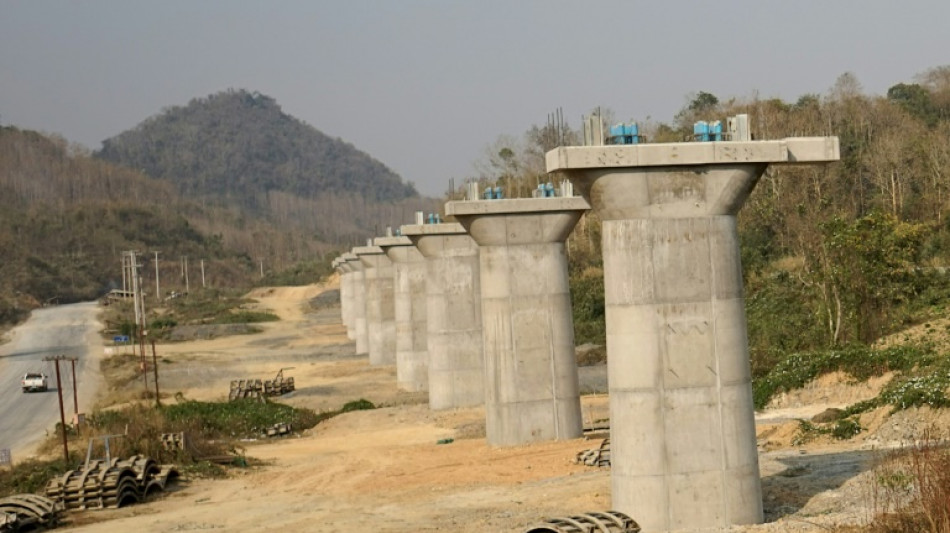
Developing nations face 'tidal wave' of China debt: report / Photo: Aidan JONES - AFP/File

 Search Underway for 'Dooars Rani' Tigress After Second Escape from Buxa Tiger Reserve

 IIM Indore Announces IPMAT 2027 Exam Date for April 24

 The Dilemma of Recording Live Music: Preserving Memories vs. Being Present

 ANC’s Renewal Rhetoric Fades as Voters Reject Party in 2026 Local Elections

 Foreign Investors Return to Indian Markets After 10-Month Selloff

 Honda CR-V and Toyota RAV4 Lead Canada’s Most Stolen Vehicles List for 2025

The world's poorest nations face a "tidal wave of debt" as repayments to China hit record highs in 2025, an Australian think tank warned Tuesday in a new report.
China's Belt and Road Initiative lending spree of the 2010s has paid for shipping ports, railways, roads and more from the deserts of Africa to the tropical South Pacific.
But new lending is drying up, according to Australia's Lowy Institute, and is now outweighed by the debts that developing countries must pay back.
"Developing countries are grappling with a tidal wave of debt repayments and interest costs to China," researcher Riley Duke said.
"Now, and for the rest of this decade, China will be more debt collector than banker to the developing world."
The Lowy Institute sifted through World Bank data to calculate developing nations' repayment obligations.
It found that the poorest 75 countries were set to make "record high debt repayments" to China in 2025 of a combined US$22 billion.
"As a result, China's net lending position has shifted rapidly," Duke said.
"Moving from being a net provider of financing -- where it lent more than it received in repayments -- to a net drain, with repayments now exceeding loan disbursements."
Paying off debts was starting to jeopardise spending on hospitals, schools, and climate change, the Lowy report found.
"Pressure from Chinese state lending, along with surging repayments to a range of international private creditors, is putting enormous financial strain on developing economies."
The report also raised questions about whether China could seek to parlay these debts for "geopolitical leverage", especially after the United States slashed foreign aid.
While Chinese lending was falling almost across the board, the report said there were two areas that seemed to be bucking the trend.
The first was in nations such as Honduras and Solomon Islands, which received massive new loans after switching diplomatic recognition from Taiwan to China.
The other was in countries such as Indonesia or Brazil, where China has signed new loan deals to secure battery metals or other critical minerals.
G.M.Castelo--PC


