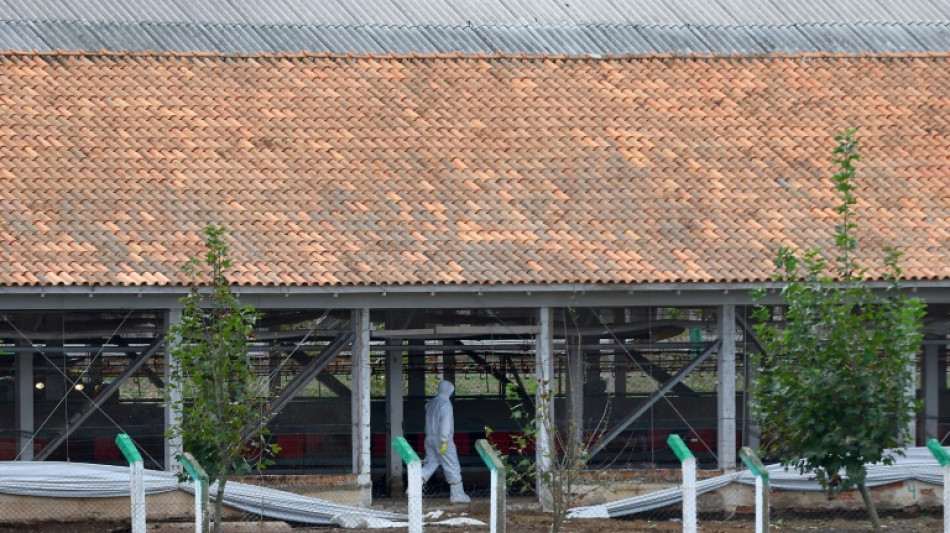
Brazil says free of bird flu, will resume poultry exports / Photo: SILVIO AVILA - AFP/File

 Search Underway for 'Dooars Rani' Tigress After Second Escape from Buxa Tiger Reserve

 IIM Indore Announces IPMAT 2027 Exam Date for April 24

 The Dilemma of Recording Live Music: Preserving Memories vs. Being Present

 ANC’s Renewal Rhetoric Fades as Voters Reject Party in 2026 Local Elections

 Foreign Investors Return to Indian Markets After 10-Month Selloff

 Honda CR-V and Toyota RAV4 Lead Canada’s Most Stolen Vehicles List for 2025

 China Extends Tariff Suspension on US Imports to Stabilize Trade Ties
Brazil said Wednesday it was free of bird flu, paving the way for it to resume chicken exports to China and 20 other countries after a month-long suspension.
The world's top exporter of chicken meat was forced to halt exports to its main client China, the European Union and fellow Latin American countries over an outbreak of "highly pathogenic avian influenza" (HPAI) on a farm in the southern state of Rio Grande do Sul.
A case was also later confirmed at Brasilia's zoo, where a pigeon and a duck were found dead, but it did not lead to new restrictions on the poultry industry as it involved wild birds.
On Wednesday, the government said it had informed the World Organisation for Animal Health that the 28-day quarantine period without any new cases being detected had passed.
"The country is declaring itself free of highly pathogenic avian influenza," the agriculture ministry said in a statement.
Agriculture Minister Carlos Favaro announced a "gradual resumption" of poultry exports.
Avian flu has spread globally in recent years, leading to mass culling of poultry, some human deaths, and rising egg prices.
Infections in humans can cause severe disease with a high mortality rate, according to the World Health Organization, but the virus does not appear to move easily from person to person.
Human cases detected so far were mostly in people who had close contact with infected birds and other animals, or contaminated environments.
A.Magalhes--PC

