
AI-powered 'nudify' apps fuel deadly wave of digital blackmail / Photo: Stefani REYNOLDS - AFP

 Arteta coy over Lewis-Skelly's Arsenal future after 'emotional' celebration

 Romania shuts down nuclear plant as Danube drops

 German steel giant Thyssenkrupp weighs options as Rhine drops

 US ambassador denounces settler siege as Israel dispatches troops

 Hasan takes 6-55 as Bangladesh claim opening day of Australia Test

 Taiwan says AI agents used in cyberattacks targeting island

 Japan protests Putin's first visit to disputed islands

 Kiss wants fit-again Wallabies playmaker Gordon to 'open up' Japan

 British eccentrics push humble garden shed to new heights

 Zambia votes with president's economic record on the line

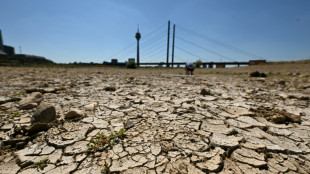 Germany's dry rivers spark battle on engineering vs restoration

 Senators demand inquiry into conditions aboard USS Abraham Lincoln

 All Blacks' Proctor out of South Africa series, Mo'unga called up

 Bangladesh quick Hasan reduces Australia to 74-4 at lunch

 Seoul tech leads Asian stock gains as traders cheer US inflation

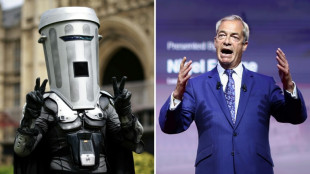 Farage and Count Binface go head-to-head in snap UK poll
 Afghan students divided over smartphone ban at universities

 Japan go back to school for second Australia Test

 Matthew McConaughey on his sweet return to the big screen

 President's economic record on the line as Zambia votes

 U.S. Polo Assn. Takes No. 1 Spot for All Sports Brands and Climbs to No. 22 Overall on License Global's 2026 'Top Global Licensors' Ranking

 Trump 'low-key' bets on economic pressure against Iran

 Pitch invaders take selfies with Fernandes during Man Utd friendly

 No-stress Sabalenka won't fret over lackluster 2026 results

 Hometown hero Hudson-Smith basks in Euro glory

After a Kentucky teenager died by suicide this year, his parents discovered he had received threatening texts demanding $3,000 to suppress an AI-generated nude image of him.
The tragedy underscores how so-called sextortion scams targeting children are growing around the world, particularly with the rapid proliferation of "nudify" apps -- AI tools that digitally strip off clothing or generate sexualized imagery.
Elijah Heacock, 16, was just one of thousands of American minors targeted by such digital blackmail, which has spurred calls for more action from tech platforms and regulators.
His parents told US media that the text messages ordered him to pay up or an apparently AI-generated nude photo would be sent to his family and friends.
"The people that are after our children are well organized," John Burnett, the boy's father, said in a CBS News interview.
"They are well financed, and they are relentless. They don't need the photos to be real, they can generate whatever they want, and then they use it to blackmail the child."
US investigators were looking into the case, which comes as nudify apps -- which rose to prominence targeting celebrities -- are being increasingly weaponized against children.
The FBI has reported a "horrific increase" in sextortion cases targeting US minors, with victims typically males between the ages of 14 and 17. The threat has led to an "alarming number of suicides," the agency warned.
- Instruments of abuse -
In a recent survey, Thorn, a non-profit focused on preventing online child exploitation, found that six percent of American teens have been a direct victim of deepfake nudes.
"Reports of fakes and deepfakes -- many of which are generated using these 'nudifying' services -- seem to be closely linked with reports of financial sextortion, or blackmail with sexually explicit images," the British watchdog Internet Watch Foundation (IWF) said in a report last year.
"Perpetrators no longer need to source intimate images from children because images that are convincing enough to be harmful -- maybe even as harmful as real images in some cases -- can be produced using generative AI."
The IWF identified one "pedophile guide" developed by predators that explicitly encouraged perpetrators to use nudifying tools to generate material to blackmail children. The author of the guide claimed to have successfully blackmailed some 13-year-old girls.
The tools are a lucrative business.
A new analysis of 85 websites selling nudify services found they may be collectively worth up to $36 million a year.
The analysis from Indicator, a US publication investigating digital deception, estimates that 18 of the sites made between $2.6 million and $18.4 million over the six months to May.
Most of the sites rely on tech infrastructure from Google, Amazon, and Cloudflare to operate, and remain profitable despite crackdowns by platforms and regulators, Indicator said.
- 'Whack-a-mole' -
The proliferation of AI tools has led to new forms of abuse impacting children, including pornography scandals at universities and schools worldwide, where teenagers created sexualized images of their own classmates.
A recent Save the Children survey found that one in five young people in Spain have been victims of deepfake nudes, with those images shared online without their consent.
Earlier this year, Spanish prosecutors said they were investigating three minors in the town of Puertollano for allegedly targeting their classmates and teachers with AI-generated pornographic content and distributing it in their school.
In the United Kingdom, the government this year made creating sexually explicit deepfakes a criminal offense, with perpetrators facing up to two years in jail.
And in May, US President Donald Trump signed the bipartisan "Take It Down Act," which criminalizes the non-consensual publication of intimate images, while also mandating their removal from online platforms.
Meta also recently announced it was filing a lawsuit against a Hong Kong company behind a nudify app called Crush AI, which it said repeatedly circumvented the tech giant's rules to post ads on its platforms.
But despite such measures, researchers say AI nudifying sites remain resilient.
"To date, the fight against AI nudifiers has been a game of whack-a-mole," Indicator said, calling the apps and sites "persistent and malicious adversaries."
burs-ac/des
X.M.Francisco--PC