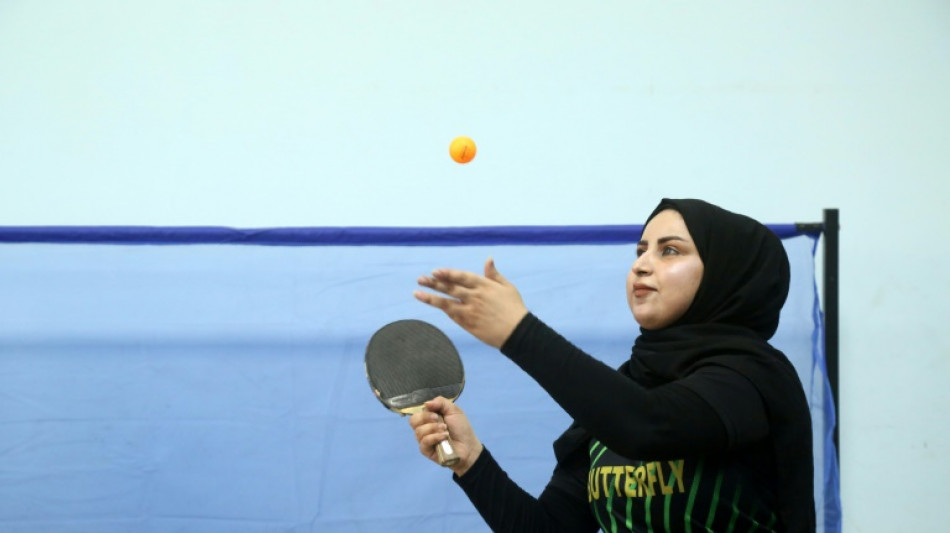
Iraqi women table tennis players chase Paralympic dreams / Photo: Hayder INDHAR - AFP

 Best Pet Advent Calendars for Christmas 2026: Dog Treats and Cat Toys

 Grattan Institute Releases Blueprint to Target Specialists Over Excessive Fees

 Arizona Science Center Hosts Girls in STEM Astro Adventures for Students

 New Turkish Cafe, Japanese BBQ, and Korean Restaurants Open Across East Bay

 Knowle Move Four Points Clear at Top After Histon Victory

 Physicians Urge Arizona to Ban Medical Gag Clauses and Enable Private Lawsuits

 New Campaign Highlights Knowledge Gaps on Carbon Monoxide Safety Among Americans

Iraqi table tennis player Nur al-Huda Sarmad adjusts her wheelchair before striking the ball into play, braving sweltering heat, social stigma and inadequate facilities as she dreams of taking her team to the Paralympics.
Sarmad and seven other Iraqi women who live with disabilities train three times a week at a community centre in the southern city of Diwaniyah, preparing for an upcoming tournament that could qualify them for the national Paralympic team.
The facilities, however, are far from Olympic-standard.
"The tennis tables are broken, there are power outages and we even have to buy our own paddles," said Sarmad, 25.
With no dedicated training facility, the team often has to share the three second-hand tables at the public community centre with visitors.
In the scorching Iraqi summer they cannot turn on the fans, which would disrupt the movement of the balls.
And the air conditioner that could provide some relief remains off-limits in a country grappling with chronic power cuts, especially in summer when temperatures approach 50C. The community centre is powered by a generator, but it can barely sustain the essentials.
These practical issues "affect our training" and hinder the players' progress, Sarmad said.
The team also faces obstacles in the form of insufficient government funding for sports, and conservative views on women's rights and people with disabilities.
Paralympic champion Najlah Imad, the first Iraqi to snare a gold medal in table tennis, told AFP that "despite the difficult circumstances, nothing is impossible".
Imad, who now relies on sponsorship deals, encouraged her fellow players to keep fighting.
"You can do anything," she said.
- No support -
Sarmad, who has already won several medals including bronze in a tournament in Thailand, takes pride in the fact that despite the many challenges, "we overcame all this, we became players".
The state-owned community centre provides the team a stipend equivalent to $75 a month to cover transportation costs, but the players had to purchase their professional paddles, at a cost of $200, out of their own pockets.
The players often have to rely on taxis to travel to training sessions and back, but "sometimes cabs refuse to take disabled people", said Sarmad.
Coach Mohammed Riyad, 43, said that table tennis "has developed in Diwaniyah solely through personal efforts... due to the lack of support from the state".
Riyad, a member of the Iraqi Paralympic Committee, said that funding sports was not a priority in a country where decades of conflicts, neglect and endemic corruption have devastated infrastructure.
Through the Paralympic Committee, he has managed to acquire old equipment for Sarmad and her fellow players.
He said that "the state only focuses on football, despite the achievements of table tennis players" like Imad, who brought home the Paralympic gold from the 2024 Paris Games.
Iraq has a long tradition of women's sports, with teams competing in regional football, weightlifting and boxing tournaments.
But there is also vocal opposition seeking to exclude women and bar mixed-gender events.
In southern Iraq, a largely conservative area where Sarmad's team is based, organisers of a marathon last year had made it a men-only event after a social media controversy over women's participation in sports.
Iraqis living with disabilities often face additional challenges amid a general lack of awareness about their rights and inclusion.
For award-winning table tennis player Iman Hamza, 24, society mistakenly sees women with disabilities like her "as helpless people who cannot do anything".
"But we became world champions."
Ferreira--PC

