
-
 Venezuela govt, opposition wrap up round of post-Maduro talks
-
Matthew McConaughey on his sweet return to the big screen

-
 Five things to know about Zambia as it goes to the polls
-
President's economic record on the line as Zambia votes
-
 Nakashima holds off Jodar to book first ATP Masters final in Montreal
-
Grieving Messi available for Miami in Leagues Cup clash

-
 Trump 'low-key' bets on economic pressure against Iran
-
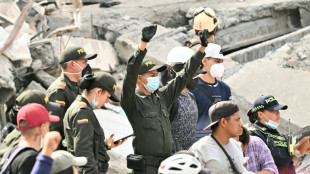
Colombia enters 'final phase' of quake search as toll hits 265
-
 Pitch invaders take selfies with Fernandes during Man Utd friendly
-
Father-figure Christie helps guide Kounta to European silver
-
 No-stress Sabalenka won't fret over lackluster 2026 results
-
McIlroy returns to St. Jude to launch marathon PGA playoff push
-
 Hometown hero Hudson-Smith basks in Euro glory
-
Guimaraes makes Arsenal debut in Como friendly
-
 PSG down Aston Villa to retain UEFA Super Cup
-
Travis Kelce says wedding to Taylor Swift was 'best night of my life'
-
 Trump's spokesperson Karoline Leavitt to step down
-
US stocks mostly up after data shows slightly lower inflation in July
-
 'Imposing ignorance': US climate science under siege
-
Caracas protest denounces secrecy of Venezuela transition talks
-
 As millions gazed in awe, a swathe of Spain plunged into darkness
-
Hudson-Smith regains Euro 400m title on home track

-
 Xavi named first foreign Netherlands coach since 1978
-
Rob Reiner son denies grand jury murder charges

-
 NBA triple-double king Westbrook to retire after 18 seasons
-
Spain darkens as solar eclipses races south from Arctic
-
 'Trying to bury the science': US climate research under siege
-
Skies darken as solar eclipse heads south from Arctic to Spain
-
 Eurovision to bar countries at war from hosting
-
Protest denounces secrecy of Venezuela transition talks
-
 Italian teenager Curtis breaks 50m backstroke world record at Europeans
-
NBA's Los Angeles Lakers to be sold for reported $12.5 bn

-
 New mum Sjostrom wins 50m butterfly for 18th European gold
-
Lukaku joins Turkish side Fenerbahce from Napoli
-
 Solar eclipse darkens Arctic Russia on course for Spain
-
Colombia quake rescue efforts enter 'final phase' as toll hits 239
-
 Russian economy rebounds in second quarter despite Ukrainian strikes
-
Brazil orders suspension of Discord livestreams after teen suicide

-
 NBA's Los Angeles Lakers to be sold for $12.5 bn: ESPN
-
Tourists rush to Mount Etna as Italian volcano erupts

-
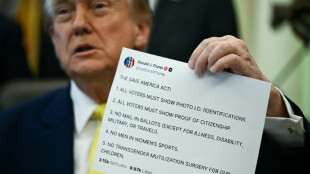 Trump sued over sale of access to Truth Social posts
-
Knot and Venmo Team Up to Make Venmo the Effortless Way to Pay

-
 Europe looks to the skies as solar eclipse cast its shadow
-
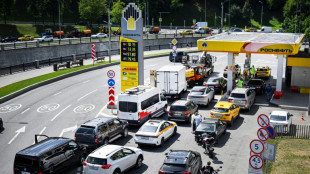
In Moscow, Russians worry about new fuel shortages
-
 At least 44 drown after ferry overturns on Zimbabwe's Lake Kariba
-
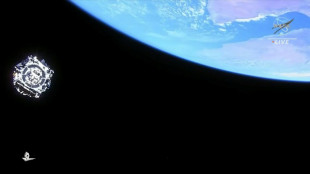
New space object 'black hole star' discovered by astronomers
-
 Grieving Argentine icon Messi unsure about playing on 'much longer'
-
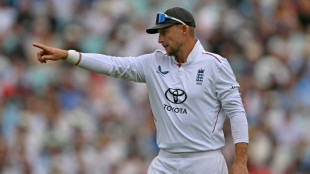
England captain Root tells players to be 'adults' as he ditches curfew
-
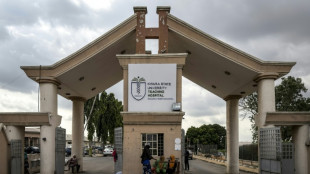 Nigeria kidnap victims escape 'hellfire' captivity beaten, malnourished
-
US inflation slows slightly in July despite elevated fuel prices
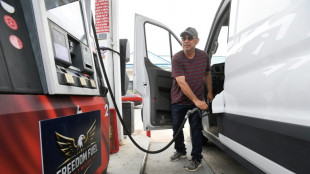
US, China extend tariff truce for 90 days
China and the United States delayed higher tariffs on each other's imports for 90 days, hours before a trade truce between the world's two largest economies was due to expire Tuesday.
US President Donald Trump signed an executive order on Monday that will "extend the Tariff Suspension on China for another 90 days," according to a post on his Truth Social platform.
The White House said its halt on steeper tariffs will be in place until November 10.
China also said it would continue suspending its earlier tariff hike for 90 days, starting August 12, while retaining a 10-percent duty, according to a joint statement.
While the United States and China slapped escalating tariffs on each other's products this year, bringing them to prohibitive triple-digit levels and snarling trade, both countries in May agreed to temporarily lower them.
As part of their truce that month, fresh US tariffs targeting China were reduced to 30 percent and the corresponding level from China was cut to 10 percent.
Those rates will now hold until November -- or whenever a deal is cut before then.
In the executive order posted Monday to its website, the White House reiterated its position that there are "large and persistent annual US goods trade deficits" and they "constitute an unusual and extraordinary threat to the national security and economy of the United States."
The order acknowledged Washington's ongoing discussions with Beijing "to address the lack of trade reciprocity in our economic relationship" and noted that China has continued to "take significant steps toward remedying" the US complaints.
Beijing, meanwhile, said it would "take or maintain necessary measures to suspend or remove non-tariff countermeasures against the United States," as agreed in Geneva in May.
- Trump-Xi summit? -
In Shanghai, China's commercial capital, residents welcomed the extended trade truce on Tuesday.
"I feel that negotiations will definitely steer the two countries toward a better direction," said Zhang Xuan, a 25-year-old postgraduate student.
Lin Peng, a commercial property leasing agent, told AFP he felt there would be more negotiations between the two nations as Trump is a "businessman" and an escalated trade war would "hurt his own interests too."
"Beijing will be happy to keep the US-China negotiation going, but it is unlikely to make concessions," warned William Yang, an analyst at the International Crisis Group.
He believes China sees its leverage over rare earth exports as strong, and that Beijing will likely use it to pressure Washington.
US-China Business Council president Sean Stein said the extension was "critical to give the two governments time to negotiate an agreement," providing much-needed certainty for companies to make plans.
Since Trump took office in January, China's tariffs have essentially boomeranged, from the initially modest 10 percent hike in February, followed by repeated surges as Beijing and Washington clashed, until it hit a high of 145 percent in April.
Now the tariff has been pulled back to 30 percent, a negotiated truce rate.
A trade deal would "pave the way for a Trump-Xi summit this fall," said Asia Society Policy Institute senior vice president Wendy Cutler.
But Cutler, herself a former US trade official, said: "This will be far from a walk in the park."
Even as both countries reached a pact to cool tensions after high level talks in Geneva in May, the de-escalation has been shaky.
Key economic officials convened in London in June as disagreements emerged and US officials accused their counterparts of violating the pact. Policymakers met again in Stockholm last month.
- 'Reciprocal' tariffs -
Trump said in a social media post Sunday that he hoped China will "quickly quadruple its soybean orders," adding this would be a way to balance trade with the United States.
China's exports reached record highs in 2024, and Beijing reported that their exports exceeded expectations in June, climbing 5.8 percent year-on-year, as the world's number-two economy works to sustain growth.
Since returning to the presidency, Trump has separately slapped a 10 percent "reciprocal" tariff on almost all trading partners, aimed at addressing trade practices Washington has deemed unfair.
This surged to varying steeper levels last Thursday for dozens of economies.
Major partners like the European Union, Japan and South Korea now see a 15 percent US duty on many products, while the level went as high as 41 percent for Syria.
The "reciprocal" tariffs exclude sectors that have been targeted individually, such as steel and aluminum, and those that are being investigated like pharmaceuticals and semiconductors.
E.Borba--PC