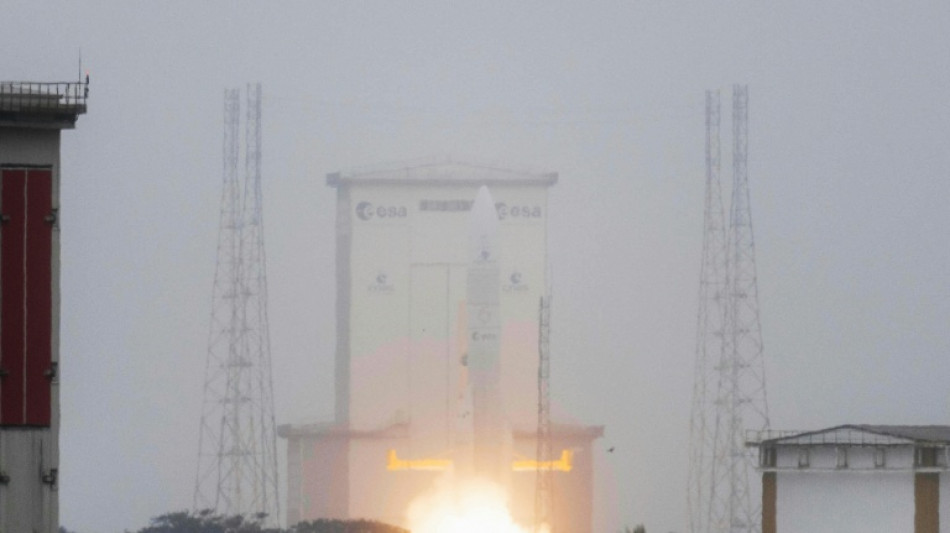
European satellite to step up monitoring of extreme weather / Photo: Ronan LIETAR - AFP/File

 Best Pet Advent Calendars for Christmas 2026: Dog Treats and Cat Toys

 Grattan Institute Releases Blueprint to Target Specialists Over Excessive Fees

 Arizona Science Center Hosts Girls in STEM Astro Adventures for Students

 New Turkish Cafe, Japanese BBQ, and Korean Restaurants Open Across East Bay

 Knowle Move Four Points Clear at Top After Histon Victory

 Physicians Urge Arizona to Ban Medical Gag Clauses and Enable Private Lawsuits

 New Campaign Highlights Knowledge Gaps on Carbon Monoxide Safety Among Americans

The Ariane 6 rocket on Wednesday blasted off carrying Europe's next generation satellite for warning against extreme weather events.
As many European countries simmer in a deadly heatwave, the European Organisation for the Exploitation of Meteorological Satellites (EUMETSAT) said its MetOp-SGA1 satellite will give "earlier warnings to help protect lives and property from extreme weather".
"Metop-SGA1 observations will help meteorologists improve short- and medium-term weather models that can save lives by enabling early warnings of storms, heatwaves, and other disasters, and help farmers to protect crops, grid operators to manage energy supply, and pilots and sailors to navigate safely," the agency added.
The rocket carrying the four-tonne satellite took off from France's Kourou space base in French Guyana. MetOp-SGA1 was to be put into an 800 kilometre (500 mile) high orbit.
It will be Europe's first contribution to a US-led programme, the Joint Polar System, putting up satellites orbiting between the north and south poles.
The six monitoring instruments on the satellite are twice as precise as the agency's existing satellite, IASI. It will monitor ocean and land temperatures, water vapour and greenhouse gases in the atmosphere, the amount of desert dust and cloud cover.
"Extreme weather has cost Europe hundreds of billions euros and tens of thousands of lives over the past 40 years -- storms like Boris, Daniel and Hans, record heatwaves and fierce wildfires are just the latest reminders," said Phil Evans, EUMETSAT director-general.
"The launch of Metop-SGA1 is a major step forward in giving national weather services in our member states sharper tools to save lives, protect property, and build resilience against the climate crisis."
The liftoff was the third by Ariane 6 since its inaugural flight in July last year.
The Ariane company said that it had 32 launches planned from Kourou in coming years and that it was aiming to carry out nine or 10 launches each year.
E.Ramalho--PC

