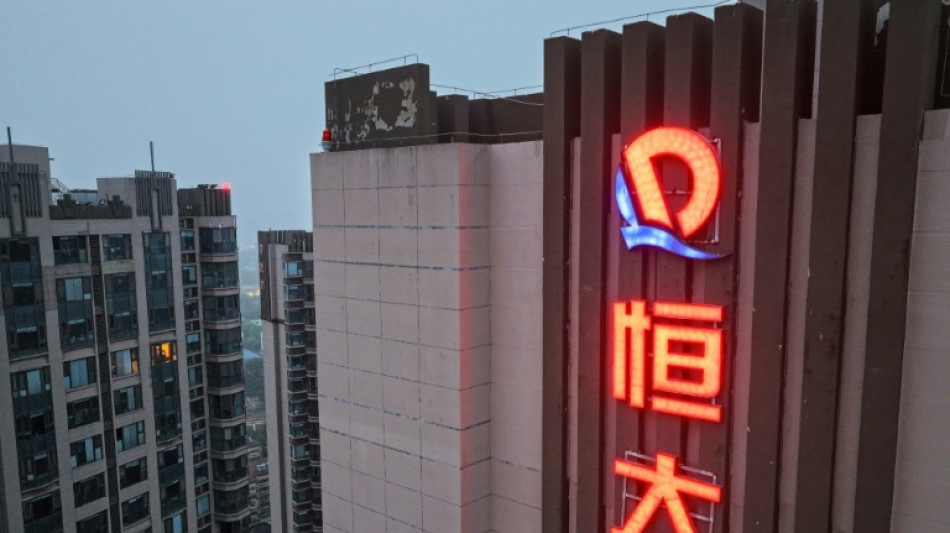
China Evergrande Group delisted from Hong Kong stock exchange / Photo: STR - AFP/File

 Best Pet Advent Calendars for Christmas 2026: Dog Treats and Cat Toys

 Grattan Institute Releases Blueprint to Target Specialists Over Excessive Fees

 Arizona Science Center Hosts Girls in STEM Astro Adventures for Students

 New Turkish Cafe, Japanese BBQ, and Korean Restaurants Open Across East Bay

 Knowle Move Four Points Clear at Top After Histon Victory

 Physicians Urge Arizona to Ban Medical Gag Clauses and Enable Private Lawsuits

 New Campaign Highlights Knowledge Gaps on Carbon Monoxide Safety Among Americans

Shares in heavily indebted China Evergrande Group were taken off the Hong Kong Stock Exchange on Monday, capping a grim reversal of fortune for the once-booming property developer.
A committee at the bourse had decided earlier this month to cancel Evergrande's listing after it failed to meet a July deadline to resume trading -- suspended since early last year.
The delisting on Monday marks the latest milestone for a firm whose painful downward spiral has become symbolic of China's long-standing property sector woes.
Once the country's biggest real estate firm, Evergrande was worth more than $50 billion at its peak and helped propel China's rapid economic growth in recent decades.
But it defaulted in 2021 after years of struggling to repay creditors.
A Hong Kong court issued a winding-up order for Evergrande in January 2024, ruling that the company had failed to come up with a suitable debt repayment plan.
Liquidators have made moves to recover creditors' investments, including filing a lawsuit against PwC and its mainland Chinese arm for their role in auditing the debt-ridden developer.
The firm's debt load is bigger than the previously estimated amount of $27.5 billion, according to a filing earlier this month attributed to liquidators Edward Middleton and Tiffany Wong.
The statement added that China Evergrande Group was a holding company and that liquidators had assumed control of more than 100 companies within the group.
Evergrande's saga -- and similar issues faced by other property giants including Country Garden and Vanke -- have been closely followed by observers assessing the health of the world's second-largest economy.
After a decades-long construction boom fuelled by rapid urbanisation, China's property sector began to show worrying signs in 2020, when Beijing announced new rules to limit excessive borrowing.
With Evergrande's default the following year and other complications across the industry continuing, a return to the boom years has proven elusive for policymakers.
The crisis has also dampened consumer sentiment at a time when economists argue that China must shift towards a new growth model driven more by domestic spending rather than investment.
New home prices in a grouping of 70 Chinese cities continued to drop in July, official data showed earlier this month.
F.Cardoso--PC

