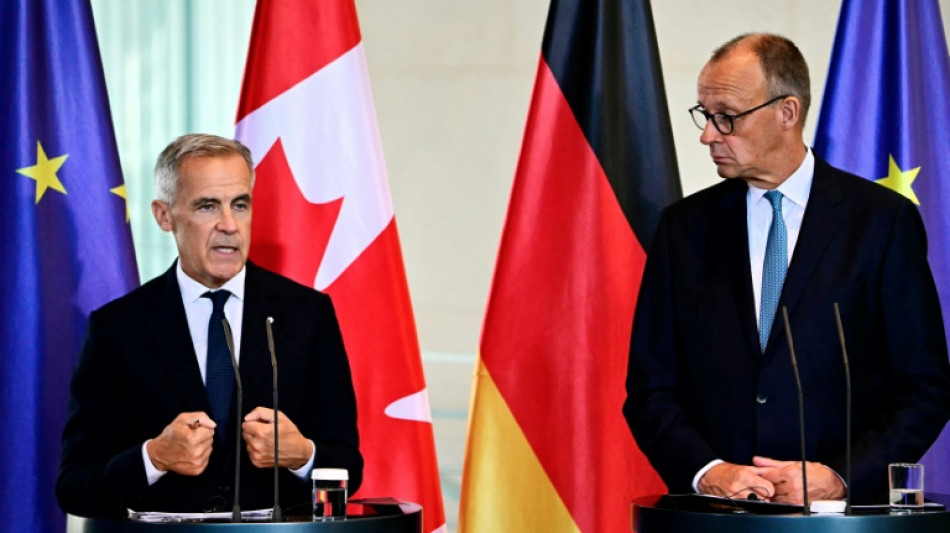
Germany, Canada to cooperate on key raw materials / Photo: Tobias SCHWARZ - AFP

 Best Pet Advent Calendars for Christmas 2026: Dog Treats and Cat Toys

 Grattan Institute Releases Blueprint to Target Specialists Over Excessive Fees

 Arizona Science Center Hosts Girls in STEM Astro Adventures for Students

 New Turkish Cafe, Japanese BBQ, and Korean Restaurants Open Across East Bay

 Knowle Move Four Points Clear at Top After Histon Victory

 Physicians Urge Arizona to Ban Medical Gag Clauses and Enable Private Lawsuits

 New Campaign Highlights Knowledge Gaps on Carbon Monoxide Safety Among Americans

Germany and Canada will sign an agreement Tuesday on boosting cooperation in the field of critical raw materials, Chancellor Friedrich Merz said, as they seek to reduce heavy dependence on China.
China's dominance in supplying the world with such materials has been in the spotlight since Beijing this year introduced export curbs on some key rare earths, triggering jitters among businesses globally.
Rare earths are used in a wide variety of products from electric car batteries to wind turbines and computer hard drives.
At a press conference in Berlin alongside Canadian Prime Minister Mark Carney, Merz said that Canadian and German ministers would sign a memorandum of understanding on raw materials.
"This is a collaboration that I very much welcome and that we support," the German leader said. "It is a positive step towards strengthening our economies and making them more secure."
Carney said a range of factors -- from global trade volatility to the Ukraine war and coronavirus pandemic -- had exposed the vulnerabilities of critical mineral supply chains.
"Germany has been amongst the leaders in beginning that diversification away from China... Canada can play a role in accelerating that diversification for Germany and for Europe," he said.
"These issues are only going to become more important."
The leaders did not immediately reveal details of the agreement, which are expected to be released later.
News outlet Politico reported that the agreement will have five main objectives, with a focus on technologies related to raw material processing, refining and recycling.
The effort will include materials ranging from rare earths to lithium and copper, which Canada can provide and that Germany is interested in, it said.
The countries will also both aim to participate more in international initiatives on raw materials.
Nogueira--PC

