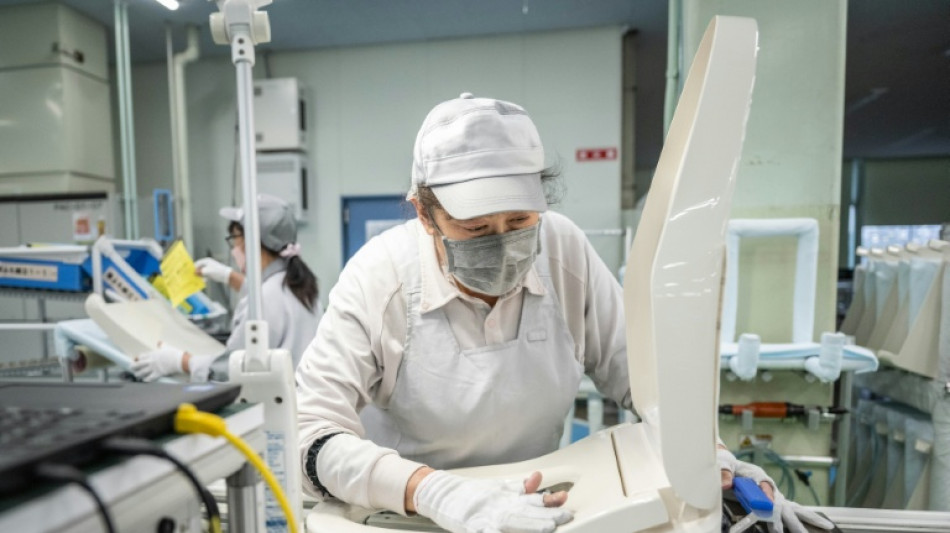
Need a pee? Japan has QR code for that / Photo: Yuichi YAMAZAKI - AFP

 Best Pet Advent Calendars for Christmas 2026: Dog Treats and Cat Toys

 Grattan Institute Releases Blueprint to Target Specialists Over Excessive Fees

 Arizona Science Center Hosts Girls in STEM Astro Adventures for Students

 New Turkish Cafe, Japanese BBQ, and Korean Restaurants Open Across East Bay

 Knowle Move Four Points Clear at Top After Histon Victory

 Physicians Urge Arizona to Ban Medical Gag Clauses and Enable Private Lawsuits

 New Campaign Highlights Knowledge Gaps on Carbon Monoxide Safety Among Americans

Japanese toilet giant TOTO has launched a service allowing those caught short in public to locate the nearest washrooms and see how busy they are real-time with a phone and QR code.
Japan like other countries struggles with managing long queues outside public toilets, particularly for women, in its teeming train stations and other places.
The system launched this month by TOTO -- famous for its water-spraying, musical toilets -- links consumers up with existing internet-connected facility management systems.
This was developed to automatically notify facility staff if a particular cubicle is dirty or occupied for an unusually long time.
Now users can scan a QR code with their phones to access a website showing restroom locations and live congestion levels.
"In addition, a QR code inside a restroom stall brings you to a website where a user can report problems, like being unable to flush or something broken," TOTO spokesman Tasuku Miyazaki told AFP on Thursday.
The service is multi-lingual and available in English, Chinese and Korean.
The government is also trying to relieve the problem of long queues for women, with the transport ministry seeking extra funds in the budget for the coming fiscal next year.
These will be used to set up digital signage displays and movable toilet walls that can increase the number of stalls for women, according to local media.
O.Gaspar--PC

