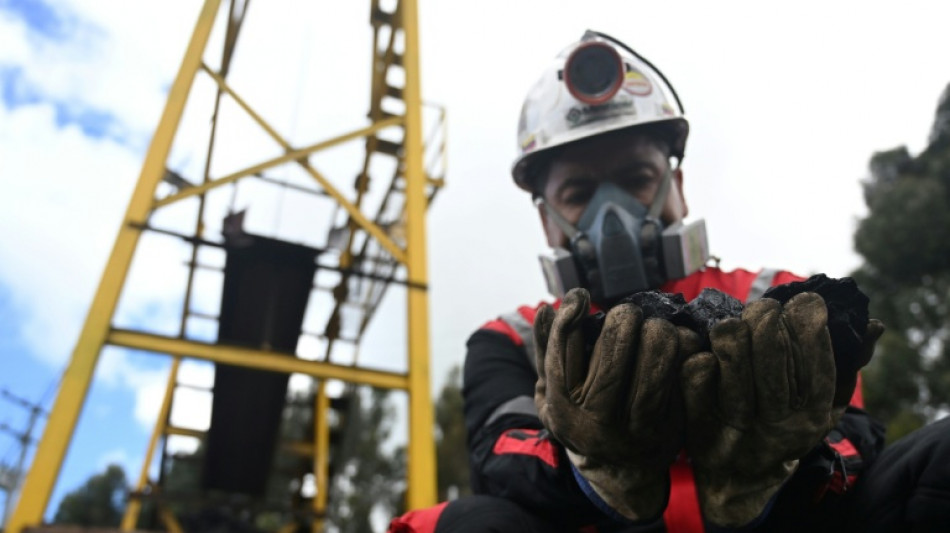
Colombia coal exports plummet after ban on Israel sales / Photo: Raul ARBOLEDA - AFP/File

 Best Pet Advent Calendars for Christmas 2026: Dog Treats and Cat Toys

 Grattan Institute Releases Blueprint to Target Specialists Over Excessive Fees

 Arizona Science Center Hosts Girls in STEM Astro Adventures for Students

 New Turkish Cafe, Japanese BBQ, and Korean Restaurants Open Across East Bay

 Knowle Move Four Points Clear at Top After Histon Victory

 Physicians Urge Arizona to Ban Medical Gag Clauses and Enable Private Lawsuits

 New Campaign Highlights Knowledge Gaps on Carbon Monoxide Safety Among Americans

Colombia's coal exports fell by almost half in July compared to the same month last year, official figures showed Wednesday, amid a global price crisis and days after President Gustavo Petro's ban on sales to Israel.
Colombia is Latin America's leading coal producer but the sector has contracted for five consecutive quarters due to the collapse of international prices and domestic policies.
The country exported $479.8 million worth of coal in July, a 45.8 percent drop from the $885.8 million sold during July 2024, according to the National Administrative Department of Statistics.
Local mining unions blame increased production in Indonesia that has driven down global prices.
Last month, Petro issued a second decree for Colombia to halt coal exports to Israel in protest against its deadly war in Gaza, renewing a June 2024 edict.
Colombia was previously Israel's top coal supplier.
In a broader push for sustainability, the leftist president has imposed higher taxes on coal with a view to moving his country toward renewable energies.
Since coming to power in 2022, Petro has also halted several mining projects and instead promoted agriculture and tourism as alternative sectors for the roughly 350,000 people employed in mineral exploration.
But some miners have told AFP they fear losing their jobs, while towns whose economies depend on the industry are also feeling the impact.
"The government wants to end mining ... but they don't think about us," said Jorge Noriega, a 60-year-old worker at a coal mine in Tausa, a town about 50 miles (80 kilometers) from capital Bogota.
El Cerrejon, Colombia's largest coal mine operated by Anglo-Swiss firm Glencore, said in March it would reduce its production by 50 percent due to high operating costs.
M.Carneiro--PC

