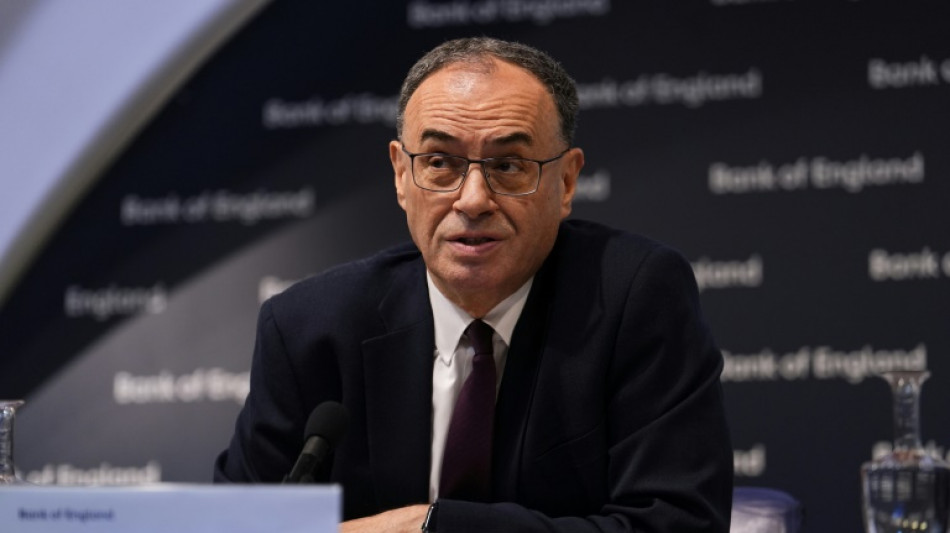
Bank of England holds rate as inflation stays high / Photo: Jordan Pettitt - POOL/AFP/File

 Grattan Institute Releases Blueprint to Target Specialists Over Excessive Fees

 Arizona Science Center Hosts Girls in STEM Astro Adventures for Students

 New Turkish Cafe, Japanese BBQ, and Korean Restaurants Open Across East Bay

 Knowle Move Four Points Clear at Top After Histon Victory

 Physicians Urge Arizona to Ban Medical Gag Clauses and Enable Private Lawsuits

 New Campaign Highlights Knowledge Gaps on Carbon Monoxide Safety Among Americans

The Bank of England kept its key interest rate at four percent Thursday, as elevated UK inflation offsets the country's stagnant economic growth.
The decision widely expected by markets followed a regular policy meeting and came one day after the US Federal Reserve cut its benchmark borrowing costs for the first time in 2025.
"Although we expect inflation to return to our two-percent target, we're not out of the woods yet, so any future cuts will need to be made gradually and carefully," Bank of England governor Andrew Bailey said in a statement.
Official data Wednesday showed UK annual inflation at 3.8 percent in August. The BoE on Thursday confirmed that it is set to peak at four percent this month.
Policymakers have to balance rising inflation against Britain's sluggish economy and unemployment at a four-year high.
The BoE in August trimmed borrowing costs to the lowest level in 2.5 years, in a bid to boost the UK economy threatened by US tariffs.
Linsday James, investment strategist at wealth management firm Quilter, said markets "are not fully pricing the next rate cut... until the end of April".
Despite several reductions over the past year, Britain's economy has struggled to grow after finance minister Rachel Reeves hiked taxes and slashed public spending following Labour's general election win in July last year.
The Labour government has acknowledged difficulty in driving economic growth, piling pressure on Prime Minister Keir Starmer ahead of the annual budget announcement in late November.
Elsewhere Thursday, Norway's central bank reduced interest rates to four percent to avoid putting pressure on the country's economy.
The Bank of Canada also opted to trim borrowing costs this week, citing concerns over the impact of US President Donald Trump's tariffs.
B.Godinho--PC

