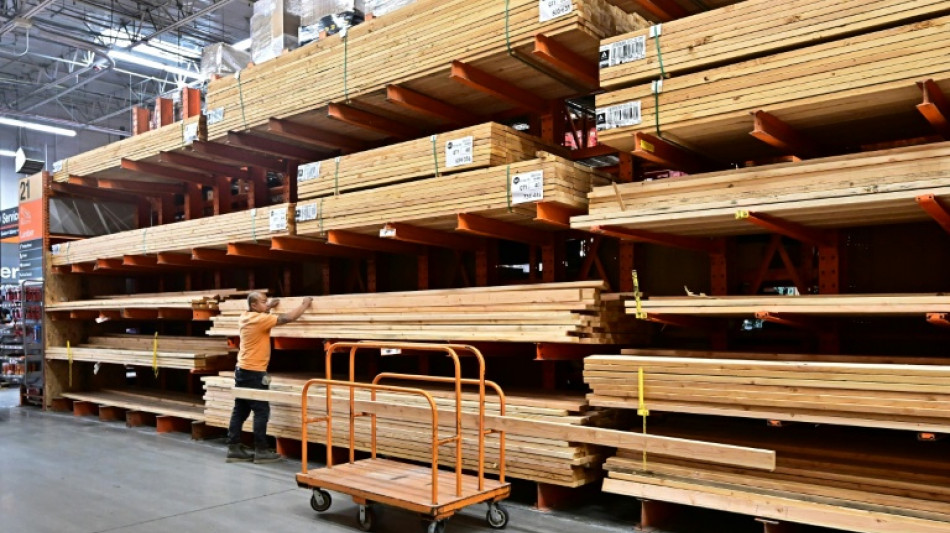
US tariffs on lumber imports set for October 14 / Photo: Frederic J. BROWN - AFP/File

 Grattan Institute Releases Blueprint to Target Specialists Over Excessive Fees

 Arizona Science Center Hosts Girls in STEM Astro Adventures for Students

 New Turkish Cafe, Japanese BBQ, and Korean Restaurants Open Across East Bay

 Knowle Move Four Points Clear at Top After Histon Victory

 Physicians Urge Arizona to Ban Medical Gag Clauses and Enable Private Lawsuits

 New Campaign Highlights Knowledge Gaps on Carbon Monoxide Safety Among Americans

US President Donald Trump on Monday set a slate of tariffs for lumber imports to go into effect October 14.
In a proclamation, the White House imposed a "10 percent global tariff on imports of softwood lumber."
It also set "a 25 percent global tariff on upholstered furniture, which will increase to 30 percent on January 1."
And home renovation materials were hardest hit in the latest round of tariffs, which marked a "25 percent global tariff on kitchen cabinets and vanities, which will increase to 50 percent on January 1."
Some economies were singled out for better tariff rates, with the United Kingdom, the European Union and Japan set to "enjoy more favorable treatment that reflects the terms of their trade deals with the United States."
Tariffs have faced legal challenges and blowback both globally and in the United States, from small business owners to members of Congress.
The US Supreme Court is due to hear oral arguments on the legality of Trump's global duties on November 5.
In a fact sheet released with Trump's latest proclamation, the administration said tariffs on lumber address a threat to national security, in part, because "lumber plays a vital role in civilian construction and military infrastructure.
"Foreign supply chains and major experters increasingly fill US demand, creating vulnerabilities to disruptions," it said.
The fact sheet also noted trading partners who negotiate with the US "may be able to secure an alternative to the pending tariff increases."
B.Godinho--PC

