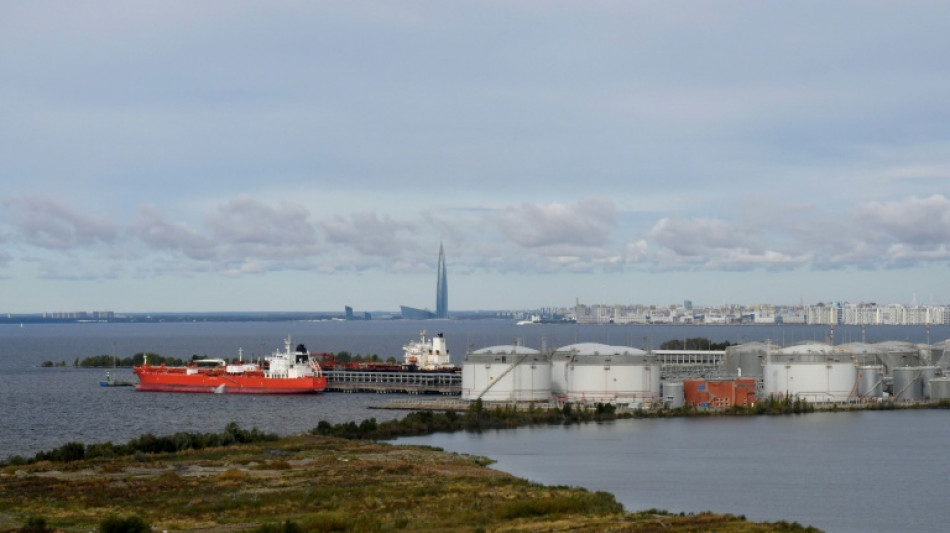
G7 ministers to target those increasing Russia oil purchases / Photo: Olga MALTSEVA - AFP/File

 Grattan Institute Releases Blueprint to Target Specialists Over Excessive Fees

 Arizona Science Center Hosts Girls in STEM Astro Adventures for Students

 New Turkish Cafe, Japanese BBQ, and Korean Restaurants Open Across East Bay

 Knowle Move Four Points Clear at Top After Histon Victory

 Physicians Urge Arizona to Ban Medical Gag Clauses and Enable Private Lawsuits

 New Campaign Highlights Knowledge Gaps on Carbon Monoxide Safety Among Americans

G7 finance ministers pledged Wednesday to take aim at those who are continuing to step up purchases of Russian oil, since Moscow's invasion of Ukraine more than three years ago.
In a statement after a virtual meeting, officials from the Group of Seven advanced economies -- Britain, Canada, France, Germany, Italy, Japan and the United States -- agreed that it is time to "maximize pressure on Russia's oil exports."
This would hit at revenue Moscow needs for the war.
"We will target those who are continuing to increase their purchase of Russian oil since the invasion of Ukraine and those that are facilitating circumvention," the ministers said in a joint statement.
They added that they agreed on "the importance of trade measures, including tariffs" and import or export bans in efforts to cut off Russian revenues.
The countries are also giving "serious consideration to trade measures and other restrictions on countries and entities that are helping finance Russia's war efforts, including on refined products sourced from Russian oil."
The statement came after the United States indicated last month that it was ready to broaden tariffs targeting buyers of Russian oil if the European Union takes similar moves.
President Donald Trump, who dialed in to talks between the United States and EU officials, had raised the possibility of tariffs between 50 percent and 100 percent targeting oil buyers like China and India, according to an official.
In September, the European Commission also said that it was working on potentially imposing tariffs on imports of Russian oil into the bloc, in the face of pressure from Trump.
The US leader has demanded that Europe end energy imports from Moscow before agreeing to move forward with sanctions against Russia.
The G7 ministers plan to meet again on the sidelines of the annual meetings of the International Monetary Fund and World Bank in Washington this month.
A.Magalhes--PC

