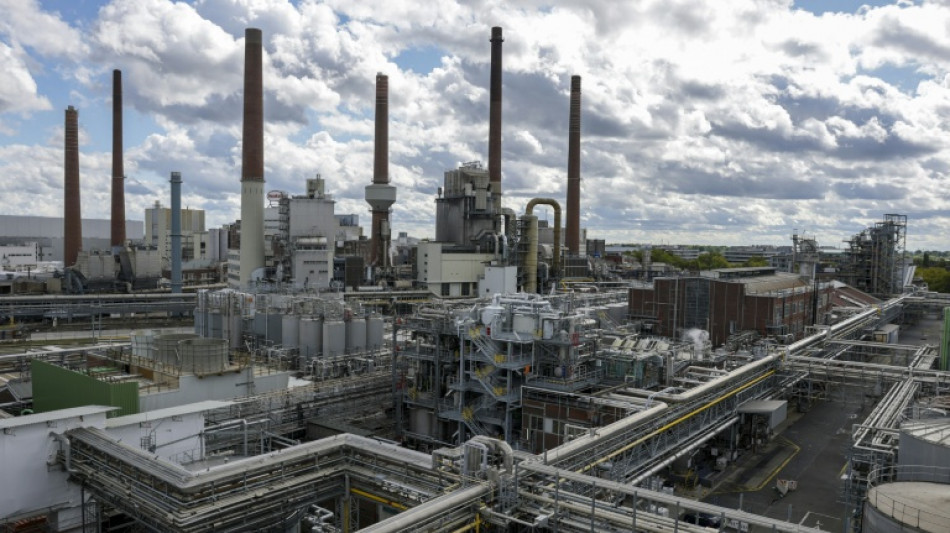
German factory orders drop in new blow to Merz / Photo: Christopher Neundorf - POOL/AFP

 Grattan Institute Releases Blueprint to Target Specialists Over Excessive Fees

 Arizona Science Center Hosts Girls in STEM Astro Adventures for Students

 New Turkish Cafe, Japanese BBQ, and Korean Restaurants Open Across East Bay

 Knowle Move Four Points Clear at Top After Histon Victory

 Physicians Urge Arizona to Ban Medical Gag Clauses and Enable Private Lawsuits

 New Campaign Highlights Knowledge Gaps on Carbon Monoxide Safety Among Americans

German industrial orders unexpectedly fell in August, marking a fourth straight month of decline, official data showed Tuesday, the latest blow to the government's efforts to reboot the ailing economy.
New orders, closely watched as an indicator of future business activity, dropped 0.8 percent month-on-month, according to preliminary figures from federal statistics agency Destatis, after sliding 2.7 percent in July.
Analysts surveyed by financial data firm FactSet had predicted an increase of one percent in August.
"The figures highlight the economy's bumpy road in all its ugliness," said LBBW bank analyst Jens-Oliver Niklasch. "After a slight upward trend in the spring, the downturn is now back."
Europe's biggest economy has faced two years of recession due to a manufacturing slump and increasing competition, particularly from China, and the US tariff onslaught has added to headwinds.
Chancellor Friedrich Merz took office promising a blitz of spending on infrastructure and defence that many hoped would spark a turnaround for the export powerhouse.
But, after a promising start to the year, recent data have proved disappointing, and criticism is mounting that the plans are moving too slowly.
The August figures were pulled down by a steep fall in overseas orders, according to Destatis. The pharmaceutical sector as well as the crisis-hit auto sector saw hefty declines.
But there was an increase in domestic orders, driven by a boom in the defence sector at a time European countries are rearming due to the growing Russian threat.
In an update to their forecasts, leading economic institutes last month said they expect growth of just 0.2 percent in 2025, and warned that structural reforms were urgently needed.
The government is due to update its growth forecasts on Wednesday.
A.P.Maia--PC

