
Black gold, green promises: Brazil's climate paradox / Photo: Pablo PORCIUNCULA - AFP/File

 Trump's secret plane swap triggers questions and confusion
 California calls Paramount's threat to leave state 'blackmail'

 PSG 'want to win everything', says Luis Enrique

 Barred from elections, Russia's anti-war party vows to fight on

 Jaissle states Newcastle ambition but urges patience
 NBA star Cooper Flagg trading card a slam dunk for lucky buyer
 ForumPay Expands Payment Infrastructure with New Card and Bank Transfer Acceptance Solution
 Oil prices higher, stocks flat ahead of inflation report

 Orban-critic ex-judge becomes Hungary president after predecessor ouster

 US rights groups sue Trump over ICC sanctions

 Sphere 3D Corp. (Nasdaq: ANY) Attracts 6.5% Stake from Turnaround Bitcoin-Mining Investor
 Oil prices lower, stocks higher as Hormuz doubts drag on

 Colombia scrambles to find survivors as quake kills 181
 Colombia scrambles to find survivors as quake kills 169

 MEXC Report: 74.2% of Traditional Finance Users Have Shifted Their Trading Activity to Crypto Exchanges

 MEXC Lists DAPPOS (DOS) With $60,000 Worth of DOS and 10,000 USDT in Airdrop+ Rewards
 Jellyfish force shutdown of three reactors at French nuclear plant

 Hodgkinson, Werro sail through Euro 800m qualifying

 Somali referee denied World Cup 'proud' to oversee UEFA Super Cup
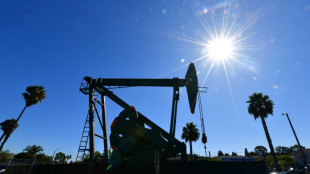
 French newspapers target Google over AI summaries

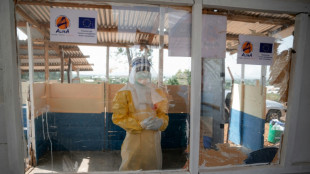 Ebola death toll in DR Congo outbreak rises to more than 2,000

 PrimeXBT Launches MT5 Cent Account for Beginners and Risk-Conscious Traders
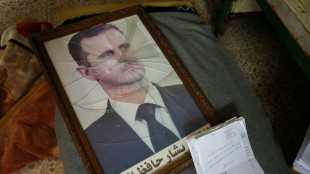
 British sprinter Hunt chasing three more golds after winning 100m

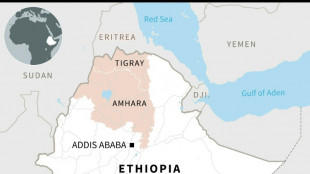 Ethiopia's Tigray rebel authorities condemn army drone strikes
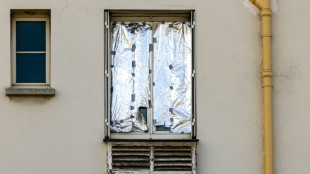 Too hot to live? French buyers rethink housing choices after heatwaves
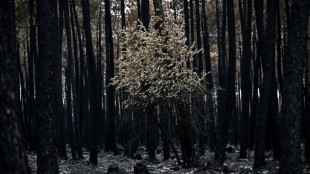
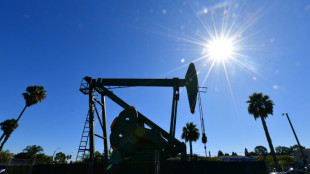
Can oil, the climate villain, be used to pay for its own demise?
Brazil's President Luiz Inacio Lula da Silva thinks so. He is pushing for more oil exploration, including offshore from the Amazon rainforest, while casting himself as a global leader on climate change.
"The world is not yet ready to live without oil," Lula, the host of this year's COP30 UN climate conference, told a local podcast.
"I am against fossil fuels whenever we can do without them. But until we can, we need to use them. Oil money will help us develop biofuels, ethanol, green hydrogen, and other initiatives," he said during an event earlier this year.
Brazil is the eighth biggest oil producer and Lula wants state energy giant Petrobras to be the "largest oil company in the world."
At the same time, he urges world leaders to step up in the fight against the climate crisis and he has pledged zero deforestation by 2030.
Critics say Lula's position is contradictory; others see it as pragmatic.
"It's becoming increasingly clear that developing countries won't be able to count on rich nations to finance their climate agenda," said Jorge Arbache, an economics professor at the University of Brasilia.
It's much harder to force a country like Brazil not to extract oil than it is to tell a rich-oil producing nation like Norway the same thing, according to him.
He said the question should be how to use this oil, "and within what environmental parameters.
"That should be an adult conversation."
- 'A historic mistake' -
Off the coast of the Amazon in northern Brazil, the world's mightiest river crashes into the ocean, sending a muddy brown plume of freshwater hundreds of kilometers into the blue-gray Atlantic -- a striking color contrast visible from space.
Plans for oil exploration in the biodiverse Foz do Amazonas basin have become a symbol of Lula's environmental contradictions.
After being denied a license to explore for oil in 2023, Petrobras recently passed a key environmental test by the Ibama environmental agency -- despite serious concerns noted by the regulator over plans to protect wildlife in the case of an oil spill.
Petrobras said in a statement that it expected to receive a drilling license soon.
The Foz de Amazonas is part of a promising new offshore oil frontier, with nearby Guyana emerging as a major oil producer in less than a decade following large offshore discoveries.
Petrobras says its models show that an oil spill at the offshore site "would not be likely to reach the coast" and there would be "no direct impact" on Indigenous communities.
"There is no such thing as sustainable oil, period," Suely Araujo, a former president of Ibama and coordinator of the Climate Observatory NGO, told AFP.
"We're in the midst of a climate crisis, with a slew of extreme events, and the option to continue indefinitely increasing oil production is a historical mistake."
- Exporting the problem -
Even if Petrobras strikes oil, the new block could take a decade to enter production.
The International Energy Agency predicts demand for oil will fall after 2030, making continued drilling economically risky, Araujo said.
She said Brazil's existing oil money had not proven to "solve social problems."
Brazil's Federal Court of Auditors (TCU) this year flagged "severe dysfunctions" with the distribution of royalties from oil revenues, which multiplied by 40 between 2000 and 2022.
It said 87 percent of royalties went to only three states, based on rules drawn up decades before Brazil was a major oil producer.
Brazil is one of the world's largest emitters of harmful greenhouse gases, but with an unusual profile, as it meets most of its energy needs through renewables.
Felipe Barcellos e Silva, a researcher at the Institute for Energy and the Environment thinktank, said 50 percent of Brazil's emissions came from deforestation and another 25 percent from agriculture.
Brazil exports more than half of its oil, so emissions from it won't add to its own greenhouse gas tally, "but will still be released globally."
Shigueo Watanabe Jr., a researcher at the ClimaInfo institute, calculated that burning the estimated reserves from Block 59 alone would emit 2.5 billion tons of CO₂ equivalent -- more than a year of Brazil's emissions.
"It's incoherent to talk about a transition linked to destruction," said environmentalist and Indigenous expert Neidinha Surui, who has spent decades fighting to protect native lands.
"What the president is doing is contributing to the pressure on the climate and the destruction of the planet. I hope he changes his attitude and sets more realistic goals for protecting nature," she told AFP.
J.Pereira--PC