China, EU stand firm on shipping emission deal despite US threats / Photo: Jim WATSON - AFP

 Barred from elections, Russia's anti-war party vows to fight on

 Jaissle states Newcastle ambition but urges patience

 NBA star Cooper Flagg trading card a slam dunk for lucky buyer
 ForumPay Expands Payment Infrastructure with New Card and Bank Transfer Acceptance Solution

 Oil prices higher, stocks flat ahead of inflation report

 Orban-critic ex-judge becomes Hungary president after predecessor ouster

 US rights groups sue Trump over ICC sanctions

 Sphere 3D Corp. (Nasdaq: ANY) Attracts 6.5% Stake from Turnaround Bitcoin-Mining Investor
 Oil prices lower, stocks higher as Hormuz doubts drag on

 Colombia scrambles to find survivors as quake kills 181

 Colombia scrambles to find survivors as quake kills 169

 MEXC Report: 74.2% of Traditional Finance Users Have Shifted Their Trading Activity to Crypto Exchanges

 MEXC Lists DAPPOS (DOS) With $60,000 Worth of DOS and 10,000 USDT in Airdrop+ Rewards

 Jellyfish force shutdown of three reactors at French nuclear plant

 Hodgkinson, Werro sail through Euro 800m qualifying

 Somali referee denied World Cup 'proud' to oversee UEFA Super Cup
 French newspapers target Google over AI summaries

 Ebola death toll in DR Congo outbreak rises to more than 2,000

 PrimeXBT Launches MT5 Cent Account for Beginners and Risk-Conscious Traders

 British sprinter Hunt chasing three more golds after winning 100m
 Ethiopia's Tigray rebel authorities condemn army drone strikes

 Too hot to live? French buyers rethink housing choices after heatwaves
 Ukraine says Russia fired N. Korean missiles in deadly attack
 Oil prices jump further as hopes for Hormuz deal fade
 Trump says would be 'terrible mistake' to oust embattled Infantino

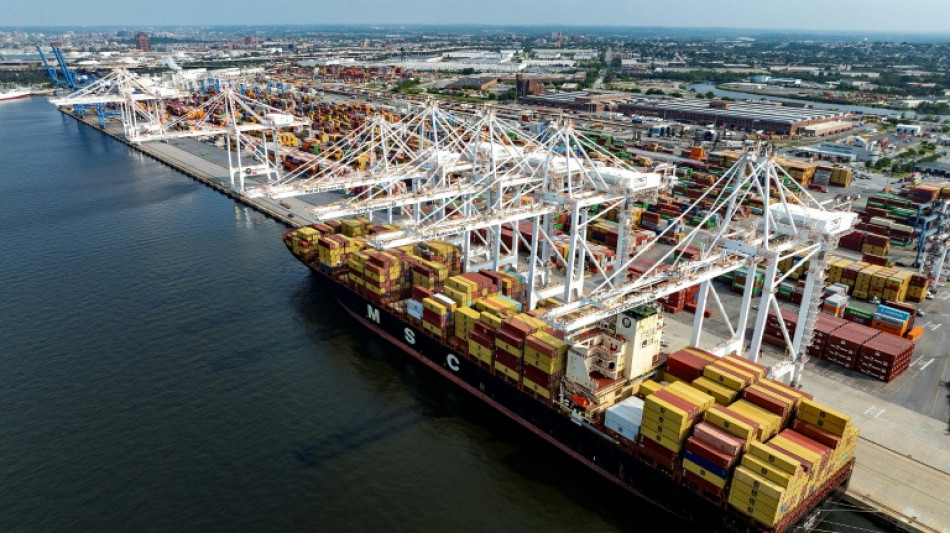
China, the European Union and several other members of the International Maritime Organization reaffirmed their support on Tuesday for ambitious plans to cut shipping emissions, despite US threats.
Initially approved in April, the London-based IMO are set to vote on Friday on formally adopting the Net Zero Framework (NZF), the first global carbon-pricing system.
However, Washington's threat to impose sanctions on those supporting it had cast doubt on the future of the framework, just as the summit where it is due to be adopted got under way.
The summit's first day on Tuesday was marked by friction between members supporting the NZF and those opposing it.
The framework would require ships to progressively reduce carbon emissions from 2028, or face financial penalties.
Last week, the United States threatened countries who vote in favour of the framework with sanctions, visa restrictions and port levies, calling the proposal a "global carbon tax on the world".
But several countries, including Britain, Brazil, China and the European Union, reaffirmed their commitment during Tuesday's meeting of the 176-nation IMO.
"We believe that reaching a consensus on global implementation (of the framework) is essential," a representative from China told members.
- Oil producers' opposition -
To be adopted, the framework needs the backing of two-thirds of the present and voting IMO members that are parties to the so-called MARPOL anti-pollution convention.
The convention has 108 members.
A majority of members -- 63 states -- that voted in favour of the NZF in April are expected to maintain their support on Friday.
The plan would charge ships for emissions exceeding a certain threshold, with proceeds used to reward low-emission vessels and support countries vulnerable to climate change.
Several major oil producers -- Saudi Arabia, Russia and the United Arab Emirates -- voted against the measure, and are expected to do so again this week, arguing it would harm the economy and food security.
Pacific Island states, which abstained in the initial vote over concerns the proposal was not ambitious enough, are now expected to support it.
The United States withdrew from IMO negotiations in April and did not comment on the proposal until last week.
US threats could affect "countries more sensitive to US influence and vulnerable to these retaliations", a European source told AFP.
"We remain optimistic about the outcome, but it will probably be tighter than before, with a higher risk of abstention," the source added.
Countries highly dependent on the maritime industry, such as the Philippines and Caribbean islands, would be particularly impacted by US visa restrictions and sanctions.
Contacted by AFP, IMO Secretary-General Arsenio Dominguez declined to respond directly to the US statement, maintaining he was "very confident" about the NZF vote.
If the global emissions pricing system was adopted, it would become difficult to evade, even for the United States.
IMO conventions allow signatories to inspect foreign ships during stopovers and even detain non-compliant vessels.
Since returning to power in January, US President Donald Trump has reversed Washington's course on climate change, denouncing it as a "scam" and encouraging fossil fuel use by deregulation.
V.Fontes--PC