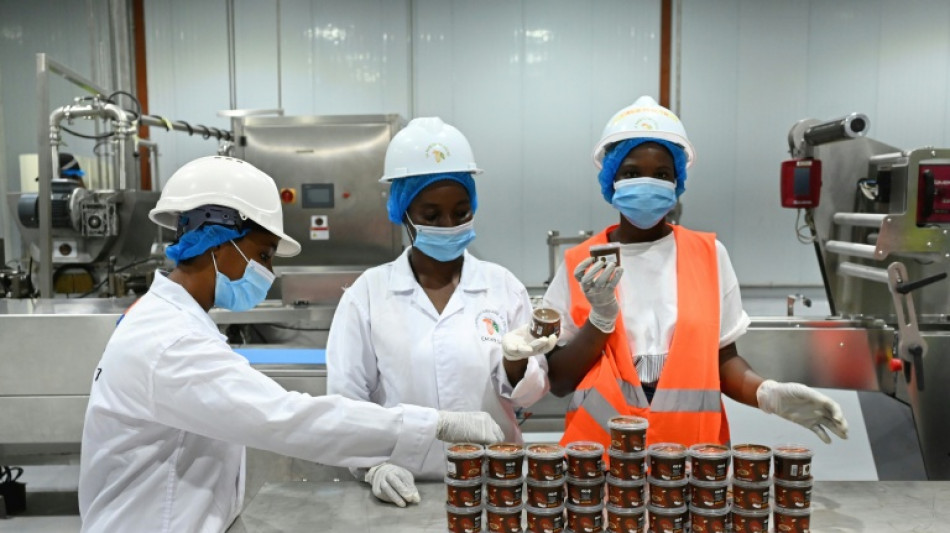
Ivorian brothers dream of transforming cocoa industry / Photo: Issouf SANOGO - AFP

 Somali referee denied World Cup 'proud' to oversee UEFA Super Cup
 French newspapers target Google over AI summaries
 Ebola death toll in DR Congo outbreak rises to more than 2,000

 PrimeXBT Launches MT5 Cent Account for Beginners and Risk-Conscious Traders
 British sprinter Hunt chasing three more golds after winning 100m

 Ethiopia's Tigray rebel authorities condemn army drone strikes
 Too hot to live? French buyers rethink housing choices after heatwaves
 Ukraine says Russia fired N. Korean missiles in deadly attack
 Oil prices jump further as hopes for Hormuz deal fade
 Trump says would be 'terrible mistake' to oust embattled Infantino

 Charity races to raise millions to buy historic English estate
 Hungary parliament to elect Orban-critic judge as president
 Wallabies lock Amatosero given three-match ban for Japan red card
 Swiatek races into Toronto semis as Svitolina battles through
 'Big Four' bowlers back as ageing Australia begin gruelling run

 AI's hunger for power sparks US private gas plant boom
 Memphis AI data center fuels pollution fight in Black neighborhood

 Ceuta leader wants migrant detention centre after influx
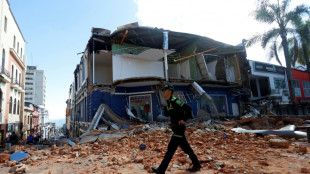
 Colombia scrambles to find survivors as quake kills 111
 Rain postponements wreck Montreal Masters schedule
 ePropelled to Increase Manufacturing Footprint with $60 Million in U.S. Government Funding to Strengthen U.S. Drone Propulsion Supply Chain

 Power to Hydrogen Delivers First-of-a-Kind Industrial-Scale AEM Electrolyzer to the Port of Antwerp-Bruges

 Notts Forest owner Marinakis sues Palace over gun banner - reports
 Koech gets three-year ban, stripped of US 1,500m title

 Sensational Ingebrigtsen back with more European gold
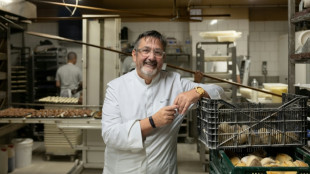
In a factory in southern Ivory Coast, where machines hum to produce chocolate bars and spreads, twin brothers dream of becoming "giants of cocoa processing".
Ivory Coast, which holds its presidential election this Saturday, is the world's leading cocoa producer but only processes about 40 percent locally while the rest is exported.
Fousseni and Alahassane Diakite, 33, opened a processing factory in August in their hometown of Divo, situated in a cocoa-dependent region some 200 kilometres (124 miles) from the economic capital Abidjan, with hopes of closing the gap.
Stored in jute sacks, the beans are roasted to unleash their aroma, shelled, and then ground.
The factory has a processing capacity of 36,000 tons annually, with a target of 80,000 tons.
Comparatively, US giant Cargill, Switzerland's Barry Callebaut, and Singapore's Olam each process between 100,000 and 200,000 tons of cocoa annually in the west African nation.
The twins' added value lies in "the quality of our products, our services," and their story, they told AFP.
Sons of a producer, "we are the pure products of Ivorian cocoa," said Fousseni, asserting that they are now realising their "dream".
"We were sure that what we were going to do was not just for us, but also to inspire other generations," he said.
A few years after earning their high school diplomas, they created a union of cooperatives bringing together over 4,000 producers.
They then founded their first company to create products for the pharmaceutical and cosmetic industries, such as cocoa butter, from the inedible parts of a cocoa pod.
Later, a second company was launched to process cocoa for food products.
Alahassane earned a business degree in Abidjan and has now pursued training at the HEC Paris business school.
Fousseni, meanwhile, has taken up practical training in agroforestry and agronomy.
"We complement each other," Alahassane said.
While their cosmetic materials are exported "where there is demand", he said, their chocolate for consumption is sold in Ivory Coast at competitive prices.
In stores, most chocolate bars, often European brands, cost between 2,500 and 4,000 CFA francs ($4 to $7), while the brothers' bar costs 1,200 francs ($2).
Their small jar of spread is sold at the unbeatable price of 100 francs.
At a time of growing demand for ethical products, "all our productions are traceable," assured Alahassane, while his brother specified that the factory's machines run on renewable energy.
- Creating jobs -
Cocoa accounts for five million jobs in Ivory Coast, or one-sixth of the population.
The government-set price of cocoa paid to growers is at a record level of 2,800 CFA francs per kilo.
A few kilometres from Divo, in a shaded plantation carpeted with cocoa tree leaves, Kanga Prudence N'Guessan was cutting yellow pods with a machete.
"Our wish... is not to send our cocoa outside our country... when processing is done there, it becomes two or three times more expensive," he said.
At another plantation, 49-year-old grower Harouna Ouattara agreed, saying, "local processing is insufficient."
"The first obstacle to cocoa processing is the issue of financing," explained Fousseni.
Their factory cost nearly 50 million euros ($58 million), the brothers noted, without specifying the source of the funds.
The second obstacle has been the lack of qualified labour.
Still, the brothers said their factory has created 1,000 direct and indirect jobs, primarily for locals.
Technical jobs are held by young people trained in major cities.
Salimata Ouattara, a 35-year-old chemist, studied in the southern port city of San Pedro.
In her white coat, between analyses, she said she wants to "help the youth here who don't have much knowledge about industrialisation."
L.Mesquita--PC