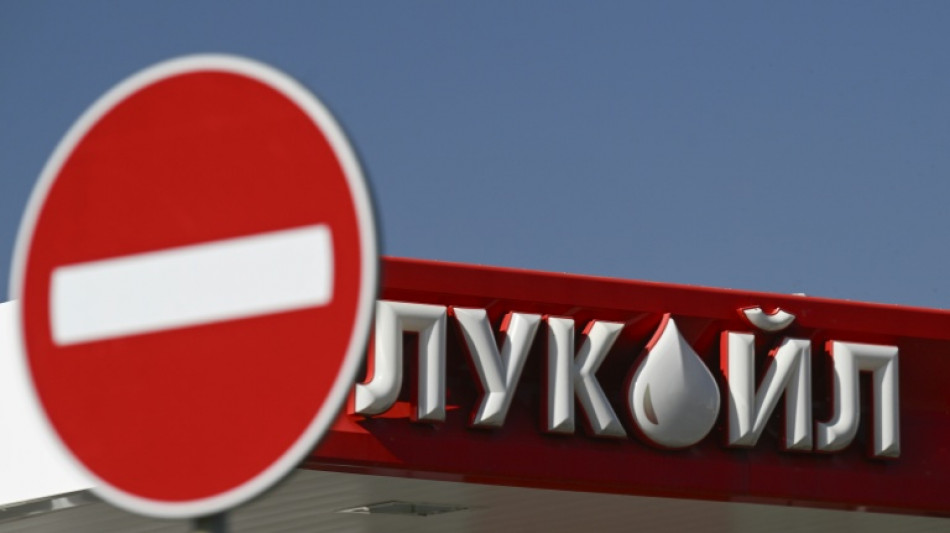
Russia's Lukoil to sell overseas assets after US sanctions / Photo: Nikolay DOYCHINOV - AFP

 ANC’s Renewal Rhetoric Fades as Voters Reject Party in 2026 Local Elections

 Foreign Investors Return to Indian Markets After 10-Month Selloff

 Honda CR-V and Toyota RAV4 Lead Canada’s Most Stolen Vehicles List for 2025

 China Extends Tariff Suspension on US Imports to Stabilize Trade Ties

 JR East Launches 'teppay' to Integrate Suica Balance with Mobile Payments
Russian oil giant Lukoil will sell its overseas assets, the company said late Monday, after it was hit with US sanctions over the war in Ukraine.
US President Donald Trump last week slapped Russia with his first significant sanctions package, targeting two top oil companies, Lukoil and Rosneft, after saying he was frustrated that Moscow had not halted its offensive.
"Owing to the introduction of restrictive measures against the company and its subsidiaries by some states, the company announces its intention to sell its international assets," Lukoil said in a statement.
It added that the bidding process has already started.
After a diplomatic flurry this year and the first direct talks between Russia and Ukraine in more than three years, efforts to end the war have frozen with little sign of progress.
Shortly before introducing the sanctions, Trump had scrapped a planned summit with Russia's President Vladimir Putin, who said the measures were "serious", but not enough to crush the Russian economy, already under numerous international restrictions.
The sanctions would freeze all Rosneft and Lukoil assets in the United States and prohibit US companies from doing business with them.
The two companies, which account for 55 percent of Russia's oil output, were also put on the SDN list of sanctioned entities, a registry followed by many countries and feared in the business world.
Washington gave firms who work with the Russian entities one month to cut ties, or to face secondary sanctions, which would deny them access to US banks, traders, shippers and insurers.
F.Ferraz--PC

