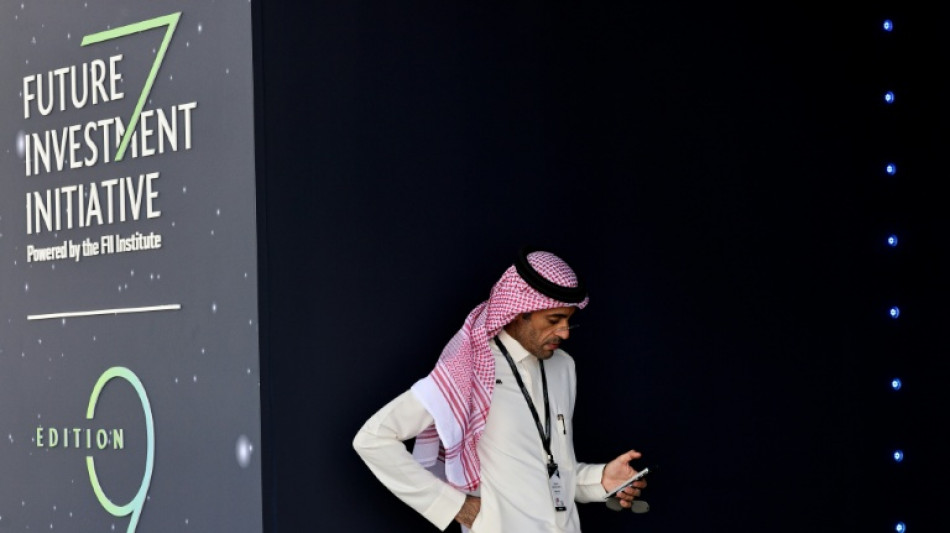
Saudi chases AI ambitions with homegrown firm pitched to global investors / Photo: Fayez Nureldine - AFP

 Singapore says AI-related demand lifting economy

 Demeter Tactical Investments (ME) Limited bolsters governance with two board appointments

 Russian barrage on Ukraine kills 9, wounds dozens

 Schools closed as Indonesia battles wildfires

 Swiatek dominates Shnaider to set up Toronto semi with Svitolina

 Oil prices rise further as hopes for Hormuz deal fade

 One year after Putin-Trump summit, 'spirit of Anchorage' dissipated
 Farage vs Count Binface: What to know about UK snap poll
 Torment of Afghan fathers as daughters deprived of education

 Return of displaced Syrian Kurds to hometown suspended after violence
 Swiatek races past Shnaider into Toronto semi-finals

 Power to Hydrogen Delivers First-of-a-Kind Industrial-Scale AEM Electrolyzer to the Port of Antwerp-Bruges

 Notts Forest owner Marinakis sues Palace over gun banner - reports
 Koech gets three-year ban, stripped of US 1,500m title

 Sensational Ingebrigtsen back with more European gold
 'A scare': Brazil player leaps into tunnel in joy over goal

 USA Swimming CFO Hilliard arrested for alleged theft

 Trump insists Netanyahu relationship 'very good' despite Gaza rift

 Ingebrigtsen delivers masterclass for seventh European athletics gold

 Colombia declares state of emergency after quake kills 111

 Golden relay double for Britain at Europeans as Marchand takes silver

 Barcelona's Araujo heads to Liverpool on loan

 Tupac Shakur murder trial begins 30 years after rapper's death

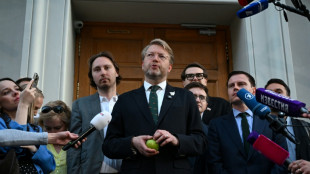 Russia bars only anti-war party from elections

 Boeing to divest tech ventures for stake in air-taxi startup

Powered by its sovereign wealth fund of nearly $1 trillion, Saudi Arabia is backing its new AI firm Humain, entering a highly competitive sector some fear is a bubble ready to burst.
The company, launched in May, is bankrolled by Saudi's powerful Public Investment Fund, which has played a key role in financing the kingdom's so-called gigaprojects -- major developments aimed at boosting and diversifying its oil-reliant economy.
Humain this week signed a number of deals during the Future Investment Initiative conference (FII) in Riyadh, where its CEO doubled down on the stated goal of Saudi Arabia becoming the third-largest provider of AI infrastructure, behind the United States and China.
But Riyadh's ambitions to become a global AI hub face fierce competition from the neighbouring United Arab Emirates, which have invested in AI for years, as well as challenges over acquiring advanced US technology, including powerful chips.
"Our ambition is really, really massive," Humain's CEO Tareq Amin told delegates at the FII conference.
Humain has vowed to offer a wide range of AI services, products and tools, along with a powerful Arabic large language model.
In August, the company unveiled its debut Arabic chatbot that boasted of being able to comprehend the language's myriad dialects while also being mindful of Islamic values.
- Deals -
On Tuesday, state-backed oil giant Saudi Aramco announced plans to acquire a "significant minority stake" in Humain to scale up operations and "accelerate its growth in the AI sector", according to a joint press release.
Aramco's President and CEO Amin Nasser gushed over the potential of AI, saying the technology and digitalisation had the ability to double an oil well's productivity.
Humain also signed a $3 billion deal with private equity giant BlackStone's AirTrunk to build data centres in Saudi Arabia and struck an agreement with US chipmaker Qualcomm.
For Robert C. Mogielnicki, a senior resident scholar at the Arab Gulf States Institute in Washington, Humain, like other "nascent" Saudi tech entities, seeks "to assure audiences that the kingdom's tech ambitions are very real, feasible, and exciting".
"The fast pace of the tech agenda in the neighboring UAE, which is a key regional investment hub, heightens the need to do this," he added.
- 'Our goal' -
AI-related spending is skyrocketing across the globe, with total investments in 2025 alone expected to reach nearly $1.5 trillion, according to US research firm Gartner.
The Gulf's two largest economies, Saudi Arabia and the UAE, are vying to secure access to US technology.
The oil-producing countries have an advantage in the race to build sprawling data centres -- offering ample land, abundant energy supplies and ready access to finance along with backing from authorities.
But many challenges remain.
"The kingdom's capital means little if it doesn't have permission from Washington buy the advanced chips needed for its data center ambitions -- either for training or operating AI," Vivek Chilukuri, a senior fellow at the Center for a New American Security, told AFP.
Chilukuri added that Saudi is also facing an acute shortage of AI talent and is competing not only with "more established and well-capitalized US firms" but also with the UAE.
There are also concerns over the impact of AI, with companies across the globe shedding tens of thousands of jobs, while economic returns remain uncertain.
The spending spree has also prompted painful memories of the dotcom bubble of the late 1990s, when vast investments were wiped out.
Yet optimism was in no short supply this week in Riyadh.
"It's exciting to be in this region now because there is so much motivation from the very top levels of government to want to be leaders in AI," said Adam Jackson, the head of Middle East operations with the tech firm CIQ.
"We are not in the AI race to compete," added a female employee from Humain, who spoke to AFP on condition of anonymity because she did not have permission to speak to the press.
"We are there to be at the top with the US and China. That's our goal and vision."
P.Cavaco--PC