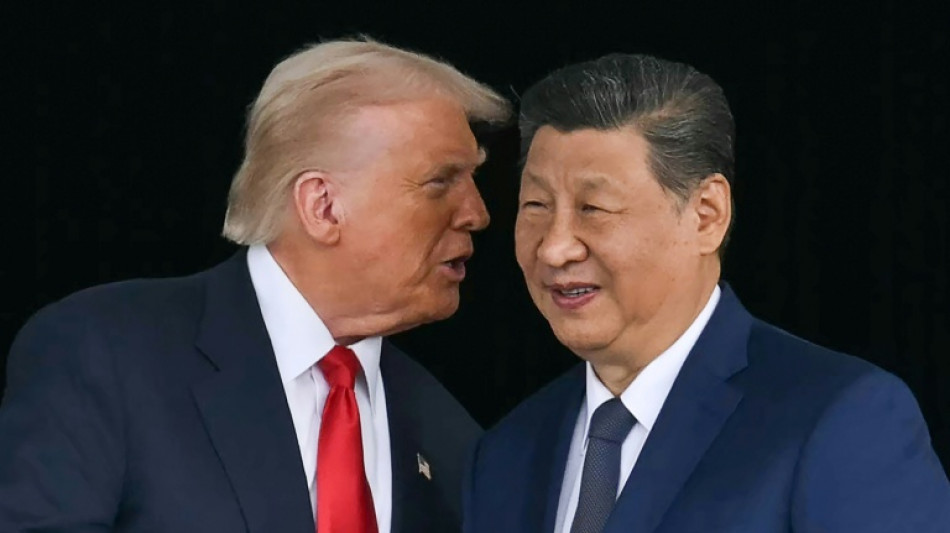
Where things stand on China-US trade after Trump and Xi talk / Photo: ANDREW CABALLERO-REYNOLDS - AFP/File

 Schools closed as Indonesia battles wildfires

 Swiatek dominates Shnaider to set up Toronto semi with Svitolina

 Oil prices rise further as hopes for Hormuz deal fade

 One year after Putin-Trump summit, 'spirit of Anchorage' dissipated

 Farage vs Count Binface: What to know about UK snap poll

 Torment of Afghan fathers as daughters deprived of education
 Return of displaced Syrian Kurds to hometown suspended after violence
 Swiatek races past Shnaider into Toronto semi-finals

 Meta pushes global AI vision amid race with OpenAI, Anthropic and China

 US judge ends graft case against India's Adani

 Anderson retires after 10 MLB seasons after 'too much pain'

 Colombia in state of emergency as quake kills 111

 Britain's Amy Hunt wins European women's 100m gold

 Trump order pushes for overhaul of childhood vaccine schedule
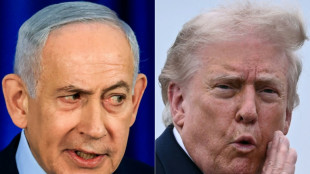
 Global stocks mixed while oil prices jump on Hormuz

 Turkey MPs back historic law on reintegrating Kurdish militants
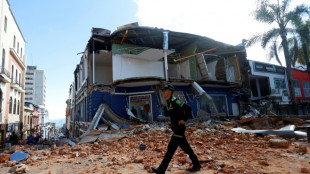
 'Dreams disappear' as Gaza students await evacuation to Italy

 Third European gold for Schilder in women's shot put

 Golden relay double for Britain at Europeans as Marchand settles for silver

 US had hottest month on record in July

 Colombia quake leaves 69 dead, with more trapped under rubble

 Bookmap Announces Partnership with Plus500 to Expand Futures Trading Access
 Barcelona turn down PSG offer for Torres

 Buildings collapse as major quake rocks Colombia and neighbors

 Meta releases new AI model as Zuckerberg lays out vision
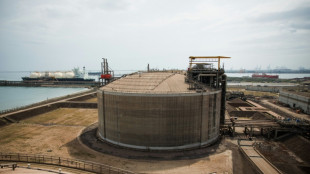
China and the United States have recently agreed to lower the temperature in their spiralling trade war, bringing a precarious end to months of back-and-forth measures between the economic and technological powerhouses.
The detente -- reached at last week's meeting between presidents Donald Trump and Xi Jinping in South Korea -- marks a new phase in a fierce standoff that has rumbled since 2018.
Here are the main issues and where they now stand:
- Tariffs -
Trump imposed tariffs on China during his first presidential term, decrying intellectual property theft and other "unfair" trade practices.
His successor, Joe Biden, largely maintained those duties and added to them in strategic technological sectors including electric vehicles and semiconductors.
At last week's meeting with Xi, Trump agreed to cut blanket tariffs on all Chinese goods by 10 percent from November 10 and approve separate one-year exemptions for certain products.
China said it would make corresponding adjustments to its own tariffs on US goods.
The new arrangement brings total US levies on Chinese goods down to an average of about 45 percent -- still a hefty impediment to trade between the world's two largest economies.
- Fentanyl -
China is the primary origin of precursor chemicals used to make fentanyl, the highly potent opioid underpinning a deadly drug epidemic in the United States.
Beijing says it cracks down on illicit shipments, but trans-Pacific flows of the chemicals into the United States -- especially through Mexico -- have continued.
The 10 percent reduction in US tariffs, formalised Tuesday in an executive order, is an easing of the 20 percent fentanyl-related penalty imposed by Trump since March.
Trump previously said Xi assured him China will "work very hard to stop the flow".
- Rare earths -
The presidents reached a tentative agreement for securing supplies of rare earths -- critical for the defence, automotive and consumer electronics sectors.
Their mining and processing are dominated by China.
Beijing's tightening control over their export this year has snarled supply chains and halted production in factories globally.
More sweeping measures introduced last month -- including restrictions on related technologies -- provoked a furious response from Trump, who threatened blanket 100 percent tariffs on China in retaliation.
That move was averted, however.
After last week's meeting, the White House said China will issue export licences for rare earths, as well as gallium, germanium, antimony and graphite.
Confrontation over rare earths this year has spurred Washington and allies including Japan and Australia to shore up domestic production -- but experts say it could take years to reduce reliance on China.
- Export controls -
Washington has agreed to suspend for one year its latest expansion of "Entity List" export restrictions on Chinese firms, originally imposed citing national security concerns.
But the United States has steadily expanded other export controls in recent years, particularly in advanced chips and digital infrastructure.
US officials remain concerned over the use of American technology by Chinese firms as competition heats up -- the rivalry likely to continue through coming years.
"The announced outcomes do little to resolve underlying structural issues that are at the heart of (the) bilateral economic tensions," said Wendy Cutler, senior vice president at the Asia Society Policy Institute, in a statement following the leaders' meeting.
- Soybeans -
Beijing has retaliated against the US tariffs with levies on American agricultural products, including soybeans, hurting a key source of Trump's political support: farmers.
More than half of US soybean exports went to China last year, but Beijing halted all orders as the trade dispute deepened.
The White House said China agreed to purchase at least 12 million metric tons of American soybeans in the last two months of 2025, and suspend retaliatory tariffs on various US agriculture products.
But it remains to be seen if US farmers can regain lost market share.
- TikTok -
Washington has sought to wrest TikTok's US operations from Chinese parent company ByteDance, citing national security concerns.
The two sides said recently that they agreed to a framework of a deal for the popular social media app's US operations to be transferred to American ownership.
After the Trump- Xi meeting, US Treasury Secretary Scott Bessent said the deal was expected to "go forward in the coming weeks".
China has not offered details, but its commerce ministry expressed willingness to "work with the United States to properly resolve" the TikTok issue.
A.Silveira--PC