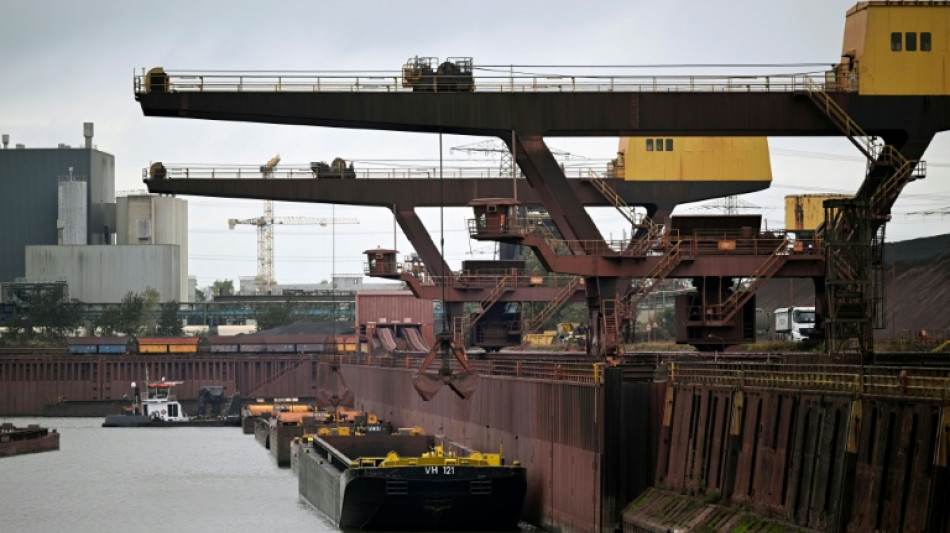
Germany factory output jumps but exports disappoint / Photo: Ina FASSBENDER - AFP

 Physicians Urge Arizona to Ban Medical Gag Clauses and Enable Private Lawsuits

 New Campaign Highlights Knowledge Gaps on Carbon Monoxide Safety Among Americans

 GoodData.AI Launches the Agentic Serving Plane, a New Category of Enterprise Data Infrastructure for AI Agents

 US Government Questions Effectiveness of Waymo’s School Bus Software Fix

 Panthers expected to begin 2027 NRL season away from new stadium

 Sweet As app launches restaurant discovery platform

 MLA seeks inquiry into reported sectarian gestures on Ormeau Road

 Louise O’Reilly attacks Simon Harris over unemployment remarks
German industrial production unexpectedly jumped in November but exports fell heavily, data showed Friday, offering a mixed picture for Europe's struggling top economy.
Factory output rose 0.8 percent month-on-month, according to preliminary data from statistics agency Destatis, far better than analyst expectations of a decline.
It marked the first time since a post-Covid lockdown surge in 2021 that production has increased for three straight months, analysts said.
"Producers of capital goods, including those manufacturing defence equipment, are in particular benefiting," said the economy ministry in a statement.
On Thursday official data showed that industrial orders -- a key indicator of future business activity -- also registered a surprise jump in November due to demand for military gear.
Germany is ramping up defence spending to overhaul its long-neglected armed forces to face a hostile Russia and amid concerns over US security commitments to Europe.
The rise in factory output was driven by increases in the manufacture of machinery and equipment and machine maintenance and assembly, as well as auto production, Destatis said.
There was bad news on the trade front, however, with exports down 2.5 percent in November from the previous month, coming in at 128.1 billion euros ($149 billion).
The United States remained the top export destination for German firms. But shipments to the world's top economy slipped again, dropping more than four percent, with US President Donald Trump's tariffs exacting a heavy toll.
Exports to other EU countries slid over four percent but exports to China, Germany's biggest trading partner, were up more than three percent.
Imports, however, rose 0.8 percent to 115.1 billion euros in November.
The trade surplus narrowed to 13.1 billion euros.
While welcoming some positive signs, ING bank economist Carsten Brzeski cautioned that "the German economy is still struggling to return to growth".
"Structural headwinds, like geopolitical shifts and the changing role of China in the global economy, remain a severe challenge for German industry," he said.
H.Portela--PC

