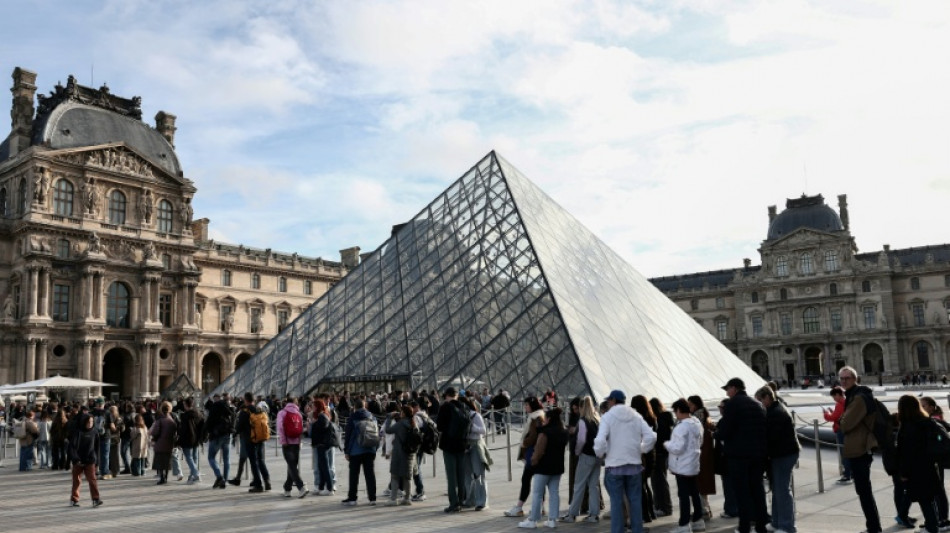
French museum fare hikes for non-European tourists spark outcry / Photo: Thibaud MORITZ - AFP

 Rybakina, Gauff advance to Toronto quarter-finals
 Rahm three-peats as LIV Golf season champ while Niemann wins at New York

 Vollering wins Tour de France Femmes after war of nerves

 BMW’s next chapter accelerates with New Class rollout

 Five dead in new Russia, Ukraine strikes

 PSG sign France full-back Digne from Villa

 Sinner withdraws from Cincinnati Open with knee injury

 Fernandez's 'perfect' race earns him British MotoGP Grand Prix win
 Iran Guards say won't reopen Hormuz without US meeting Tehran's demands
 Hogh's hat-trick inspires Celtic to 5-1 victory over Kilmarnock

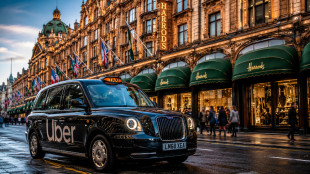 London grants first licences for supervised Uber robotaxis

 Erasmus hopeful Kolisi hamstring injury not 'too bad'
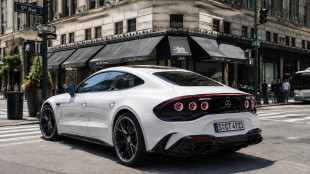
 Luxury car buyers trade prestige for mainstream value

 Students, teachers mourn girl killed in Thailand school shooting

 Jacobson to lead New Zealand for first time against Sharks

 Typhoon Dolphin makes landfall in China after flight cancellations, evacuations

 South Korea FA apologises after sex scandal adds to controversies

 Indonesia closes national park as wildfire spreads

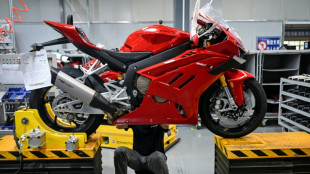 ZXMoto leads China's charge to dominate the global motorbike market

 Top-ranked Sabalenka, Pegula stunned in Toronto fourth round
 Japan nuclear debate unnerves proponents of pacifism

 Spanish teen Jodar ousts eighth seed Lehecka at Montreal

 Angers mounts in US over vast network of car license plate cams

 Darderi to face Nakashima in Montreal quarter-finals
 Espresso power fires Darderi past Borges in Montreal

Should foreign tourists pay more for state-funded galleries than locals, or should art be accessible to all, without discrimination? France is hiking prices for non-Europeans at the Louvre this week, provoking debate about so-called "dual pricing".
From Wednesday, any adult visitor from outside the European Union, Iceland, Liechtenstein and Norway will have to pay 32 euros ($37) to enter the Louvre -- a 45-percent increase -- while the Palace of Versailles will up its prices by three euros.
Americans, UK citizens and Chinese nationals, who are some of the museum's most numerous foreign visitors, will be among those affected, as will tourists from poorer countries.
The French move has few precedents elsewhere in Europe, but is more common in developing countries, where tariffs at sites such as Machu Picchu in Peru or the Taj Mahal in India vary.
Trade unions at the Louvre have denounced the policy as "shocking philosophically, socially and on a human level" and have called for strike action over the change, along with a raft of other complaints.
They argue that the museum's vast collection of 500,000 items, including many from Egypt, the Middle East or Africa, hold universal human value.
While rejecting discriminatory pricing on principle, they are also worried for practical reasons, as staff will now need to check visitors' identity papers.
French academic Patrick Poncet has drawn a parallel between France's move and the policies of US President Donald Trump, whose administration hiked the cost for foreign tourists of visiting US National Parks by $100 on January 1.
The French policy was "symptomatic of the return, as elsewhere in the world, of unabashed nationalism", Poncet wrote in Le Monde newspaper last month.
- 'Not meant to pay' -
Other state-owned French tourist hotspots are also hiking their fees, including the Chambord Palace in the Loire region and the national opera house in Paris.
The government has justified the increases on financial grounds, looking to raise 20-30 million euros annually at a time when it is under pressure to boost revenues and cut spending.
Some of the funds will go towards a colossal plan to renovate the Louvre, which French President Emmanuel Macron announced last year.
Estimated to cost around a billion euros, unions and some art critics have called the project wasteful.
Everyone agrees the Louvre is in poor shape, however, with a recent water leak, structural problems and an embarrassing daylight robbery in October focusing minds.
"I want visitors from outside the EU to pay more for their entry tickets and for that surcharge to go toward funding the renovation of our national heritage," Culture Minister Rachida Dati said at the end of 2024 as she announced the hikes.
"The French are not meant to pay for everything all by themselves," she added.
- European outlier -
It remains to be seen whether the break with European convention by the continent's most-visited country will spur other cultural destinations to follow suit.
Pricing based on age is commonplace in Europe, with access for under-18s free at places such as the Acropolis in Athens, the Prado in Madrid or the Colosseum in Rome to encourage them to visit.
The Louvre will remain free for minors from all countries and Europeans under 26.
Other destinations, such as the Doge's Palace in Venice, offer free entrance for city residents.
Britain has long had a policy of offering universal free access to permanent collections at its national galleries and museums.
But the former director of the British Museum, Mark Jones, backed fee-paying in one of his last interviews in charge, telling The Sunday Times newspaper in 2024 that "it would make sense for us to charge overseas visitors for admission".
The proposal prompted debate but has not been adopted.
A research paper published last year by The Cultural Policy Unit, a British museum think tank, opposed it for both practical and philosophical reasons.
It would reduce entries, lengthen queue times and overturn a centuries-old policy, the report concluded.
"Britain holds its national collections for the world -- not just its own residents," it objected.
N.Esteves--PC