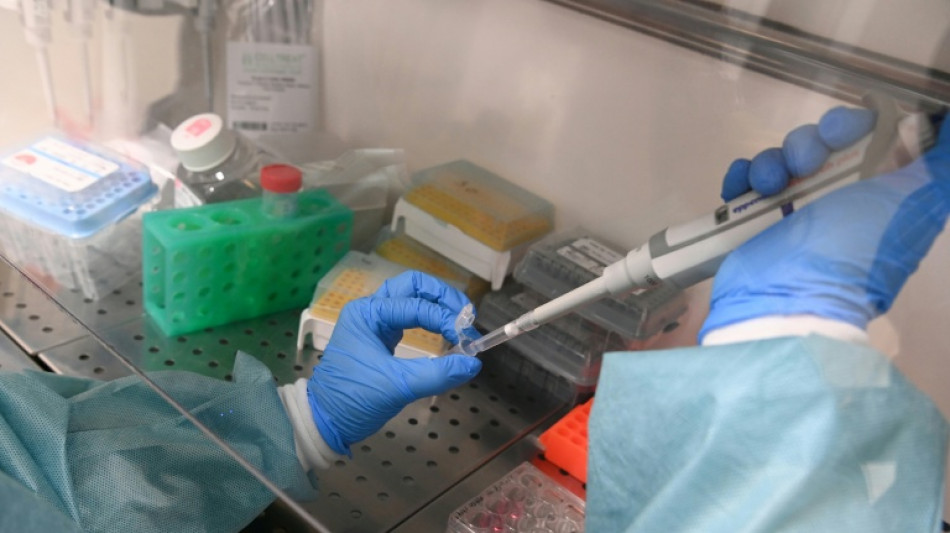
Moderna says US refusing to review mRNA-based flu shot / Photo: JEAN-FRANCOIS MONIER - AFP

 Physicians Urge Arizona to Ban Medical Gag Clauses and Enable Private Lawsuits

 New Campaign Highlights Knowledge Gaps on Carbon Monoxide Safety Among Americans

 GoodData.AI Launches the Agentic Serving Plane, a New Category of Enterprise Data Infrastructure for AI Agents

 US Government Questions Effectiveness of Waymo’s School Bus Software Fix

 Panthers expected to begin 2027 NRL season away from new stadium

 Sweet As app launches restaurant discovery platform

 MLA seeks inquiry into reported sectarian gestures on Ormeau Road

 Louise O’Reilly attacks Simon Harris over unemployment remarks

 Virginia overwhelms Arkansas 91-72 behind balanced scoring

 Second major storm brings destructive winds and outages to British Columbia

 Godzilla Minus Zero leads North American box office with $31.6m

Vaccine manufacturer Moderna said Tuesday the US Food and Drug Administration was refusing to review an application for its first mRNA-based flu shot.
The move comes as the current iteration of the FDA has called for a reconsideration of approval procedures for certain vaccines, including for influenza -- proposed federal policy changes under President Donald Trump that have triggered widespread alarm among public health and medical professionals.
Moderna, a US company, said the agency's top vaccine regulator, Vinay Prasad, wrote in a letter that Moderna's clinical trial was not "adequate and well-controlled," and had not tested its experimental shot against the best product on the market.
In the large trial Moderna had compared its new vaccine with Fluarix, an approved flu shot from the company GSK.
Moderna said the rejection was "inconsistent with previous written communications" with the FDA branch that regulates biological products, including vaccines, known by the acronym CBER.
The decision "did not identify any safety or efficacy concerns with our product" and "does not further our shared goal of enhancing America's leadership in developing innovative medicines," Moderna CEO Stephane Bancel said in the statement.
"It should not be controversial to conduct a comprehensive review of a flu vaccine submission that uses an FDA-approved vaccine as a comparator in a study that was discussed and agreed on with CBER prior to starting."
Moderna said it had received a Refusal-to-File letter, which would indicate the application did not meet the requirements for substantive review. The company said it had requested a meeting to discuss the decision.
The letter did not identify any safety or efficacy concerns regarding the mRNA vaccine, said Moderna, which added the shot was accepted for review in the European Union, Canada and Australia.
During his first term Trump called mRNA technology a "modern-day miracle."
It was used during the Covid-19 pandemic to swiftly develop an immunization against the fast-spreading illness, and was credited with saving millions of lives.
Vaccines against Covid-19 are considered safe and effective by global health authorities, and protect against the most severe forms of the infection.
But in his second term, Trump has appointed Robert F. Kennedy Jr as his health chief, and the long-time vocal vaccine skeptic has spent the past year reshaping federal health agencies in his image.
That has meant spreading false information and sowing doubt about the safety and efficacy of vaccines widely known to be safe, and upending the pediatric immunization schedule.
Notably, Kennedy cut off federal research grants that funded mRNA development.
F.Ferraz--PC

