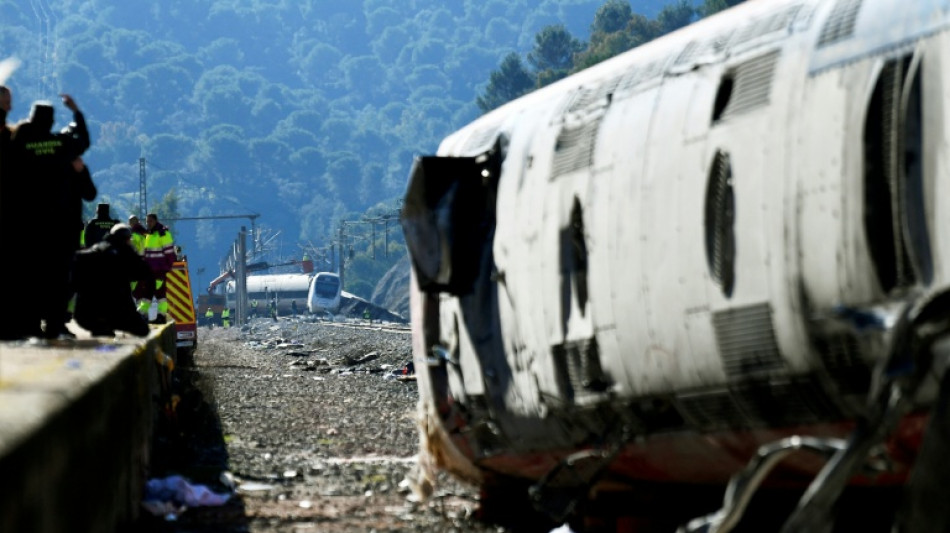
Spanish PM vows justice, defends rail safety after deadly accidents / Photo: CRISTINA QUICLER - AFP/File

 Physicians Urge Arizona to Ban Medical Gag Clauses and Enable Private Lawsuits

 New Campaign Highlights Knowledge Gaps on Carbon Monoxide Safety Among Americans

 GoodData.AI Launches the Agentic Serving Plane, a New Category of Enterprise Data Infrastructure for AI Agents

 US Government Questions Effectiveness of Waymo’s School Bus Software Fix

 Panthers expected to begin 2027 NRL season away from new stadium

 Sweet As app launches restaurant discovery platform

 MLA seeks inquiry into reported sectarian gestures on Ormeau Road

 Louise O’Reilly attacks Simon Harris over unemployment remarks

 Virginia overwhelms Arkansas 91-72 behind balanced scoring

 Second major storm brings destructive winds and outages to British Columbia

 Godzilla Minus Zero leads North American box office with $31.6m

Spanish Prime Minister Pedro Sanchez vowed Wednesday that justice would be done following two train accidents that claimed 47 lives last month, and insisted the country's rail system "is safe".
The back-to-back disasters in January shocked the country and raised doubts about the safety of train travel in Spain, which boasts one of the world's most extensive high-speed rail networks.
"The entire state is doing -- and will continue to do -- everything possible to support the injured and the victims' families, clarify the causes of the accident, and, if necessary, ensure justice is done," Sanchez told parliament.
Spain's rail system "is not perfect, but it is safe", he added, vowing to take all necessary measures to prevent similar tragedies in the future.
Shock hit the rail sector after a collision between two high-speed trains in the southern region of Andalusia on January 18 resulted in the death of 46 people -- one of Europe's deadliest such disasters this century.
Two days later, a commuter train in the Barcelona region ploughed into the rubble of a collapsed wall following heavy rain, killing the driver and injuring dozens.
The government reached a deal with railway unions on Monday to invest 1.8 billion euros ($2.1 billion) to improve maintenance, create 3,650 jobs, and strengthen public rail safety.
The agreement prompted unions to call off a three-day strike.
The opposition has called for the resignation of Transport Minister Oscar Puente, blaming the accidents on underinvestment in maintenance and understaffing.
Popular Party (PP) chief Alberto Nunez Feijoo accused the government in parliament of having "played Russian roulette with our safety".
He said the accident in Andalusia was "preventable, not an unforeseeable catastrophe" and blasted the government for not apologising and "taking responsibility".
A preliminary report suggested the track may have been cracked before that catastrophe.
Private operators began running passenger trains in Spain in 2021 following the liberalisation of the rail sector, ending Renfe's decades-long monopoly.
Since then, passenger numbers on some routes have grown noticeably, but the unions say investment in maintenance has not kept up.
But Sanchez said his coalition government had nearly tripled investment in railway infrastructure since it came to power in 2018.
He accused the previous PP government of underinvestment in the national rail network which he said carries over 12 million passengers each week.
"There is still work to be done, without a doubt, and much to improve," Sanchez told lawmakers.
T.Resende--PC

