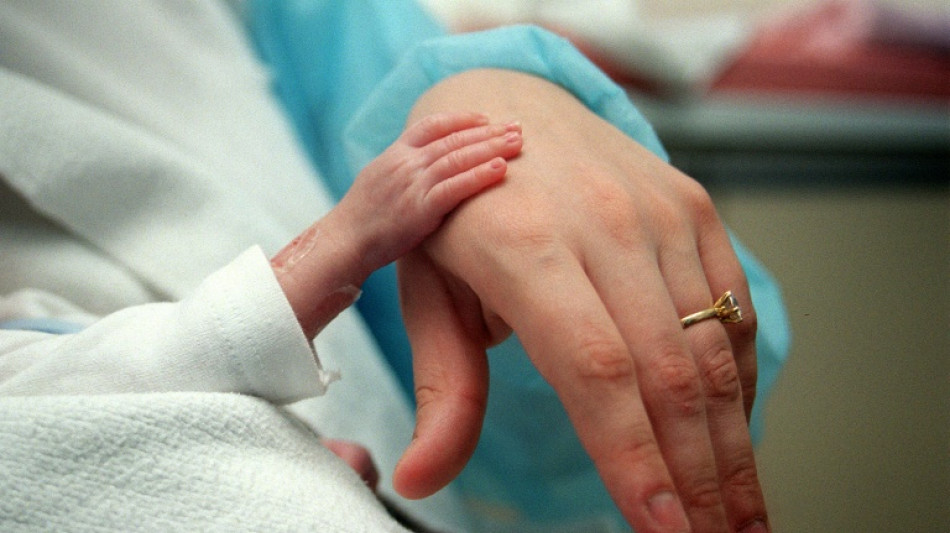
France lawmakers urge changes to counter dwindling births / Photo: Didier PALLAGES - AFP

 Physicians Urge Arizona to Ban Medical Gag Clauses and Enable Private Lawsuits

 New Campaign Highlights Knowledge Gaps on Carbon Monoxide Safety Among Americans

 GoodData.AI Launches the Agentic Serving Plane, a New Category of Enterprise Data Infrastructure for AI Agents

 US Government Questions Effectiveness of Waymo’s School Bus Software Fix

 Panthers expected to begin 2027 NRL season away from new stadium

 Sweet As app launches restaurant discovery platform

 MLA seeks inquiry into reported sectarian gestures on Ormeau Road

 Louise O’Reilly attacks Simon Harris over unemployment remarks

 Virginia overwhelms Arkansas 91-72 behind balanced scoring

 Second major storm brings destructive winds and outages to British Columbia

 Godzilla Minus Zero leads North American box office with $31.6m

French lawmakers Wednesday urged longer paid parental leave and more financial support to make it easier for people to have more children, after deaths last year exceeded births in France for the first time in decades.
"I'm calling for a family policy overhaul," the lead author of a parliamentary report on the cause of dwindling birth rates, Jeremie Patrier-Leitus, told AFP.
That would "enable the French to fulfil their desire to have children", he added.
The recommendations came after France last year -- for the first time since the end of World War II -- recorded fewer babies born than people dying in the country, according to the National Statistics Institute.
Fertility rates are in decline across the European Union.
While women in France still hold some of the bloc's highest fertility rates, scoring second after Bulgaria in 2023, according to EU statistics, they would like to have more children, the lawmakers said, and would do so if the right measures were in place.
Recommendations include monthly payments of 250 euros (almost $300) per child to families until the offspring reach age 20, regardless of a household's income, as well as paid parental leave of 12 months, to be shared between both parents.
Currently, paid maternal leave is a little under four months for a first child, while fathers are allowed 25 days off after a birth.
The legislators also suggested a few half days a year off for parents and grandparents to help children through key moments of their education.
- Letter to 29-year-olds -
The parliamentary report comes after France's health ministry last week unveiled a plan to battle infertility, which affects 3.3 million French people.
The ministry said it would be sending a letter to all 29-years-olds -- men and women -- starting from the end of the summer, as part of the plan.
The letter would inform them about "both sexual health and reproductive health, intended for all French men and women aged 29".
The plan has sparked some criticism, especially abroad.
British columnist Zoe Williams wondered in The Guardian how she would feel to receive such a letter from "childless" President Emmanuel Macron.
In France, reactions were more muted.
And the French satirical publication Le Gorafi on Tuesday joked that "Macron recommends that the French hang a photo of him above their bed" to encourage them to make babies.
Macron in 2024 caused waves when he said a plan to combat infertility would help pave the way towards what he described as the country's "demographic re-armament".
Feminists countered that it was not up to the state to "dictate to women if they should have children and when".
V.Fontes--PC

