European debate over nuclear weapons gains pace / Photo: Michael BIHLMAYER - POOL/AFP

 Flight cancellations, evacuations in China as Typhoon Dolphin looms
 Iran issues demands for reopening of Hormuz
 Afghanistan's gold rush upends lives and landscapes
 Messi missing after father's death as Miami lose in Leagues Cup
 World number one Sabalenka ousted in Toronto by Alexandrova
 Olympic weightlifter hoists debris for Venezuela earthquake recovery
 FIFA condemns 'concerted and ongoing effort' to weaken Infantino
 South Africa win after surviving late Argentina surge
 Man Utd boss Carrick being 'careful' with Mount as Man Utd draw with PSG
 All Black Tuipulotu surprised after Sharks include Nonu
 Infantino denies allegations of affair, favouritism while at UEFA: report

 MotoGP leader Martin soars to victory in British GP sprint race
 Mosimane set to succeed Broos as South Africa coach

 Drone enters Bulgaria, explodes near pipeline at Romanian border
 Paris orders e-scooter users to wear helmets, reflective gear
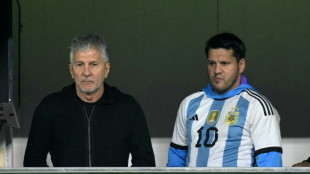 Lionel Messi's father Jorge dies aged 68

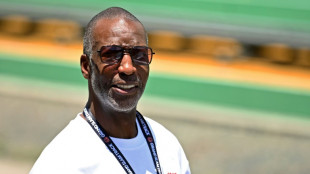 Johnson reveals 'stress' of Grand Slam Track collapse, clarifies payment
 Defending champion Ferrand-Prevot out of Tour de France Femmes
 Wallabies squeeze past Japan to give Kiss a winning start
 Kyiv mourns recovery volunteer, whose life 'intertwined with the fallen'

 Only two vehicles earn perfect child-seat scores for 2026

 Chinese car brands reshape Australia’s automotive market
 Electric cars enter their most decisive generation yet
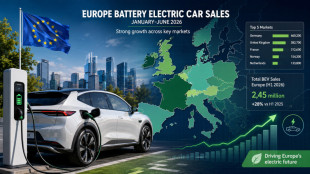
 Three Chinese carmakers enter the global automotive top 10
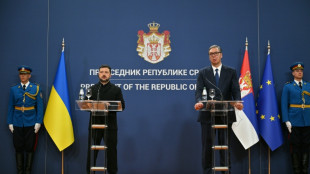
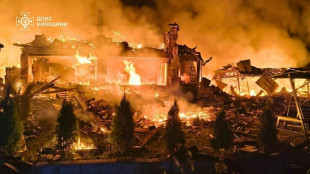 Ukraine's Zelensky visits Russian ally Serbia as Moscow pounds Kyiv

European leaders, worried about threats from a nuclear-armed Russia and doubts about the future of US security commitments, are increasingly debating whether to bolster nuclear arsenals on the continent.
While the United States and Russia have thousands of nuclear warheads each, in Europe only France and Britain have atomic weapons, with the combined total in the hundreds.
US President Donald Trump's disdainful comments about NATO and his transactional approach to foreign relations have European allies questioning whether they can risk relying on US protection.
"Europeans can no longer outsource their thinking about nuclear deterrence to the United States," an expert group warned in a report published for the Munich Security Conference.
It called on Europe to "urgently confront a new nuclear reality" in the face of "Russia's nuclear-backed revisionism".
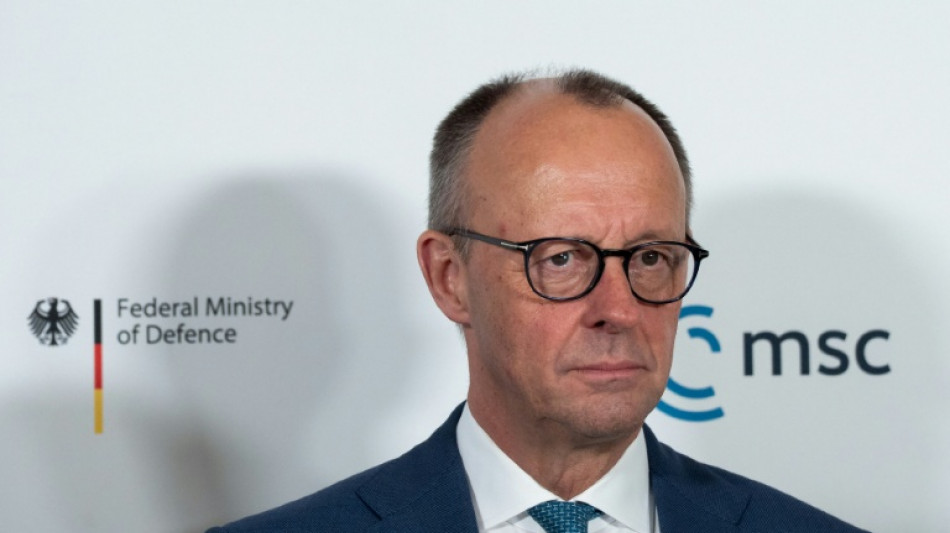
Speaking at the MSC, German Chancellor Friedrich Merz said he was already holding "confidential talks with the French president about European nuclear deterrence".
Britain's Prime Minister Keir Starmer said the UK's nuclear deterrent already protected fellow NATO members but stressed he was "enhancing our nuclear cooperation with France".
Starmer said "any adversary must know that in a crisis they could be confronted by our combined strength" alongside France.
- US 'ultimate guarantor' -
NATO Secretary General Mark Rutte insisted that "nobody" was considering fully replacing the American nuclear umbrella, which has shielded Europe's NATO countries for decades.
"I think every discussion in Europe making sure that collectively the nuclear deterrence is even stronger, fine," Rutte, a former Dutch prime minister, told journalists.
"But nobody is arguing in Europe to do this as a sort of replacement of the nuclear umbrella of the United States.
"Everybody realises that is the ultimate guarantor -- and all these other discussions are in addition."
US Under Secretary of Defense Elbridge Colby said that Trump "has made clear the US extended nuclear deterrent continues to apply here" in Europe.
He said there is US "receptivity to a greater European contribution to ... the NATO deterrent" -- but that conversations need to be "very sober" and "deliberate" because of concerns about nuclear proliferation and instability.
- No good options -
Discussion of nuclear armament has long been viewed as taboo in many other European countries -- but Russian aggression and worries about US commitment have forced the issue into mainstream European politics.
Many European officials are convinced that Moscow's territorial ambitions will not be confined to Ukraine, and that other European countries -- including even NATO members -- could face some sort of attack.
The MSC report laid out five nuclear options for Europe, while cautioning that none were good. There was "no low-cost or risk-free way out of Europe's nuclear predicament", they warned.
"The era in which Europe could afford strategic complacency has ended," wrote the authors, calling on European policymakers "to confront the role of nuclear weapons in the defence of the continent directly and without delay -- and to invest the resources needed to do so competently".
It listed five options: Continue to rely on American deterrence; strengthen the role of British and French nuclear weapons in a European deterrent; jointly develop European nuclear weapons as a deterrent; increase the number of European countries with their own nuclear arsenals; or expand European conventional military power to present a more intimidating non-nuclear deterrent.
Sticking with the status quo, and relying on America's unmatched military might, remained "the most credible and feasible option" in the short term, they argued.
- 'We need action' -
Very few currently believe Europeans can assume full responsibility for deterrence in the short term.
"If there's going to be some kind of bigger European investments in France or the UK's nuclear deterrence, that's only a good thing," Finnish Defence Minister Antti Hakkanen recently told AFP.
But he quickly added: "If you're talking about to compensate US nuclear deterrence, that's not realistic at this point."
Experts nevertheless welcomed the increasingly serious political debate on an issue that has long worried military planners.
"That's very positive, but now we need action," Heloise Fayet of the French Institute of International Relations (Ifri), a contributor to the MSC report, told AFP.
The report noted that both France and Britain would face a range of challenges in growing their arsenals and extending nuclear protection across Europe -- from hefty costs to tricky questions about who holds final authority to launch the warheads.
French President Emmanuel Macron, who has previously raised the possibility of extending France's nuclear umbrella across Europe, is scheduled to deliver a major speech on French nuclear doctrine at the end of February.
Macron said in Munich he was considering a doctrine that could include "special cooperation, joint exercises, and shared security interests with certain key countries".
O.Gaspar--PC