Soaring gas prices spark renewed debate about European electricity / Photo: Ina FASSBENDER - AFP/File

 South Africa win after surviving late Argentina surge

 Man Utd boss Carrick being 'careful' with Mount as Man Utd draw with PSG

 All Black Tuipulotu surprised after Sharks include Nonu
 Infantino denies allegations of affair, favouritism while at UEFA: report

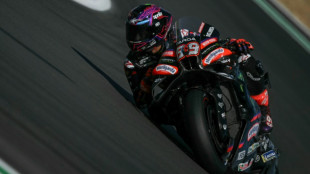 MotoGP leader Martin soars to victory in British GP sprint race
 Mosimane set to succeed Broos as South Africa coach

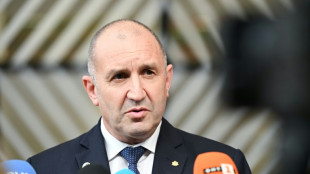 Drone enters Bulgaria, explodes near pipeline at Romanian border

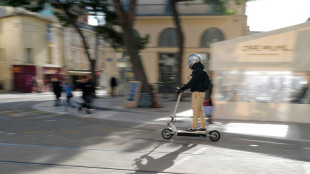 Paris orders e-scooter users to wear helmets, reflective gear
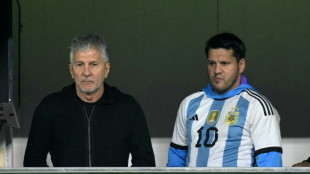 Lionel Messi's father Jorge dies aged 68

 Johnson reveals 'stress' of Grand Slam Track collapse, clarifies payment
 Defending champion Ferrand-Prevot out of Tour de France Femmes
 Wallabies squeeze past Japan to give Kiss a winning start

 Kyiv mourns recovery volunteer, whose life 'intertwined with the fallen'

 Only two vehicles earn perfect child-seat scores for 2026

 Chinese car brands reshape Australia’s automotive market

 Electric cars enter their most decisive generation yet
 Three Chinese carmakers enter the global automotive top 10
 Ukraine's Zelensky visits Russian ally Serbia as Moscow pounds Kyiv

 Ukraine's Zelensky visits Russian ally Serbia for talks

 Defending champion Shelton storms to Montreal win

 Exodus: West Bank hardships drive out Palestinian Christians

 Travis Head wins Australian cricketer of the year gong

 Colombia's new president vows to 'defeat narco-terrorists'

 Call for Infantino to resign comes amid wave of support

 Trump ally Abelardo de la Espriella sworn in as Colombia president

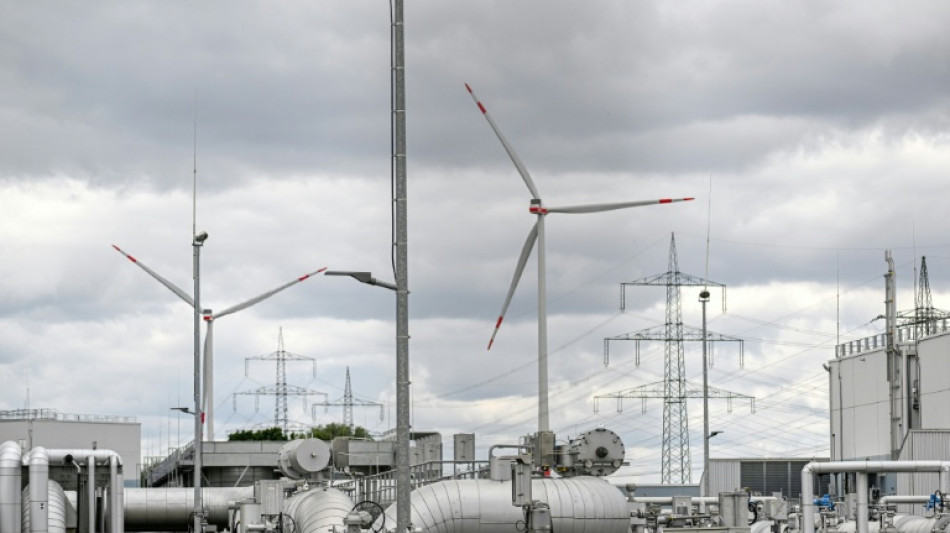
A surge in natural gas prices since the Middle East war erupted has sparked renewed debate about Europe's electricity market, where prices are still linked to gas.
Industrial firms and countries like Italy are already calling for reform ahead of an EU summit on competitiveness on March 19.
The effective closure of the Strait of Hormuz as the United States and Israel pound Iran with air strikes and Tehran's retaliatory strikes on Gulf states have again highlighted Europe's dependence on imported energy.
European industry has long been crying out for lower electricity prices to help them meet competition from Asia and North America.
The impact of the war on fossil fuel prices "confirms the need to support the electrification of industrial processes even more," the Uniden trade association which represents France’s energy-intensive industrial companies said this week.
The European Union has sought to reduce dependence on imported oil and gas and should present a plan in May to speed up a shift to electricity.
France also aims to present a plan in the coming months to support electric cars, heat pumps and electric furnaces in industry.
The Middle East war "brutally reminds us of our vulnerability to the volatility of fossil fuel markets" and reinforce the need to speed up electrification of the economy, said France's ecological transition minister Monique Barbut.
Except that "in Europe, the price of electricity is still largely determined by that of gas," noted Marc Sanchez, head of the SDI trade association that represents small and medium-sized businesses in France.
In Europe the price of electricity is determined by the production costs of the last power plant called upon to meet demand.
That can be cheaper renewable or nuclear plants when demand is low. But gas power stations can be brought online and shut down quickly, thus making them very useful to meet peak demand for electricity.
"This system can lead to higher electricity prices, including in countries like France, where a large share of production is based on decarbonized, competitive sources," said the SDI.
- Dependence upon imported gas-
After getting burned by a spike in gas prices following Russia's 2022 invasion of Ukraine, the European Union adopted a reform in 2024 following heated debate between industry, governments and political parties.
One objective was to protect the electricity market from the volatility of fossil fuel prices.
Current electricity costs are far from the dizzying prices reached in 2022.
Gas price rises have been limited. Equally important, many French nuclear power plants were undergoing repairs in 2022, boosting the need for gas-fired power plants.
Today, "nuclear power is running well" and "cushioning exposure to gas," said Emeric de Vigan, an energy market expert, in comments published on his LinkedIn account.
Nevertheless, "the surge in gas prices has had an impact on French electricity" prices, said Jean-Paul Aghetti, head of Exeltium, a consortium which buys electricity for large French industrial consumers, told AFP.
And electricity prices depend more heavily upon gas in Germany, Italy and Austria than in France, Spain or Portugal, which all rely more upon renewables and nuclear.
Even if EU nations invest heavily in low-cost renewable electricity generation it won't eliminate the need for peak production capacity.
The European Steel Association noted that industrial customers often still paid electricity prices linked to gas prices, and called for a new reform.
"Structurally higher wholesale prices, caused by the EU dependency on expensive, imported gas, combined with significant volatility, are producing negative effects that cannot be ignored," is said.
Not all EU countries want another reform.
Seven countries including Denmark, Luxembourg, the Netherlands, Portugal and Sweden have urged the European Commission to leave the current system alone.
They believe Europe's dependence upon imported gas is the reason why energy costs are higher than in other regions of the world, not the structure of the electricity market.
Even before the outbreak of the war, several federations representing energy-intensive industries had argued that ensuring competitive energy prices was key to Europe's reindustrialisation.
"Electrification can only be deployed on a large scale if electricity is affordable and predictable," said Nicola Rega, head of climate change and energy at Cefic, the trade association for the EU chemical industry.
A.S.Diogo--PC