Lobito Corridor: Africa's mega-project facing delivery test / Photo: Phill Magakoe - AFP

 Yamaguchi on course for fourth badminton world crown

 Man Utd humiliated by Hull in dismal start to Premier League season
 Anthropic market debut could break SpaceX IPO record: media

 Pope's 'couturier of the sacred' fueled by faith
 Duplantis locked in on 'grinding' for big bars
 Stokes says decision to leave Headingley off Ashes roster 'shambolic'

 New arrival Rodri to miss Elche opener: Barca's Flick

 Atletico's Alvarez to return against Villarreal: Simeone

 Dozens of civilians killed, kidnapped as jihadists clash in Nigeria
 Former envoys urge joint French, UK action on Palestinian territories

 Australia lead by 101 in 2nd Bangladesh Test as 18 wickets fall on day one

 'Aura' battles leap from social media to Latin America streets

 US, Canada fail to reach trade pact to avert Trump tariffs

 Sudan farms lie barren as El Nino leaves Nile banks dry
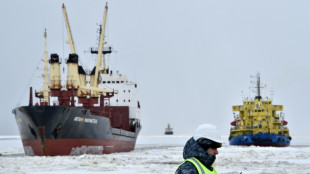 Arctic shipping a daunting prospect in hotly contested region
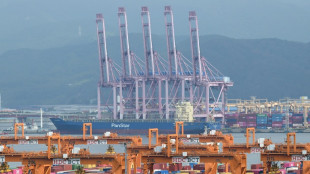
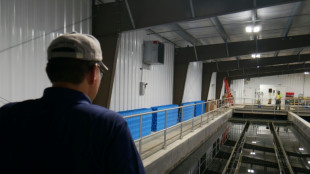 In US, rare earths extracted from coal mine wastewater

 Nakashima pounds Fritz, Bejlek beats Keys in Cincinnati upsets

 Canadian negotiator says 'more work to do' on US trade deal

 'Solid' Clark takes solo lead at BMW Championship
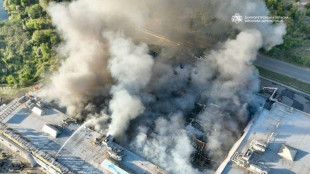
 Arteta hails Arsenal's desire after perfect start to title defence

 Betis down Real Sociedad in La Liga opener

 Mexican governor resumes job despite US drug charges

 Arsenal rout Coventry to open Premier League season in style

 Giant-killer Bejlek overhauls Keys to reach Cincinnati semi-finals

 Man Utd agree deal for Brighton midfielder Baleba: reports

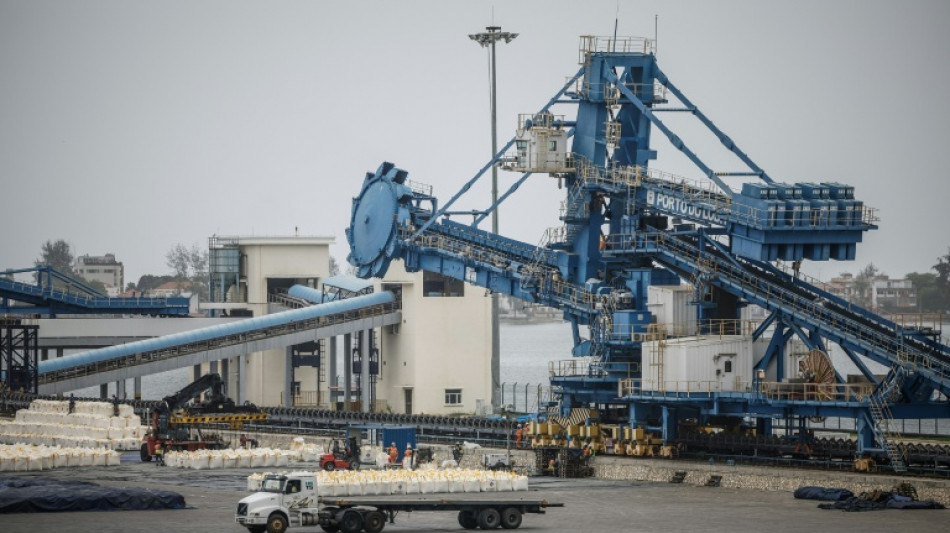
The Lobito Corridor mega-project linking three African countries is shifting from blueprint to proving ground in the global race for critical minerals.
Linking Angola, the Democratic Republic of Congo and Zambia, it was pitched as the West's answer to China's dominance in African mining.
Backed by more than $2.7 billion in pledged investment, the corridor is meant to move copper and cobalt, vital to the energy transition. For now, it remains a work in progress.
- Rail at the core -
The project aims to develop rail infrastructure to transport large quantities of minerals extracted in southern DRC and northern Zambia to Angola's Atlantic Ocean port of Lobito for shipment to global markets.
The governments involved and the European Union -- the project's largest foreign backer -- also want the corridor to drive regional development through farmland projects, logistics hubs and workforce training.
The corridor's backbone is the historic Benguela railway, which runs west to east from Lobito to the Congolese border.
Much of the line was destroyed during Angola's 1975-2002 civil war and rebuilt by a Chinese company until 2019.
Three years later, a European consortium -- Lobito Atlantic Railway, or LAR -- won a 30‑year concession to operate the line, transport minerals and manage Lobito's mineral terminal.
The Angolan rail system already links up with a line serving DRC's mineral-rich Lualaba province and is meant eventually to extend to Haut‑Katanga and into northern Zambia.
- US, Europe and China -
For years, the Lobito Corridor was billed as the biggest US infrastructure investment in Africa.
A US government agency, the Development Finance Corporation, provided a roughly $550-million loan to LAR to upgrade the railway and scale up mineral transport.
Washington's enthusiasm culminated in a late‑2024 visit to Lobito by President Joe Biden, a first for Angola after Barack Obama in 2015.
Donald Trump's return to the White House has clouded the picture. While he has openly coveted critical minerals, he has also favoured bilateral deals over large, multilateral ventures.
Europe has stepped firmly into the lead. Through the EU, its member states, the European Investment Bank and private companies, it has committed about 2 billion euros ($2.3 billion) to the project.
Just over a third is direct development aid, the EU's ambassador to Angola, Rosario Bento Pais, told AFP in Luanda.
"We don't want it to be just a transport corridor. We want it to be an economic development corridor that exactly will embrace all the development of the local economy and of the populations," she said.
Although China lost its concession, Chinese mining firms are already using the corridor to move copper, LAR chief executive Nicholas Fournier said.
In late 2025, China signed a $1.4-billion agreement with Zambia and Tanzania to rehabilitate another line, the 1,800‑kilometre (1,120-mile) Tazara railway, securing long-term access to an Indian Ocean port for mineral imports.
- Why Lobito? -
Lobito, a port city of about 200,000 people some 500 kilometres (310 miles) south of Angola's capital Luanda, sits at the western end of the Benguela line.
Its bay hosts a commercial port, oil and gas terminals and the mineral port. Naturally sheltered, it allows year‑round shipping.
Port capacity far exceeds current traffic, sharply reducing vessel waiting times and cutting costs for exporters.
- Missing link -
Zambia, Africa's second‑largest copper producer, remains the corridor's missing piece.
An old rail line links the country's northern mining belt to Lubumbashi and Kolwezi in the DRC, but it requires a full overhaul -- a project estimated at $4 billion and 10 to 15 years of work.
Zambia "remains very interested", Pais said, but "the United States is no longer in the picture, at least for now."
Working with partners such as the African Development Bank and Italy, the EU is exploring another option: upgrading a road from northern Zambia to the Angolan town of Luacano, where minerals could be loaded onto trains bound for Lobito.
- Risks -
A newly created intergovernmental agency must still prove it can smooth customs bottlenecks and regulatory hurdles.
Political uncertainty looms, with elections scheduled in Zambia in August and in Angola in 2027, raising the risk of policy shifts.
In April, torrential rains damaged sections of the Angolan railway, forcing LAR to rely temporarily on trucking while repairs were carried out.
Critics warn the project will be seen as just another chapter in the global scramble for Africa's critical minerals unless it delivers tangible economic gains for communities in all three countries.
R.J.Fidalgo--PC