12 Billion Gallons of Raw Sewage Discharged into Chicago River Despite Deep Tunnel Infrastructure

 Stadler Begins Testing First Hydrogen Narrow-Gauge Trains for Southern Italy

 Kospi Falls Below 5,000 as U.S. AI Regulation Fears Trigger Circuit Breaker

 Valsoft's TAG Software Group Enters the Content Operations Market with the Acquisition of Chalco

 South Korea Proposes Fourth Delay of Cryptocurrency Gains Tax to 2029

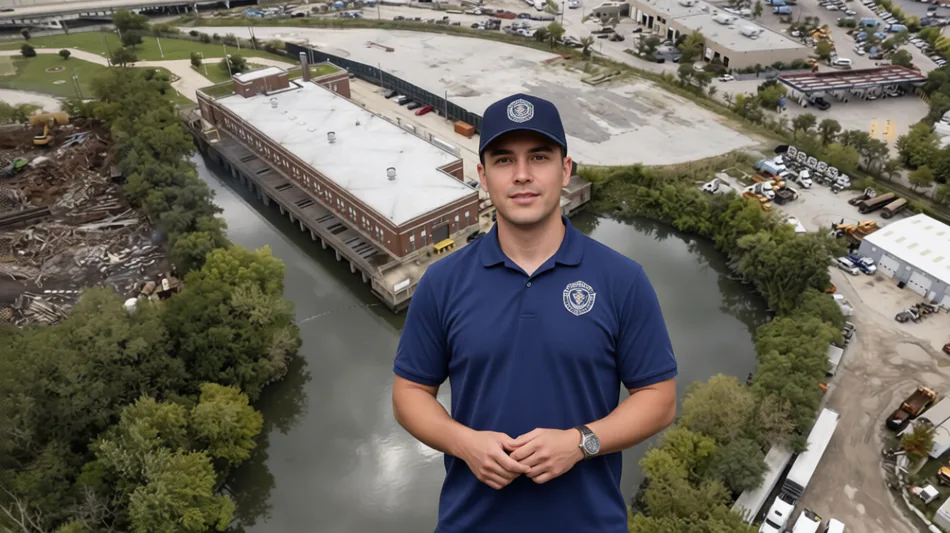
More than 12 billion gallons of untreated sewage have been discharged into the Chicago River this year due to heavy rainfall overwhelming the city's combined sewer system. The Metropolitan Water Reclamation District reports that raw wastewater was released to prevent residential flooding, causing significant ecological damage and raising public health concerns despite decades of infrastructure investment.
More than 12 billion gallons of untreated sewage have been discharged into the Chicago River this year, a volume that has intensified health concerns for residents and caused significant ecological damage despite decades of infrastructure investment. The Metropolitan Water Reclamation District of Greater Chicago (MWRD) reported that heavy rainfall forced the release of raw wastewater to prevent flooding in residential areas, overwhelming the city’s combined sewer system.
The Racine Avenue pumping station on the South Side has discharged more than 10 billion gallons of sewage into the river since January. This figure exceeds the total volume released at the same facility in any year since 2019. Simultaneously, the district’s North Branch pumping station, located at Lawrence Avenue on the border of Albany Park and Lincoln Square, has released nearly 2 billion gallons of untreated wastewater into the north branch of the river.
Joe Gamble, who works at the Chicago Maritime Museum and the Bridgeport Art Center, witnesses the aftermath of these discharges regularly. After storms in early October, Gamble noted that raw sewage floated in the creek adjacent to the art center, with the odor carrying for at least a block or two. The location, known as Bubbly Creek, is a small body of water along the south branch of the Chicago River that divides the Bridgeport and McKinley Park neighborhoods.
Bubbly Creek has long been characterized by its distinct appearance and smell due to historical industrial waste, but recent discharges have exacerbated the conditions. Layers of feces, condoms, tampons, and other items flushed down toilets float past low-lying trees along the shoreline. The accumulation of condoms has become so prevalent that locals have nicknamed them "Chicago whitefish." While the calm waters of Bubbly Creek have attracted more recreational paddlers in recent years, the sewage discharges create hazardous conditions for those who use the water.
"I am sometimes tolerant of smells," Gamble said. "But it’s a different level."
The discharge is driven by the mechanics of Chicago’s combined sewer system, which carries both stormwater and wastewater in a single network. When heavy rains occur, the volume of water exceeds the capacity of the treatment facilities. To prevent sewage from backing up into homes and businesses, the MWRD operates pumping stations that divert the excess mixture directly into the river. The Racine Avenue station, which is nearly 90 years old, moves this water toward the Chicago Sanitary and Ship Canal, then to the Des Plaines and Illinois rivers, and ultimately to the Mississippi River and the Gulf of Mexico.
The frequency and volume of these discharges have raised alarms among environmental advocates and health experts. Tara Hoffmann, executive director of Recovery on Water, a group that operates a rowing team for breast cancer survivors, expressed concern about the safety of her members. Many participants have compromised immune systems following cancer treatment and spend time on the water during warm weather months. Hoffmann recalled a day in June when the team paddled through visible excrement and observed fish gasping at the surface due to lack of oxygen.
"One of the first things you notice," Hoffmann said, "is fish up at the surface, gasping for air. They’re just desperate to breathe."
The ecological impact extends beyond immediate fish kills. Phil Nicodemus, research director for Urban Rivers, an organization dedicated to turning urban waterways into wildlife sanctuaries, explained that raw sewage introduces large amounts of nutrients into the water. This triggers a massive drop in oxygen levels, leading to significant die-offs of aquatic life.
"If that happens enough times throughout the year, you might be talking about a whole summer without much oxygen at all," Nicodemus said. "That creates an enormous problem for wildlife."
Research biologist Austin Happel from the Shedd Aquarium studied Bubbly Creek after a large sewage spill in 2023. His findings indicated a stark shift in the local food chain, with oxygen levels dropping and nitrogen levels rising significantly. Fish populations fled the area and did not return for weeks, disrupting the ecosystem that provides a home to hundreds of animal species.
These discharges occur despite the existence of the Tunnel and Reservoir Plan, commonly known as the Deep Tunnel. This sprawling infrastructure project, initiated in the 1970s, was designed to capture floodwater in underground tunnels and massive reservoirs to protect the Chicago River and Lake Michigan from pollution. The system includes more than 100 miles of tunnels ranging from under 10 feet to 35 feet in diameter, leading to two former rock quarries used as storage reservoirs.
However, climate change has intensified weather patterns, bringing storms that drop rain faster and harder than the system was designed to handle. Chicago’s sewer system can manage only about 2 inches of rain before flooding becomes likely, whereas recent storms have delivered more than 8.5 inches in 24 hours. This year, the Thornton reservoir in South Holland filled with nearly 8 billion gallons of stormwater for the first time since its opening in 2015 and has not yet completely drained. The McCook reservoir in Bedford Park filled to capacity 10 times this year, compared to only five times between its opening in 2017 and last year.
The MWRD is currently expanding the McCook reservoir, which is expected to hold 10 billion gallons upon completion in 2032. The district had previously told the Environmental Protection Agency that the expansion would be finished by 2029, but timelines have shifted. Margaret Frisbie, executive director of Friends of the River, noted that the efforts are not keeping pace with the intensity of the rains.
"I don’t think you can engineer your way out of that," Frisbie said, referring to the volume of rainfall recorded at O’Hare Airport, which exceeded 37 inches this year. She argued that the solution requires a mix of innovative smaller projects, such as creating green spaces and structures that capture rainwater before it enters the sewers.
District officials acknowledge the need for additional flood prevention measures beyond the Deep Tunnel. They have designed nearly 300 flood mitigation projects, many of which are still in the planning stages. These strategies aim to tap into other methods to capture water before it overwhelms the existing infrastructure.
The ongoing sewage discharges highlight the tension between urban development, aging infrastructure, and changing climate conditions. As more people turn to the river for recreation, the visibility of these environmental challenges has increased, prompting calls for broader systemic changes in how the city manages stormwater and wastewater.
R.Veloso--PC