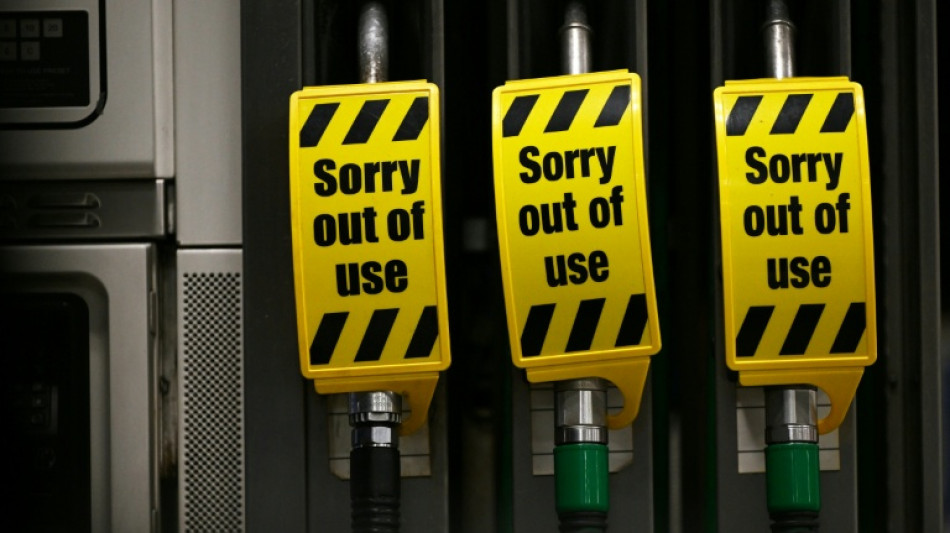
IEA says members to release 400 mn barrels from oil reserves / Photo: Paul ELLIS - AFP

 Mount injury overshadows Man Utd draw with Paris Saint-Germain
 Ukraine denies targeting Bulgaria as drone explodes near pipeline
 Vollering grabs Tour de France lead in Nice
 Euros to showcase new TV guidelines on non-sexualisation of women athletes
 'Calm' Kiss savours first win as Wallabies boss
 Duplantis bids for fourth European title as stars align in Birmingham
 Ukraine warns of tough winter as Russia strikes kill 4 in Kyiv region
 Recovering Marchand to skip medleys at European swim champs
 MotoGP leader Martin speeds to British Grand Prix pole

 Drone enters Bulgaria, explodes near pipeline at Romanian border: Bulgarian PM
 Arsenal sign Brazil midfielder Guimaraes from Newcastle
 Atletico will not sell Alvarez, says Simeone

 Ford Fathom turns affordable electric pickup into reality
 Lise Klaveness, the Norwegian thorn in Infantino's side

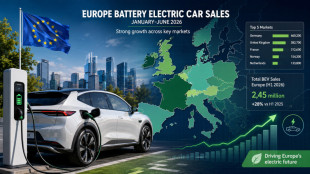 Europe’s electric car boom exposes a widening market divide

 US Senate confirms Trump's ex lawyer as attorney general
 Tibet conference in Nepal pushed online
 Nocturnal 'coffee frog' discovered in Costa Rica
 India's 'cockroach' protest movement keeps heat on Modi
 Russia's only anti-war party eyes support boost at elections
 Canada tries to adapt to a future of wildfires
 Death of NBA forward Clarke ruled accident due to heroin, cocaine
 Abelardo de la Espriella, Colombian president and flamboyant millionaire
 Maradona's 'Hand of God' ball heads to US auction
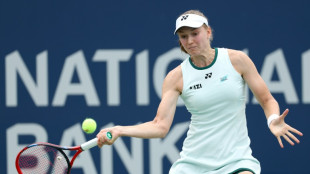 Rybakina advances while Andreeva exits at Toronto
The International Energy Agency said Wednesday its member countries would unlock 400 million barrels of oil from their reserves to ease the impact of the Middle East war, the biggest such release ever.
"The oil market challenges we are facing are unprecedented in scale, therefore I am very glad that IEA member countries have responded with an emergency collective action of unprecedented size," IEA Executive Director Fatih Birol said.
The IEA-coordinated release exceeded the 182 million barrels of oil that member countries of the Paris-based global energy body released in 2022 when Russian leader Vladimir Putin invaded Ukraine.
"The emergency stocks will be made available to the market over a timeframe that is appropriate to the national circumstances of each member country and will be supplemented by additional emergency measures by some countries," the IEA said.
The announcement came as leaders of the Group of Seven advanced economies discussed the widespread economic fallout from the US-Israeli war with Iran, now into its second week, at a video conference meeting chaired by French President Emmanuel Macron.
Earlier Wednesday, Japan -- whose strategic oil reserves are among the world's largest -- and Germany said they would tap into their oil reserves.
Prime Minister Sanae Takaichi said Japan would release reserves as early as Monday, while Germany's Economy and Energy Minister Katherina Reiche said her country planned to do the same, without specifying a date.
"Without waiting for a formal decision on coordinated international stock releases with the IEA, Japan has decided to take the lead in easing supply and demand in the international energy market by releasing strategic reserves as early as the 16th of this month," Takaichi told reporters.
"Given Japan's exceptionally high dependence on the Middle East (for oil) and as we will be severely impacted, we plan to utilise Japan's strategic petroleum reserves," she said.
Reiche said a total of 2.4 million tons would be released.
- 'Perfect time' -
The crude market has been hit by wild volatility since the United States and Israel began striking Iran at the end of last month, with Tehran retaliating by attacking targets across the oil-rich Gulf and effectively shutting down the Strait of Hormuz.
The strait normally carries about 20 percent of the world's oil and gas supplies.
US Interior Secretary Doug Burgum said the transit problem was "temporary."
"What we have here is not a shortage of energy in the world. We've got a transit problem," he said.
A French official said earlier G7 members wanted to move in lockstep.
"There is no oil shortage today, but a price problem, so the idea is more to send a signal to the markets, and for that signal to be strong, it is better if it is coordinated," he said.
- 'Pumping less oil' -
Ipek Ozkardeskaya, a senior analyst at trading platform Swissquote Bank, said 400 million barrels would still be a "meagre" amount compared with the roughly 45 million barrels that IEA countries consume every day.
"It would therefore be a temporary fix," she said, adding the announcement helped keep oil prices in check on Wednesday.
"The Middle East is now pumping less oil -- around six percent less -- in reaction to the Iran war."
Countries around the world have been left scrambling in response to the oil price spikes.
The 32 members of the IEA hold over 1.2 billion barrels of public emergency oil stocks, with a further 600 million barrels of industry stocks held under government mandates.
P.Serra--PC