US consumer inflation unchanged but price shocks from Iran war loom / Photo: Frederic J. BROWN - AFP

 Mount injury overshadows Man Utd draw with Paris Saint-Germain

 Ukraine denies targeting Bulgaria as drone explodes near pipeline

 Vollering grabs Tour de France lead in Nice

 Euros to showcase new TV guidelines on non-sexualisation of women athletes

 'Calm' Kiss savours first win as Wallabies boss

 Duplantis bids for fourth European title as stars align in Birmingham

 Ukraine warns of tough winter as Russia strikes kill 4 in Kyiv region

 Recovering Marchand to skip medleys at European swim champs

 MotoGP leader Martin speeds to British Grand Prix pole

 Drone enters Bulgaria, explodes near pipeline at Romanian border: Bulgarian PM

 Arsenal sign Brazil midfielder Guimaraes from Newcastle

 Atletico will not sell Alvarez, says Simeone

 Ford Fathom turns affordable electric pickup into reality

 Lise Klaveness, the Norwegian thorn in Infantino's side

 Europe’s electric car boom exposes a widening market divide

 US Senate confirms Trump's ex lawyer as attorney general

 Tibet conference in Nepal pushed online

 Nocturnal 'coffee frog' discovered in Costa Rica

 India's 'cockroach' protest movement keeps heat on Modi

 Russia's only anti-war party eyes support boost at elections

 Canada tries to adapt to a future of wildfires

 Death of NBA forward Clarke ruled accident due to heroin, cocaine

 Abelardo de la Espriella, Colombian president and flamboyant millionaire

 Maradona's 'Hand of God' ball heads to US auction

 Rybakina advances while Andreeva exits at Toronto

Consumer inflation in the United States remained stable at 2.4 percent in February, official data showed Wednesday, with price shocks from the US-Israel war on Iran yet to be reflected in the data.
US President Donald Trump has made lowering prices a key part of his agenda, with the world's largest economy still battling years of higher-than-usual inflation after the Covid pandemic.
The consumer price index (CPI) rose 2.4 percent year-on-year, the same increase as reported a month prior. The index rose 0.3 percent month-on-month, with both figures in line with market expectations.
Energy prices jumped 0.6 percent between January and February, following a 1.5-percent fall the previous month.
The White House was quick to laud the new data, saying it expected price shocks from the war to be "temporary."
"The American economy is strong and once we are past temporary disruptions from Operation Epic Fury, we will see even greater economic progress," said White House spokesperson Kush Desai.
But price shocks to global oil markets from the US-Israel war on Iran were not reflected in Wednesday's data, as the strikes began the last day of the month.
Markets will be buoyed by the steadiness in February's figure, but investors are likely to treat it as more of a baseline to compare expected future price increases against.
"February CPI readings as expected were subdued but given the disruption to energy supplies from the Iranian conflict the focus is on the extent and duration of the boost to inflation in the coming months," said Kathy Bostjancic, chief economist at Nationwide.
She said that Nationwide expected inflation to rise to more than four percent (year-on-year) "in the coming few months, before easing back in the following months."
Wednesday's data released by the Labor Department showed price increases in medical care, education, apparel, airline fares and household furnishings.
Prices for used vehicles and vehicle insurance, communications and personal care were down.
Core CPI, which excludes volatile energy and food prices, rose 2.5 percent over last year in February.
- Battered households -
February's year-on-year inflation figure was near its lowest levels over the past 12 months, but consumers in the United States continue to grapple with prices that have remained stubbornly high post-pandemic.
US inflation hit a high of 9.1 percent in June 2022, and while it has dropped from those levels, years of elevated prices have battered households across the country.
The Federal Reserve, which has a dual mandate to address inflation and unemployment, raised interest rates to control flaring prices and while it is now in a rate-cutting phase, they remain at elevated levels.
The new CPI figure will be a factor in the Fed's discussion at a meeting to set rates next week. The Fed's preferred inflation gauge, the Personal Consumption Expenditures (PCE) price index, will be released later this week.
The central bank has a long-term goal of two percent for US inflation, but is also battling weakness in the labor market.
The United States unexpectedly lost jobs in February while unemployment edged up, government data showed last week, piling pressure on Trump's economic agenda as crucial midterm elections approach.
Affordability has been a key issue, and the weaker jobs numbers have turned up the heat on criticism of Trump's economic policies.
The US-Israel war on Iran has roiled global oil markets, with traffic through the key Strait of Hormuz almost at a standstill and strikes hitting oil facilities across the region.
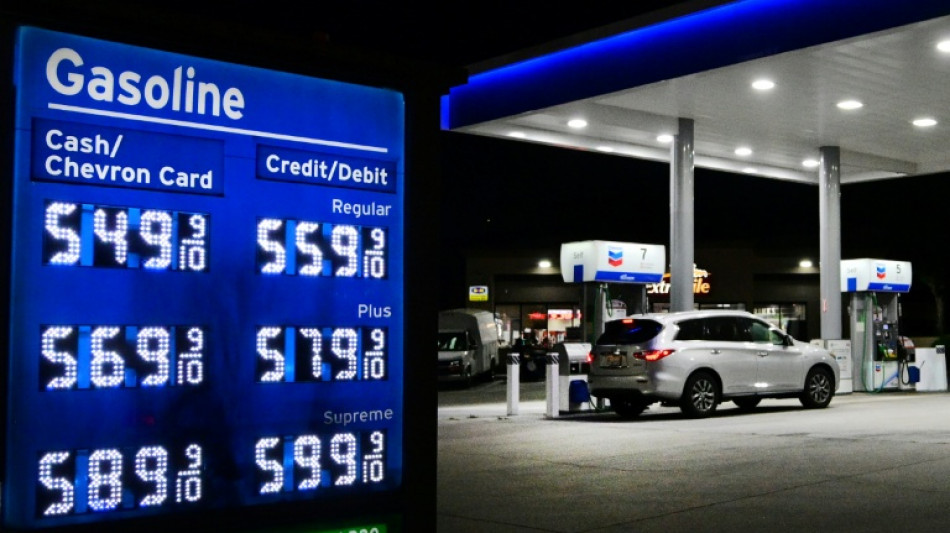
That pressure is showing at US pumps, with the national average price for a gallon of gasoline on Wednesday up by 22 percent compared to last month, according to motor club AAA.
Still, analysts looked at February's CPI figure as encouraging in the long term, saying it firmed the view that headline inflation was trending downwards, outside of geopolitical shocks.
"This pre-war inflation reading isn't entirely stale, as it shows that key pillars of disinflation are in place," said Bernard Yaros, lead US economist at Oxford Economics.
H.Silva--PC