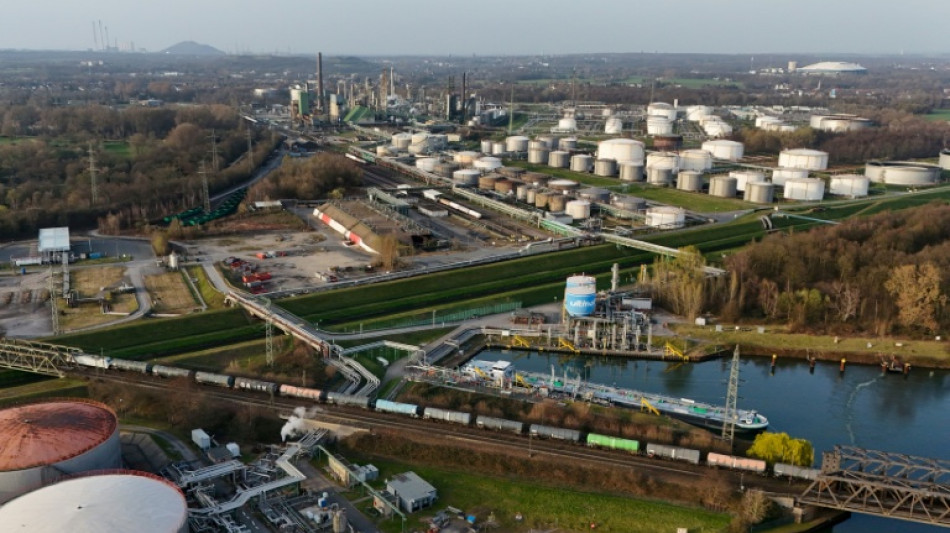
Mideast war to brake German recovery: institute / Photo: Ina FASSBENDER - AFP

 Energy bill plan could use HMRC income data to target support

 Business owner earning £6,000 a month tackles £70,000 debt

 Nvidia chief faces inquiry after disclosing affair with suspected Chinese agent

 Comet returns as online electrical marketplace 14 years after collapse

 KUFOS Signs MoU With Old Dominion University to Expand Academic Ties

 Karen Wazen Launches First Standalone Boutiques in Cairo

 Opti Digital Launches NEXA, an AI-Powered Intelligence Layer

The surge in energy prices triggered by the Middle East war will slow the struggling German economy's recovery, an economic institute warned Thursday.
Energy costs have jumped since the conflict erupted on February 28, a massive burden for Europe's top economy as it seeks to get back on its feet after a long decline.
The recovery, while likely to continue, "will be dampened by the sharp rise in crude oil and natural gas prices", said the Ifo Institute.
If the war escalates, output in Germany will be reduced by 0.4 percentage points in 2026 and by the same amount again in 2027, compared to a scenario without conflict, it forecast.
GDP growth would come in at just 0.6 percent this year and 0.8 percent next, it said.
Even if there is a quick end to the war, output will still be lower, although the impact would be less severe, Ifo said.
The hit to the economy will be a blow to Chancellor Friedrich Merz, who had hoped to spur a strong turnaround this year with vast outlays on defence and infrastructure.
Germany is heavily reliant on imports for its energy, including for the crucial manufacturing sector, leaving it vulnerable to international price fluctuations.
Still, Ifo indicated the energy shock would likely be less severe than the one triggered by Russia's 2022 invasion of Ukraine, when Moscow cut crucial supplies of gas to Germany.
"Immediate supply shortages" were not expected as Germany only obtains a small proportion of its energy supplies from the Middle East, it said.
Germany was among countries that announced Wednesday it would tap into strategic oil reserves in a bid to bring down prices, part of the biggest ever release by International Energy Agency members.
E.Ramalho--PC
