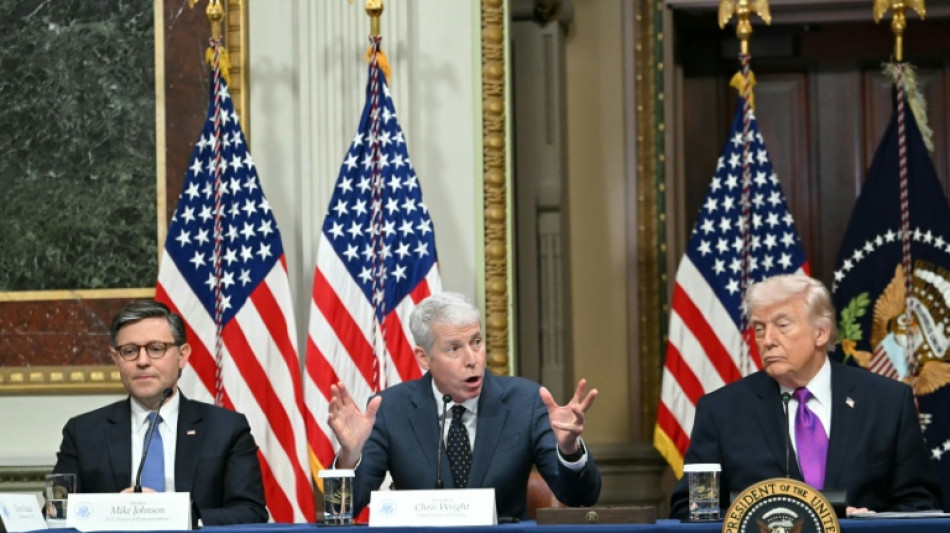
US military 'not ready' to escort tankers through Hormuz Strait: energy secretary / Photo: ANDREW CABALLERO-REYNOLDS - AFP

 Energy bill plan could use HMRC income data to target support

 Business owner earning £6,000 a month tackles £70,000 debt

 Nvidia chief faces inquiry after disclosing affair with suspected Chinese agent

 Comet returns as online electrical marketplace 14 years after collapse

 KUFOS Signs MoU With Old Dominion University to Expand Academic Ties

 Karen Wazen Launches First Standalone Boutiques in Cairo

 Opti Digital Launches NEXA, an AI-Powered Intelligence Layer

The US military is currently "not ready" to escort tankers through the critical Strait of Hormuz because all its assets are focused on striking Iran, Energy Secretary Chris Wright said Thursday.
Wright's comments came as an attack on two oil tankers off Iraq killed at least one person, and oil prices briefly soared past $100.
Since launching the war on Iran, US President Donald Trump has sought to calm the markets by offering US Navy escorts for oil tankers and reinsurance facilities for shipping companies -- but no escorts have so far taken place.
"It'll happen relatively soon, but it can't happen now. We're simply not ready," Wright told CNBC. "All of our military assets right now are focused on destroying Iran's offensive capabilities and the manufacturing industry that supplies their offensive capabilities."
He added that it was "quite likely" such escorts would be taking place by the end of the month.
As Iran launches a new wave of attacks against Gulf energy targets, the International Energy Agency said the war "is creating the largest supply disruption in the history of the global oil market".
US and Israeli strikes on Iranian targets -- including energy infrastructure -- have also disrupted supplies.
IEA member countries on Wednesday agreed to unlock 400 million barrels of oil from their reserves -- their largest release ever.
The United States will be releasing 172 million barrels, Wright said, under a swap arrangement that would see 200 million barrels flow back to its Strategic Petroleum Reserve (SPR) "within a year."
The move was unable, however, to overcome fears about the choking of energy supplies, with the Strait of Hormuz -- through which a fifth of global crude passes -- effectively shut down.
Wright said he had meetings at the Pentagon on Thursday to discuss possible US Navy escorts for tankers.
The US energy secretary told CNN on Thursday that he believed markets were "very well supplied with oil right now" and that short-term pricing was "based on psychology more than flows of oil."
The United States has also moved to ease sanctions on some Russian at-sea oil, notably allowing India a temporary waiver to buy that oil in order to address supply issues caused by the war.
Wright told CNN that waiver did not amount to "sanctions relief" for Russia, arguing the oil was already bound for China.
"Russia is not getting sanctions relief. All of that oil is oil on the water that's waiting in line to unload into China," he said, terming the waiver a "pragmatic solution" in the current crisis.
Wright's comment came one day after an envoy for Russian President Vladimir Putin met with US negotiators in Florida, in the first talks between Moscow and Washington since the start of the Iran war.
Kirill Dmitriev called the meeting "productive" and said Washington was "beginning to better understand" the importance of Russian oil.
P.L.Madureira--PC
